
OpenAI Launches GPT-5 Amid Rising AI Competition and $12 Billion Revenue Surge
 Aime Summary
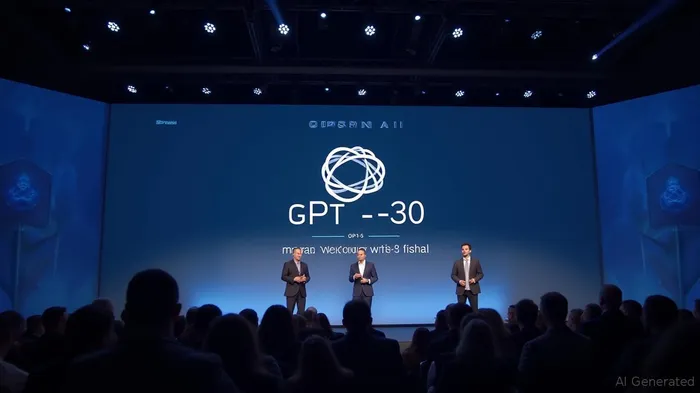
OpenAI has officially launched GPT-5, positioning it as a major advancement in its series of large language models (LLMs) and a potential step toward artificial general intelligence (AGI). The new model claims improved accuracy across academic and real-world benchmarks, including math, coding, and health-related queries, outperforming its predecessors across 40+ job functions [1]. Sam Altman, OpenAI CEO, described GPT-5 as a "significant step" on the path to AGI and highlighted its ability to deliver "PhD-level" insights across various topics [1]. The model's launch comes after two years of development, following GPT-4’s release in March 2023, and amid a competitive AI landscape.
Despite these advancements, OpenAI faces stiff competition. Rivals such as Anthropic, Google, and MetaMETA-- are pushing forward with their own models, including Anthropic’s Claude and Google’s Gemini. In addition, a wave of startups—some founded by former OpenAI researchers—continue to challenge its dominance. China’s AI industry is also emerging as a formidable force, with models like DeepSeek aiming for global influence [1].
OpenAI is pursuing a strategy of "relentless scaling," emphasizing larger datasets, more computing power, and smarter model architectures to achieve "order-of-magnitude" improvements. This approach is central to its Stargate Project, a $500 billion investment initiative by 2029, in collaboration with SoftBank, OracleORCL--, and MGX. However, such scaling demands substantial resources, and Altman acknowledged the "eyewatering" costs involved [1].
Financially, OpenAI has seen robust growth in 2025, with its annualized revenue reaching $12 billion in the first seven months, up from $6 billion at the start of the year. This surge is driven by both consumer and enterprise demand for its ChatGPT suite, which now serves 700 million weekly active users [1]. In a surprising move, OpenAI recently released a free, open-source model—marking a shift from its traditionally closed approach and signaling confidence in its premium GPT-5 offering.
Yet, the company’s partnership with MicrosoftMSFT--, which has invested over $13 billion and holds exclusive distribution rights for OpenAI models via Azure, is entering a more complex phase. Disputes over revenue sharing, AGI control, and product strategies are creating friction. Meanwhile, the Stargate Project’s success hinges on continued cooperation with key partners, including SoftBank, whose investment terms are linked to OpenAI’s ongoing corporate restructuring [1].
In a separate move, OpenAI has struck a $1 government deal with the U.S. General Services Administration to provide federal agencies with access to its frontier AI models for one dollar over the next year. This agreement, part of the Trump administration’s AI Action Plan, underscores OpenAI’s efforts to integrate AI more deeply into public-sector operations [1].
Simultaneously, the broader AI space is seeing increased competition in niche applications. Just one week after OpenAI introduced its ChatGPT Study Mode, Google launched a similar AI tutoring feature, Guided Learning, within its Gemini model. Both aim to shift from direct answer-giving to fostering problem-solving skills, raising questions about how students might adopt such tools as the academic year begins [1].
The AI industry is also witnessing regulatory developments. Amazon’s Zoox received an exemption from the National Highway Traffic Safety Administration to test self-driving vehicles without steering wheels or manual controls—a rare and significant regulatory nod in the robotaxi sector [1].
OpenAI’s GPT-5 is a bold move in a rapidly evolving field. Whether it can reestablish the company as the leading force in AI remains uncertain. The coming weeks will see researchers and competitors alike test the model’s capabilities against the latest from its rivals. For now, the race for AI supremacy is on, with GPT-5 representing OpenAI’s best chance to reclaim its position at the forefront [1].
Source: [1] GPT-5 is finally here—can it put OpenAI back on top? (https://fortune.com/2025/08/07/gpt-5-is-finally-here-can-it-put-openai-back-on-top/)

Stay ahead of the market.
Get curated U.S. market news, insights and key dates delivered to your inbox.


AInvest
PRO
AInvest
PRO



Comments
No comments yet