
OpenAI CEO envisions AI-driven space jobs by 2035
 Aime Summary
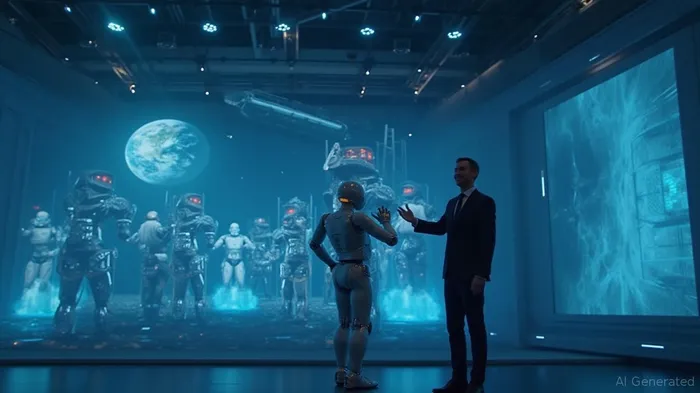
OpenAI CEO Sam Altman has sparked industry-wide speculation by suggesting that graduates entering the workforce around 2035 could be working in “completely new, exciting, super well-paid” roles in the space industry [1][4][6]. His comments highlight a future where artificial intelligence and space exploration converge, offering high-paying, innovative jobs that blend AI development with interplanetary travel and mission design [1][6].
Altman envisions a scenario where young professionals might step directly from university into careers on spacecraft or planetary missions [1]. These jobs, while still speculative, would likely require a combination of AI fluency, technical problem-solving, and space systems knowledge. He described them as “super interesting” and emphasized that today’s work would seem “boring in comparison” [1]. The rapid development of private space companies, including SpaceX and Blue Origin, suggests that such roles could become more than just hypothetical [6].
According to Altman, AI will not only drive new industries but also enable individuals to run companies that once required large teams [2]. He suggested that with the right tools—like GPT-5 and its successors—entrepreneurs could design, market, and scale businesses with minimal human resources [2]. This shift, he argued, could allow a single person to build a company worth more than a billion dollars, reshaping the traditional startup model and enabling remote, AI-driven enterprises [2].
Altman’s remarks reflect a broader belief that the next generation of workers will enter a world where AI is not just a tool but a core collaborator [2]. He referred to today’s 22-year-olds as the “luckiest in history” because they are entering an era where AI can serve as a personal expert, accelerating productivity and innovation [2]. In contrast, he acknowledged that older workers may struggle to adapt to these changes, facing greater uncertainty in a rapidly evolving job market [1].
While Altman’s vision is optimistic, it also underscores the risks of an unprepared workforce. Without proper retraining and policy support, older professionals could be left behind in a labor market increasingly defined by AI and automation [1]. This divergence between age groups highlights a growing concern among industry leaders about how to ensure equitable access to the opportunities AI will create [1][2].
Critically, Altman’s predictions remain speculative, as no specific data or studies support the exact nature or scale of these future space jobs. However, his perspective aligns with broader industry trends suggesting that AI will play a central role in shaping the future of work [2]. For students and professionals, the message is clear: mastering AI and adapting to its rapid evolution may be essential for securing the most promising careers of the coming decade [6].
Source: [1] OpenAI's CEO Sam Altman says in 10 years' time college graduates will be working 'some completely new, exciting, super well-paid' job in space (https://timesofindia.indiatimes.com/education/news/sam-altman-says-college-graduates-today-are-the-luckiest-in-history-here-is-why-ai-works-in-their-favour/articleshow/123226150.cms)
[4] OpenAI's CEO Sam Altman says in 10 years' time college graduates will be working 'some completely new, exciting, super well-paid' job in space (https://tech.yahoo.com/ai/articles/openai-ceo-sam-altman-says-151944949.html)
[6] OpenAI's CEO Sam Altman says in 10 years' time college graduates will be working 'some completely new, exciting, super well-paid' job in space (https://www.aol.com/finance/why-gen-z-ditching-college-143000855.html)

Stay ahead of the market.
Get curated U.S. market news, insights and key dates delivered to your inbox.


AInvest
PRO
AInvest
PRO



Comments
No comments yet