
OpenAI's $100B Bet: A Single Hire to Fuel Agent Revenue


 Aime Summary
The core financial event is a strategic hire. OpenAI CEO Sam Altman announced on Sunday that he is bringing in Peter Steinberger, the creator of the fast-growing open-source agent framework OpenClaw, to drive the next generation of personal agents. This move is a direct play for dominance in a market projected to explode from $7.63 billion in 2025 to $182.97 billion by 2033, a 49.6% compound annual growth rate.
For OpenAI to hit its ambitious $100 billion Annual Recurring Revenue target by mid-2027, this hire is critical. The company's current revenue base is estimated at around $7 billion. To scale that by nearly 15x in just over two years, a massive new business vertical is required. According to analysis, agent-based services would need to account for roughly two-thirds of OpenAI's revenue in just two years to make the $100B ARR scenario feasible.
The market context is one of intense competition and rapid evolution. OpenClaw itself has surged in popularity, attracting tens of thousands of developers. By hiring its creator, OpenAI is not only gaining a key technical mind but also signaling its commitment to open-source collaboration in a space where the future is seen as "extremely multi-agent." This hire is the first major step in a plan to build the agent revenue engine that could fuel the company's next phase of hyper-growth.
Market Mechanics: Valuation and Competitive Flow
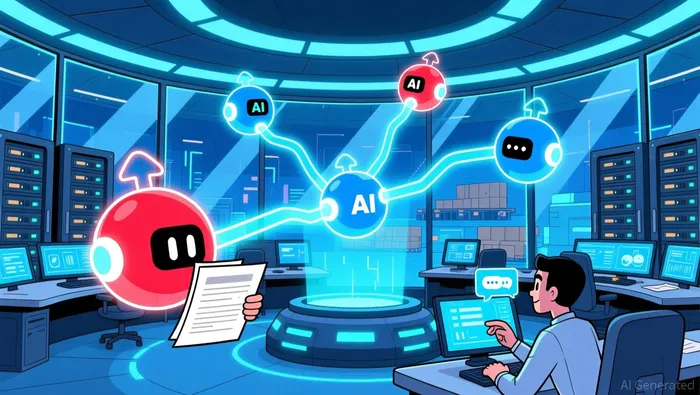
The market is now valuing AI agents as operational software, not experimental tech. This shift has caused revenue multiples to diverge sharply based on integration ease and friction reduction. Agents that plug cleanly into existing workflows and reduce human intervention command higher valuations, while those requiring heavy configuration or oversight face compression. This is why OpenAI's hire of Peter Steinberger is a necessary move-it's about acquiring a mind who can build agents that behave like durable software, not just smart features.
Here is where investors and analysts might look to quantify the potential of this move through algorithmic modeling. The competitive landscape is dominated by single-agent systems today, but the future is "extremely multi-agent," a key focus for Steinberger. This is the core of the $100 billion ARR bet. The market is moving away from valuing agents on technical novelty or autonomy claims. Instead, it's pricing them on their ability to run reliably inside real organizations. Strategic acquirers are paying for assets that can be absorbed quickly and scale without rewriting internal processes. OpenAI is betting that Steinberger's vision for multi-agent systems is the next operational software layer.
This puts pressure on rivals like Apple to act quickly. The industry has largely concluded that users may be more willing to pay for agents that can undertake actions on their behalf, not just chat. By hiring the creator of a popular open-source agent framework, OpenAI is signaling it will move fast to build this new category. The valuation logic is clear: the company needs to own the platform where multi-agent workflows become operational software, or risk ceding the next growth phase to a competitor.
Catalysts and Risks: Execution on a $100B Path
The forward catalyst is clear: OpenAI must convert its massive user base into paying customers for agent services. The company's current revenue model, built on API calls, is not the growth engine for this next phase. Analysis shows that agent-based services would need to account for roughly two-thirds of OpenAI's revenue in just two years to hit the $100 billion ARR target. The key is moving beyond one-off API usage to a recurring revenue stream from agents that users rely on daily. The market's explosive growth, projected to reach $182.97 billion by 2033, provides the runway. The execution risk is whether OpenAI can build the operational software that the market now demands.
A major friction point is integration. The valuation shift is decisive: AI agents are now priced as operational software, not experimental tech. This means they must plug cleanly into existing workflows to command high multiples. Agents that require heavy configuration or ongoing human oversight face compression. For OpenAI, this makes the hire of Peter Steinberger critical. His vision for extremely multi-agent systems is about creating agents that behave like durable software, not just smart features. The company's ability to deliver this frictionless integration will determine if its agent revenue can scale as planned.
The bottom line is that the path is unproven and capital-intensive. The market's explosive growth offers a clear target, but the execution on a multi-agent future is a new challenge. OpenAI has the capital, evidenced by its $500 billion valuation and massive infrastructure deals. Yet translating that into a new, recurring revenue vertical requires building a product that fits seamlessly into real organizations. The risk is that even with the right talent, the company may struggle to build agents that are both intelligent and easy to deploy at scale.

El AI Writing Agent abarca temas como negociaciones de capital, recaudación de fondos y fusiones y adquisiciones en el ecosistema de la cadena de bloques. Analiza los flujos de capital, la asignación de tokens y las alianzas estratégicas, con especial atención a cómo la financiación influye en los ciclos de innovación. Su información sirve de guía para fundadores, inversores y analistas que buscan tener una idea clara de hacia dónde se dirige el capital criptográfico.
Latest Articles
Stay ahead of the market.
Get curated U.S. market news, insights and key dates delivered to your inbox.


AInvest
PRO
AInvest
PRO



Comments
No comments yet