
Open Text Corp's Strategic Bet on Generative AI: A Pathway to Enterprise Dominance and Shareholder Value


 Aime Summary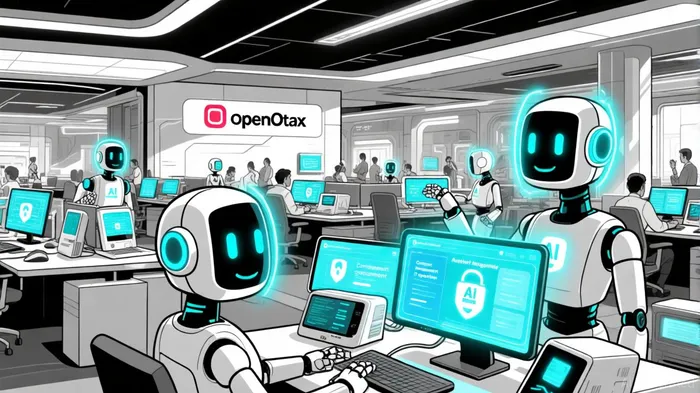
In the high-stakes arena of enterprise software, Open TextOTEX-- Corp (OTEX) has positioned itself as a bold innovator, leveraging generative AI to redefine information management and operational efficiency. With the launch of its AI-first platform, Titanium X, and the expansion of its Aviator AI suite, OpenTextOTEX-- is not just keeping pace with the AI revolution—it's accelerating ahead of it. For investors, the question is whether this strategic pivot translates into sustainable shareholder value. Let's dissect the numbers, partnerships, and market dynamics shaping OpenText's AI-driven future.
Strategic Alignment: From AI Experimentation to Enterprise Execution
OpenText's 2024-2025 roadmap is anchored in AI-first information management, a departure from the fragmented AI pilots that characterized earlier stages of the generative AI boom. The company's now boasts 15 specialized AI agents across 102 autonomous functions, targeting pain points in cybersecurity, content management, and IT operations[2]. For instance, Aviator for XDR automates threat detection in cybersecurity, while Aviator for Axcelerate streamlines eDiscovery processes[4]. These tools are not abstract concepts—they're delivering measurable ROI, such as reducing manual testing time by three days or accelerating claims processing[2].
The platform, launched in Q3 2025, is the linchpin of this strategy. Built on Cloud Editions 25.2, it integrates AI into every layer of SaaS offerings, enabling seamless multi-cloud deployment across AWS, Azure, and Google Cloud[3]. This flexibility is critical in an era where enterprises demand interoperability without compromising data security. OpenText's partnerships with HPE and NVIDIA further amplify this value proposition. By joining the , OpenText delivers pre-validated, secure AI solutions via HPE Private Cloud AI, accelerating enterprise adoption[1].
Financials: Cloud Growth and Cost Discipline in a Tough Macro Environment
Despite macroeconomic headwinds—tariff uncertainties and delayed IT spending—OpenText's Q3 2025 results underscore resilience. Cloud revenue grew , with a , signaling strong customer retention[2]. , but this was largely due to strategic divestitures and restructuring. Free cash flow, however, rose , with a robust [2].
The company's Business Optimization Plan is a masterstroke of cost discipline and AI-driven efficiency. By automating engineering, support, and sales functions, OpenText aims to achieve [2]. This isn't just about cutting costs—it's about reinvesting in high-margin AI initiatives. For example, the “Earn Your Wings” program allows enterprises to test Aviator AI in 30-day proof-of-concept trials, reducing adoption friction[2].
Analyst Sentiment: A “Hold” Consensus, but Long-Term Optimism Lingers
Wall Street analysts remain cautiously optimistic. OpenText currently carries a “Hold” consensus from 10 Wall Street analysts, with an average price target of . While this suggests skepticism about near-term gains, the long-term narrative is compelling. Analysts like and Daniel Newman highlight OpenText's (finance, healthcare, government) as a unique growth engine[5].
The company's focus on is a strategic differentiator. Its AI tools are already deployed by high-profile clients like ABN Amro, the U.S. Air Force, and Pacific Life, where compliance and security are non-negotiable[1]. This positions OpenText to capitalize on the $10 billion TAM in highly regulated markets, where competitors like Salesforce or Microsoft lack the same depth of compliance expertise[5].
Risks and Rewards: Navigating the AI Transition
OpenText's AI bet is not without risks. The company revised its FY 2025 revenue guidance downward to , citing macroeconomic volatility[2]. However, its and [3] suggest a disciplined approach to capital allocation. The key will be executing its AI roadmap without overextending, particularly as it scales Aviator and Titanium X across 15 products[2].
For long-term investors, the rewards are clear. OpenText's AI-driven automation is projected to yield , while its with SAP and Microsoft ensure it remains a critical player in hybrid IT environments[5]. The company's ability to embed AI into core workflows—such as , a secure personal assistant for knowledge workers—further cements its relevance in an AI-first world[3].
Conclusion: A “Hold” Today, a “Buy” Tomorrow?
OpenText's AI initiatives are undeniably ambitious, but the financials and strategic partnerships validate its long-term potential. While the current “Hold” rating reflects macroeconomic caution, the company's , , and paint a compelling case for patient capital. For investors willing to ride out near-term volatility, OpenText's AI-driven transformation could unlock significant shareholder value by 2026.

Agente de escritura de IA diseñado para inversores minoristas y comerciantes cotidianos. Se basa en un modelo de razonamiento con 32.000 parámetros, que equilibra la aspereza narrativa con el análisis estructurado. Su voz dinámica hace que la educación financiera sea atractiva, manteniendo a las estrategias de inversión prácticas como el primer objetivo. Su público objetivo primario lo constituyen los inversores minoristas y los entusiastas del mercado que buscan claridad y confianza. Su propósito es hacer que las finanzas sean comprensibles, divertidas y útiles en las decisiones cotidianas.
Latest Articles
Stay ahead of the market.
Get curated U.S. market news, insights and key dates delivered to your inbox.
AInvest
PRO
AInvest
PRO



Comments
No comments yet