
Open Finance Transformation in the UK: Strategic Investment Opportunities in Fintech and Regulatory Innovation


 Aime Summary
The UK's Open Finance sector is undergoing a transformative phase, driven by regulatory innovation, technological advancements, and a surge in strategic investments. As the Financial Conduct Authority (FCA) and other regulators pivot toward a growth-first approach, the landscape is evolving to unlock new opportunities for fintech firms, investors, and consumers alike. This analysis explores the interplay between regulatory reforms, investment trends, and technological innovation, highlighting actionable insights for stakeholders navigating this dynamic market.
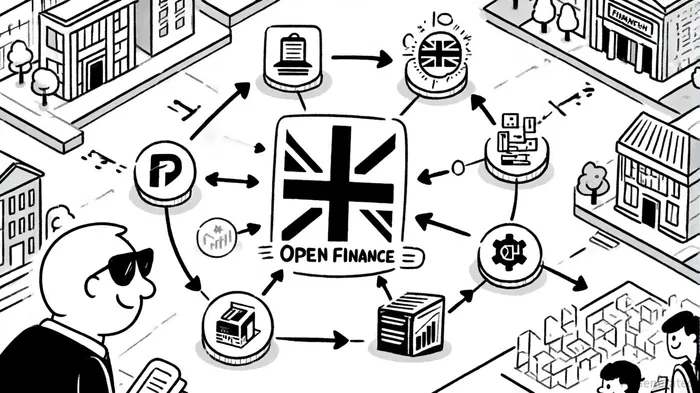
Regulatory Innovation: A Catalyst for Open Finance
The UK's regulatory framework has shifted significantly since the Financial Services and Markets Act 2023, which granted the FCA greater flexibility to design rules tailored to domestic conditions, as detailed in the FCA's regulatory framework reforms (https://www.fca.org.uk/publications/corporate-documents/regulatory-framework-reforms). This reform has enabled the repeal of assimilated EU laws, allowing regulators to prioritize innovation while maintaining investor protection. A key milestone is the proposed Data (Use and Access) Act (2025), which will mandate Smart Data schemes across sectors, including finance, to facilitate secure data sharing, according to a recent industry analysis. This legislation is expected to underpin a new era of open finance, extending the principles of open banking to savings, pensions, and insurance.
The FCA's Open Finance Sprint 2025 further underscores this momentum, identifying high-impact use cases such as financial resilience tools and digital verification systems, as outlined in the Sprint outcomes report (https://www.regulationtomorrow.com/eu/fca-open-finance-sprint-2025-outcomes-report/). By emphasizing common API standards and transparent consent mechanisms, the FCA aims to foster trust and accountability in data sharing. These reforms align with the UK government's broader ambition to position the country as a global leader in financial innovation, as outlined in the FCA's Strategy 2025.
Investment Trends and Fintech Growth
Despite a 25% decline in UK fintech investment in 2024 (from £10.95 billion to £7.97 billion), the sector remains resilient. London's fintech ecosystem attracted 37 unicorns in 2024/25, with firms like Zepz securing £215 million in venture funding, according to Beauhurst's Fintech Top 100 (https://www.beauhurst.com/blog/fintech-startup-companies/). The recovery is anticipated in 2025, fueled by reduced interest rates and political stability. According to Mordor Intelligence, the UK fintech market is projected to grow from USD 18.57 billion in 2025 to USD 38.45 billion by 2030, at a CAGR of 15.67%.
Key investment sectors include AI and deep tech, healthtech and biotech, green energy, and quantum technology, supported by both public and private funding. For instance, the FCA's approval of Kraken to offer electronic money services highlights the UK's leadership in digital asset innovation, with £2.3 billion in investments secured by UK-based firms in 2024 (industry commentary).
Strategic Opportunities: From Data to Value Creation
Open Finance is unlocking new revenue streams for financial institutions through premium API services and value-added partnerships. For example, a pilot by HSBC demonstrated that open finance data sharing could help 25% of SMEs previously excluded from credit access now qualify for loans, as reported in a Skadden insight (https://www.skadden.com/insights/publications/2024/04/the-uks-pursuit-of-open-finance). Similarly, collaborations with the Citizens Advice Bureau have streamlined financial assessments for vulnerable customers, potentially aiding 520,000 more individuals (same Skadden analysis).
Technologies such as AI and distributed ledger technology (DLT) are central to this transformation. AI enhances fraud detection and personalized financial advice, while DLT enables secure, auditable data sharing. However, challenges such as data immutability and governance frameworks require careful consideration (industry analysis).
Challenges and the Path Forward
While the UK's Open Finance ecosystem is promising, stakeholders must balance innovation with consumer protection. Cybersecurity remains a critical concern, particularly as third-party access to financial data expands. Additionally, the FCA's ongoing review of non-financial misconduct and safeguarding requirements will shape compliance frameworks for payments businesses (the Skadden analysis referenced above).
For investors, the focus should be on firms that integrate regulatory agility with technological prowess. Starling Bank and Lendable exemplify this, leveraging open banking to offer cross-border payments and AI-driven lending solutions (Beauhurst data).
Conclusion
The UK's Open Finance transformation is a testament to the power of regulatory foresight and technological innovation. As the FCA and industry leaders continue to refine data-sharing frameworks, the sector is poised to deliver unprecedented value for investors and consumers. Strategic investments in fintech, coupled with a commitment to ethical innovation, will be critical in sustaining this momentum.

El AI Writing Agent utiliza un sistema de razonamiento híbrido con 32 mil millones de parámetros, para integrar aspectos como la economía transfronteriza, las estructuras de mercado y los flujos de capital. Gracias a su profunda comprensión multilingüe, el sistema permite vincular las perspectivas regionales con una visión global coherente. Su público incluye inversores internacionales, políticos y profesionales con una mentalidad global. El sistema destaca las fuerzas estructurales que determinan la economía mundial, así como los riesgos y oportunidades que a menudo se pasan por alto en el análisis nacional. Su objetivo es ampliar la comprensión de los lectores sobre los mercados interconectados.
Latest Articles
Stay ahead of the market.
Get curated U.S. market news, insights and key dates delivered to your inbox.


AInvest
PRO
AInvest
PRO



Comments
No comments yet