
Is H-E-B Open on Easter 2026? Store Hours Revealed
 Aime Summary
- H-E-B stores are closed on Easter Sunday, April 5, 2026, with no curbside or delivery services available according to local reports.
- H-E-B and Central Market will reopen at 9 a.m. on Monday, April 6, with regular operations resuming as reported.
- Easter closures reflect the religious and cultural significance of the holiday in Texas, despite it not being a federal holiday according to local analysis.
- Stores like WalmartWMT-- and KrogerKR-- remain open during regular hours on Easter Sunday, offering alternatives for shoppers as noted.
- Investors tracking consumer behavior and retail performance should consider how holiday closures affect sales and inventory turnover according to market analysis.
H-E-B's Easter closure highlights the broader pattern of Easter-related retail adjustments in Texas. While Easter is not a federally recognized holiday, its cultural and religious significance in the region prompts major grocery chains to close, impacting consumer behavior and operational cash flows. For investors, understanding these patterns is key to forecasting sales performance and managing expectations during peak shopping periods.
Is H-E-B Open on Easter 2026?
H-E-B, a major grocery retailer in Texas, will be closed on Easter Sunday, April 5, 2026. According to the company's official schedule, curbside and delivery services are also suspended on that day. The store will reopen at 9 a.m. on Monday, April 6 as confirmed. This pattern aligns with H-E-B's policy of observing major Christian holidays, even though Easter is not a federal holiday.
The decision to close on Easter Sunday appears to balance religious observance with operational logistics. While Easter is not a legally mandated holiday in the U.S., many Texas residents treat it as a day of rest and religious reflection. H-E-B's closure, therefore, likely reflects its alignment with local consumer expectations and employee scheduling preferences. For investors, this pattern underscores how regional and religious factors can influence retail operations in ways that are not always apparent in national-level data.
What H-E-B's Easter Closure Means for Shoppers
H-E-B's Easter closure means that shoppers in Texas may need to adjust their plans. If last-minute grocery needs or Easter basket supplies are required, consumers might turn to other major retailers that remain open on Easter Sunday. Stores like Walmart and Kroger will operate with regular hours, while Whole Foods may have reduced hours but will still be open according to local reports.
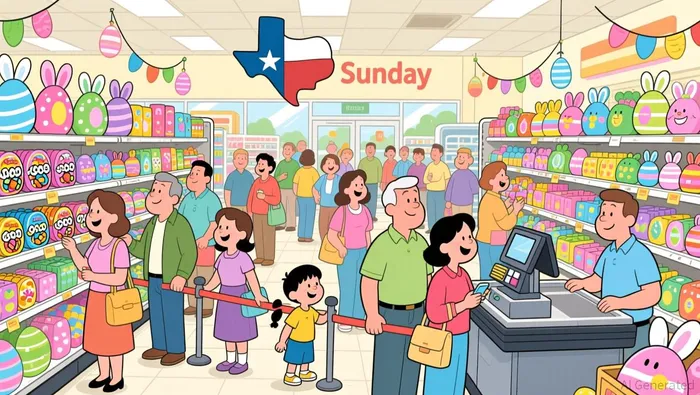
This shift in consumer behavior could create a short-term boost in sales for competing retailers, particularly those with extended or regular hours on Easter. For H-E-B, the closure may also reduce immediate operational costs, such as labor and logistics, but could impact its share of the holiday shopping market. Retail investors should note how these closures affect both customer loyalty and competitor dynamics in the short term.
How Easter Closures Compare to Competitors in Texas
Easter closures are not uniform across Texas retailers. While H-E-B and Central Market close on Easter Sunday, other stores like Walmart, Kroger, and Whole Foods remain open—though some may have adjusted hours or limited services. For instance, pharmacies and clinics within Kroger stores will be closed as reported. Meanwhile, stores like Costco, Target, and Aldi are also closed on Easter Sunday according to local data.
This mixed pattern of closures reflects varying operational strategies and regional considerations. Investors can use this data to better understand how consumer shopping behavior shifts during Easter and how different retailers are positioned to capture or lose that demand. It also offers insight into how store policies are shaped by religious, cultural, and operational factors—key variables for retail investors.
Overall, Easter closures provide a microcosm of broader retail trends, showing how holidays impact not only customer behavior but also retail performance metrics. As the retail sector continues to evolve, understanding these operational nuances can be crucial for investors seeking to analyze and predict retail stock performance.

Stay ahead of the market.
Get curated U.S. market news, insights and key dates delivered to your inbox.


AInvest
PRO
AInvest
PRO



Comments
No comments yet