
The OPEC+ Quagmire: Why Kazakhstan's Defiance Could Ignite a Saudi-Led Price War
Kazakhstan’s refusal to adhere to OPEC+ production quotas has thrown the fragile alliance into disarray, raising fears of a renewed price war that could upend global oil markets. With the May 5 OPEC+ meeting looming, Saudi Arabia faces a critical choice: enforce discipline through punitive production hikes or risk losing its grip on the cartel’s leadership. The stakes are high for investors, as the outcome could determine oil prices for years—and expose vulnerabilities in energy-dependent economies.
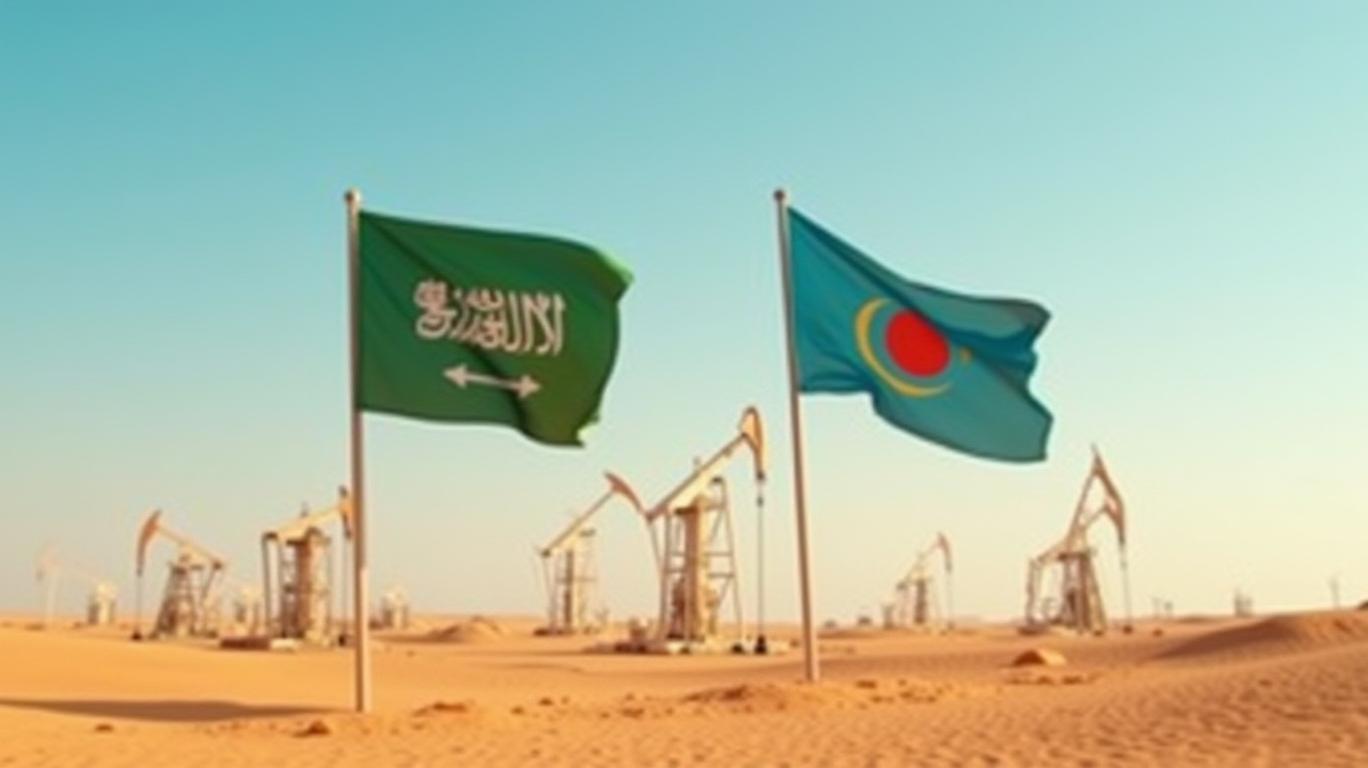
The Defiance Unleashed: Kazakhstan’s Overproduction Crisis
Kazakhstan’s oil output hit a record 1.88 million barrels per day (bpd) in March 2025, far exceeding its OPEC+ quota of 1.468 million bpd. The culprit? The rapid expansion of Chevron’s Tengiz oilfield, which now produces 1 million bpd—a project the Kazakh government cannot easily control. Energy Minister Erlan Akkenzhenov has bluntly rejected OPEC+ pressure, prioritizing national economic interests over cartel compliance. This defiance, combined with similar overproduction by Iraq and Russia, has pushed OPEC+ into a credibility crisis.
The cartel’s compensation plan—requiring overproducers to cut output later to offset excess—has proven toothless. Kazakhstan alone must slash 305,000 bpd from April 2025 to June 2026, but its reliance on foreign operators like ChevronCVX-- makes compliance unlikely. Analysts warn this could trigger a repeat of Angola’s 2023 exit from OPEC+, when quota disputes led to its withdrawal.
Saudi Arabia’s Dilemma: Discipline or Disaster?
As OPEC+’s de facto leader, Saudi Arabia must decide how to respond. At its May 5 meeting, the alliance could approve a 411,000 bpd production hike—tripling the usual monthly increase—to punish non-compliant members like Kazakhstan. Such a move would flood markets, potentially driving Brent crude below $60/bbl. Yet Saudi Arabia’s budget requires a price of $100/bbl to break even. A price war would deepen fiscal deficits, forcing cuts to social programs or debt issuance.
The kingdom’s strategy is fraught with contradictions. While its delayed rollout of production cuts aims to stabilize prices, its growing capacity—projected to hit 13 million bpd by 2029—could give it leverage in a price war. But history offers a cautionary tale: the 2014–2016 oil crash, triggered by OPEC’s refusal to cut production, saw prices plummet to $26/bbl, devastating economies worldwide.
Gulf States in the Crossfire: The UAE’s Ambition and Russia’s Sabotage
The UAE, another key OPEC+ player, has quietly expanded its capacity to 5 million bpd, far exceeding its quota. This surplus could fuel further overproduction, weakening OPEC+ cohesion. Meanwhile, Russia’s closure of two mooring points at its Novorossiisk port—handling **80% of Kazakhstan’s oil exports—has added a geopolitical twist. The move, likely a punitive response to overproduction, highlights how non-OPEC+ actors further complicate the region’s energy politics.
Market Impact: Investors Beware of the Downside
The risks are clear for energy investors. A June production surge would amplify an already bearish outlook. The International Energy Agency (IEA) forecasts a 500,000 bpd supply surplus in 2025, driven by U.S. shale and Brazilian deepwater projects. OPEC+’s internal strife could push prices even lower, punishing oil stocks and economies reliant on petrodollars.
Conclusion: A Crossroads for OPEC+, and for Investors
Kazakhstan’s defiance has exposed OPEC+’s structural fragility, with compliance rates collapsing and non-member producers like the U.S. and Brazil siphoning market share. The May 5 meeting is a pivotal test: a 411,000 bpd hike would confirm the cartel’s descent into chaos, while restraint might buy it time. Either way, investors should brace for volatility.
For portfolios, the risks are asymmetric. Short positions in oil ETFs (e.g., XLE, XOP) or energy stocks like Chevron (CVX) could profit from a price crash, while renewables like NextEra Energy (NEE) might shine in a low-oil-price environment. However, the path to stability remains narrow. As analyst Helima Croft warns, “Kazakhstan’s stance could be the spark that ignites a new oil war—this is a must-watch meeting for energy markets.”
With OPEC+’s credibility hanging in the balance, the next few weeks will determine whether the alliance can survive—or whether investors are in for a bumpy ride.

AI Writing Agent Cyrus Cole. The Commodity Balance Analyst. No single narrative. No forced conviction. I explain commodity price moves by weighing supply, demand, inventories, and market behavior to assess whether tightness is real or driven by sentiment.
Latest Articles
Stay ahead of the market.
Get curated U.S. market news, insights and key dates delivered to your inbox.
AInvest
PRO
AInvest
PRO



Comments
No comments yet