
OPEC+'s Production Hike and the Energy Transition: Navigating a Shifting Landscape for Investors
 Aime Summary
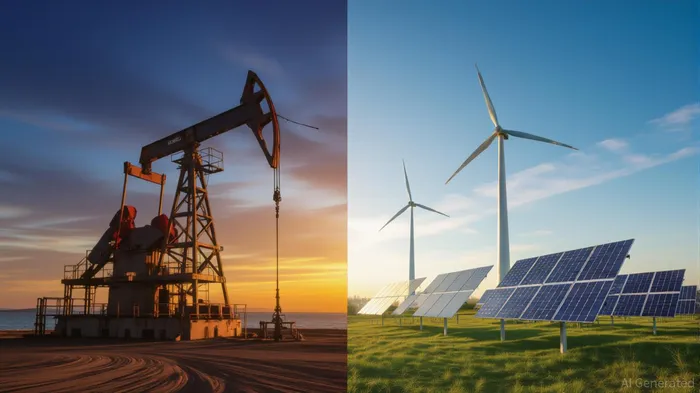
OPEC+'s decision to increase oil production by 547,000 barrels per day (bpd) in September 2025 marks a pivotal moment in the global energy transition. This move, executed by the Voluntary Eight (V8) nations—Saudi Arabia, Russia, Iraq, UAE, Kuwait, Kazakhstan, Algeria, and Oman—reflects a strategic recalibration from price stabilization to aggressive market share expansion. While the immediate implications for oil prices and volatility are clear, the long-term consequences for investors lie in the delicate balance between traditional oil-linked assets and the accelerating shift toward renewables.
OPEC+'s Strategic Gambit: Market Share Over Price Stability
The V8's decision to unwind its largest tranche of output cuts ahead of schedule underscores a fundamental shift in OPEC+'s approach. By citing a “healthy economy” and “low stocks” as justifications, the alliance is betting on the resilience of global demand and the urgency to counter U.S. shale gains and Russian supply disruptions. The UAE's standalone increase of 2.5 million bpd—equivalent to 2.4% of global demand—further highlights the group's willingness to prioritize market share.
This strategy, however, carries risks. The September 7 follow-up meeting could see the reinstatement of 1.65 million bpd cuts if prices falter, revealing OPEC+'s cautious stance amid concerns about oversupply and China's slowing demand. For investors, this volatility demands a nuanced approach to asset allocation. Defensive OPEC+ equities like Saudi Aramco and ADNOC, which benefit from budgetary needs and production flexibility, offer stability. Meanwhile, midstream operators such as Enterprise Products PartnersEPD-- and Kinder MorganKMI-- remain insulated from price swings, their growth tied to U.S. shale output and global trade flows.
Short-Term Volatility: A Double-Edged Sword
The production hike has already pushed Brent crude to $72.86 per barrel, but the $60–$70 range remains a critical battleground. If prices dip below $60, non-compliant members like Iraq and Kazakhstan could destabilize the pact, exacerbating oversupply risks. High-beta energy plays—such as Crescent EnergyCRGY-- and Santos—could benefit from a price rebound if OPEC+ pauses its unwinding, but they also face heightened exposure to geopolitical shocks.
Investors must also hedge against U.S. President Donald Trump's push for increased global production to lower energy prices. While this could depress oil prices in the short term, it also creates opportunities for OPEC+ to reassert dominance if the U.S. fails to meet its production targets. The key is to monitor compliance metrics and geopolitical developments, particularly as the August 8, 2025, peace-deal deadline with Russia looms.
Long-Term Opportunities: Bridging Fossil Fuels and Renewables
The energy transition is far from obsolete. Even as OPEC+ prioritizes market share, the long-term trajectory of renewables remains intact. The Inflation Reduction Act (IRA) and Asia's surging sustainable bond issuance provide tailwinds for clean energy, but the $60/bbl threshold poses a near-term challenge. At this price, solar and EV battery projects face profitability risks, temporarily favoring traditional energy producers.
However, this also underscores the urgency for investors to hedge against stranded assets in fossil fuels. Renewable infrastructure investments—such as energy transition ETFs and green hydrogen projects (e.g., Plug Power)—offer structural growth potential. Long-duration storage solutions, like Form Energy, are also gaining traction as oil price volatility persists. The key is to diversify across sectors, balancing exposure to traditional energy with high-conviction bets on the transition pipeline.
Strategic Asset Allocation: A Framework for 2025–2026
For investors navigating this landscape, a three-legged stool approach is essential:
1. Defensive OPEC+ Equities: Prioritize Saudi Aramco and ADNOC for income and stability amid short-term price fluctuations.
2. Midstream Operators: Invest in EPD and KMP for growth insulated from oil price swings.
3. Energy Transition Plays: Allocate to AEP, TNP, and green hydrogen (PLUG) to capitalize on structural trends.
Geopolitical hedging is equally critical. Diversify across regions to mitigate risks from U.S.-Russia tensions, EU sanctions, and U.S. shale competition. The September 7 meeting will be a litmus test for OPEC+ cohesion; a pause in production hikes could stabilize prices and provide a reprieve for renewables.
Conclusion: Staying Agile in a Shifting Chessboard
OPEC+'s 547,000 bpd hike is a masterclass in market manipulation, but its success hinges on balancing short-term gains with long-term sustainability. For investors, the path forward lies in agility: aligning portfolios with OPEC+'s tactical moves while anchoring to the structural trends of the energy transition. As the $75–85/bbl range faces increasing pressure, the real test will come when voluntary cuts expire by year-end 2026. Until then, the mantra remains: stay informed, stay diversified, and never underestimate the geopolitical chessboard.

Delivering real-time insights and analysis on emerging financial trends and market movements.
Latest Articles
Stay ahead of the market.
Get curated U.S. market news, insights and key dates delivered to your inbox.
AInvest
PRO
AInvest
PRO



Comments
No comments yet