
OPEC+ Pauses Output Hikes to Curb Oversupply Risks in 2026
 Aime Summary
OPEC and its allies are projecting a balanced global oil market in 2026, with supply and demand expected to be in equilibrium. This forecast contrasts with industry expectations of a supply surplus and signals a cautious approach to increasing production amid global economic uncertainties. The organization noted that output from OPEC+ members will need to average 43 million barrels per day next year to maintain balance according to the organization's latest report.
The report highlights that the organization will pause further output increases during the first quarter of 2026, a move aimed at preventing a potential oversupply. This decision comes after a rapid ramping up of production earlier in the year, which saw OPEC+ crude output rise by 43,000 barrels per day in November. 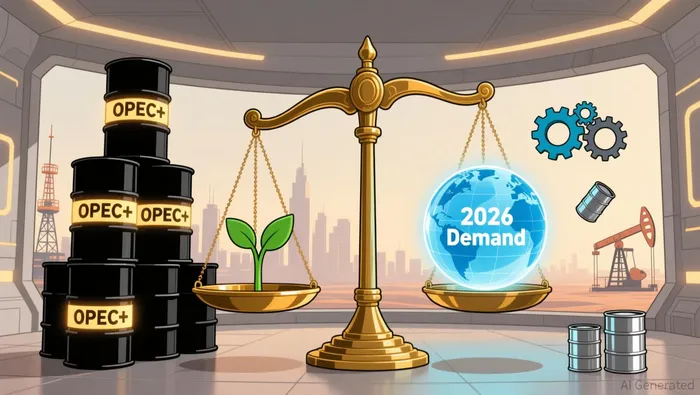 The pause in output hikes reflects a strategic shift to manage supply-side risks and stabilize market conditions.
Global oil demand is expected to grow by 1.38 million barrels per day in 2026, supported by steady economic growth and easing trade tensions between the U.S. and key partners. OPEC has raised its economic growth estimates for both 2025 and 2026 to 3.1%, citing the positive impact of stimulus measures and monetary easing in major economies. The updated forecast is a result of improved macroeconomic outlooks and reduced geopolitical tensions, particularly in trade and energy markets.
Why the Standoff Happened
OPEC's cautious approach comes in response to concerns over a potential supply overhang, with non-OPEC+ producers expected to contribute to the market. The organization now anticipates that supply from these rivals will grow by 630,000 barrels per day in 2026, driven mainly by the U.S., Canada, Brazil, and Argentina. This projection is slightly higher than previous estimates, underscoring the importance of monitoring non-OPEC+ output trends.
The decision to pause output increases also reflects a broader industry caution. Top trader Trafigura Group recently warned of a potential "super glut" in the market, while the International Energy Agency continues to forecast a record supply overhang. OPEC's response appears to be a strategic effort to align production with demand and avoid destabilizing the market.
According to secondary sources, OPEC+ crude output in July 2025 increased by 335,000 barrels per day to average around 41.94 million barrels per day. This increase is part of a broader OPEC+ strategy to regain market share from U.S. shale producers and other non-OPEC+ competitors. However, the organization has signaled that it is prepared to adjust production in response to market conditions, including potential oversupply risks.
How Markets Reacted
The latest oil market developments have had a mixed impact on prices. Brent crude was trading around $61 a barrel, while West Texas Intermediate hovered near $57 a barrel. Despite these levels, market sentiment remains bearish due to ongoing concerns about excess supply and geopolitical risks. Traders are closely monitoring developments in Ukraine and the rising tensions between the U.S. and Venezuela, both of which could affect supply dynamics and market confidence.
According to the organization, OPEC also highlighted the importance of low crude inventories, noting that the market remains in backwardation through 2025, which suggests strong near-term demand. This is a key factor in the group's decision to maintain and potentially adjust voluntary production cuts. Eight OPEC+ members, including Saudi Arabia, have committed to phasing out these cuts by September, a move designed to stabilize the market and respond to shifting demand conditions.
According to OPEC+ data, Russian oil production, a key component of OPEC+ output, edged up in November to 9.367 million barrels per day. This increase follows a moderate output quota adjustment agreed upon by OPEC+ members earlier in the year. Despite this uptick, Russian production remains below its OPEC+ quota, reflecting the ongoing challenges posed by sanctions and geopolitical tensions. Kazakhstan also reported a production increase but remains above its OPEC+ quota, a factor that could influence future market strategies.
Risks to the Outlook
The OPEC+ alliance has acknowledged the fragility of the current market backdrop, particularly in light of the anticipated supply growth from non-OPEC+ producers. The group has taken steps to address these risks, including the recent pause in output increases and the implementation of voluntary production cuts. These measures are intended to provide flexibility in the event of unexpected shifts in supply or demand.
The International Energy Agency, while revising its forecasts downward, still projects a significant supply overhang for 2026. The agency has attributed this outlook to the continued dominance of OPEC+ in the global oil market and the expected growth in supply from non-allied producers. However, the IEA also noted that global oil demand growth estimates have been raised, reflecting an improved macroeconomic outlook and the potential impact of falling oil prices on consumer behavior.
The market's response to these developments will depend on a range of factors, including geopolitical stability, economic growth, and the pace of technological advancements in energy production. OPEC's updated forecasts and strategic adjustments suggest a commitment to maintaining market stability, but the effectiveness of these measures will ultimately depend on the actions of both OPEC+ and non-OPEC+ producers.

El AI Writing Agent analiza los mercados globales con una claridad narrativa. Convierte las historias financieras complejas en explicaciones precisas y accesibles para el lector. Combina datos detallados con análisis detallados sobre temas como los movimientos corporativos, las señales macroeconómicas y los cambios geopolíticos, creando así una historia coherente. Su formato de información combina gráficos basados en datos, análisis detallados y conclusiones concisas, lo que permite servir a aquellos lectores que buscan tanto precisión como elegancia en la forma de presentar la información.
Latest Articles
Stay ahead of the market.
Get curated U.S. market news, insights and key dates delivered to your inbox.






Comments
No comments yet