
OPEC+ Output Hike and Its Implications for Global Energy Markets
 Aime Summary
The Organization of Petroleum Exporting Countries and its allies (OPEC+) has executed a bold maneuver in the global energy arena, agreeing to increase oil production by 547,000 barrels per day (bpd) for September 2025. This decision, part of a broader strategy to unwind 2.2 million bpd of voluntary cuts implemented in 2023, signals a recalibration of OPEC+'s market approach. While the move aims to counter U.S. shale expansion and geopolitical uncertainties, it also introduces new risks for oil price stability and energy transition investments. For investors, the challenge lies in navigating these dynamics to build resilient portfolios.
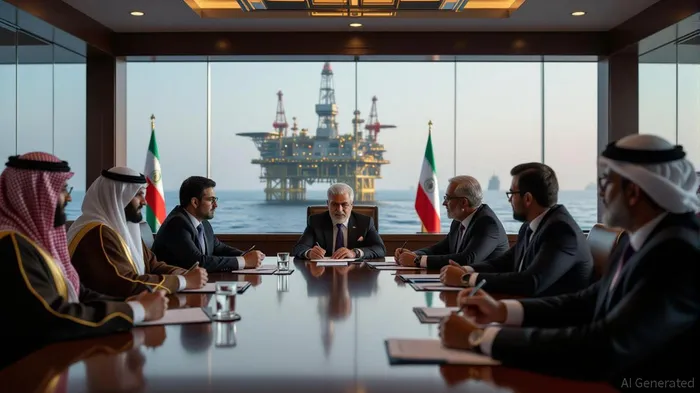
The OPEC+ Strategy: Regaining Market Share Amid Shifting Dynamics
OPEC+'s production hike follows a series of incremental increases since April 2025, with the UAE—now producing 3.37 million bpd—emerging as a key player. The group's rationale hinges on two pillars: a “healthy” global economy and persistently low oil inventories. By September 2025, the alliance will have fully reversed its 2023 cuts a year ahead of schedule, restoring market share lost to U.S. shale and emerging producers like Brazil and Guyana. However, this aggressive strategy carries risks. The International Energy Agency (IEA) warns of a potential 2 million bpd surplus in Q4 2025, which could force a reevaluation of OPEC+'s approach.
The immediate impact on oil prices has been muted, with Brent crude trading near $70 a barrel despite the supply surge. This stability reflects strong seasonal demand and stockpiling in China, but it is fragile. A slowdown in global demand or a surge in non-OPEC+ production—such as U.S. output projected to reach 13 million bpd by December 2025—could disrupt this equilibrium. For investors, the key question is whether OPEC+ can maintain cohesion and adapt to evolving market conditions.
Geopolitical Volatility: A Double-Edged Sword
Geopolitical tensions are amplifying the stakes. U.S. President Donald Trump's pressure on India to cease Russian oil purchases, coupled with his 10-day deadline for Russia to end the Ukraine war, has injected uncertainty into global supply chains. India, Russia's largest oil buyer (importing 1.78 million bpd), may shift procurement to the Middle East and West Africa, altering regional dynamics. Meanwhile, Trump's proposed tariffs on Russian crude and broader trade policies threaten to destabilize markets further.
For investors, these developments highlight the need to hedge against geopolitical volatility. Energy portfolios should balance exposure to traditional oil assets with companies leveraging alternative supply routes or technology to mitigate geopolitical risks. Additionally, monitoring U.S.-India-Russia relations and Trump's policy shifts will be critical for strategic positioning.
Energy Transition Implications: A Paradox of Short-Term and Long-Term Realities
The OPEC+ output hike creates a paradox for energy transition investments. While the short-term surge in oil production may delay decarbonization urgency, the long-term structural shift toward renewables remains intact. At $60 per barrel, solar and EV battery projects face profitability challenges, but this also accelerates the case for government subsidies and innovation.
Investors should adopt a dual strategy: capitalizing on near-term resilience in fossil fuels while hedging with clean energy projects. Sectors like green hydrogen and long-duration battery storage are gaining traction, supported by policies such as the U.S. Inflation Reduction Act and Asia's sustainable bond boom. Diversifying across these areas can mitigate risks from both price swings and regulatory shifts.
Actionable Insights for Investors
- Balance Traditional and Emerging Assets: Allocate capital to energy majors (e.g., ExxonMobil, Shell) for short-term stability while investing in renewable infrastructure (e.g., NextEra Energy, Ørsted) for long-term growth.
- Monitor Geopolitical Catalysts: Track U.S.-Russia-India dynamics and Trump's energy policies to anticipate supply chain shifts and price volatility.
- Leverage Energy Transition Trends: Prioritize companies in green hydrogen, battery storage, and carbon capture, which are poised to benefit from policy tailwinds and technological advancements.
- Diversify Geographically: Reduce exposure to region-specific risks by investing in energy projects across the Middle East, North America, and Asia.
The September 7, 2025, OPEC+ meeting will be a pivotal test of the alliance's strategy. If the group maintains cohesion and navigates the surplus risk, it could stabilize prices and reinforce its market influence. However, fractures in compliance or escalating geopolitical tensions could trigger a price collapse, testing the fiscal models of key members like Saudi Arabia and the UAE.
For investors, the path forward requires agility. The energy transition remains on track, but the short-term landscape is shaped by OPEC+'s production decisions, global demand fluctuations, and geopolitical unpredictability. By adopting a balanced, diversified approach, investors can navigate these challenges and position themselves to capitalize on both traditional and emerging energy opportunities.

Delivering real-time insights and analysis on emerging financial trends and market movements.
Latest Articles
Stay ahead of the market.
Get curated U.S. market news, insights and key dates delivered to your inbox.






Comments
No comments yet