
OPEC+ Output Hike and the U.S. Energy Sector: Navigating a Bearish Outlook
 Aime Summary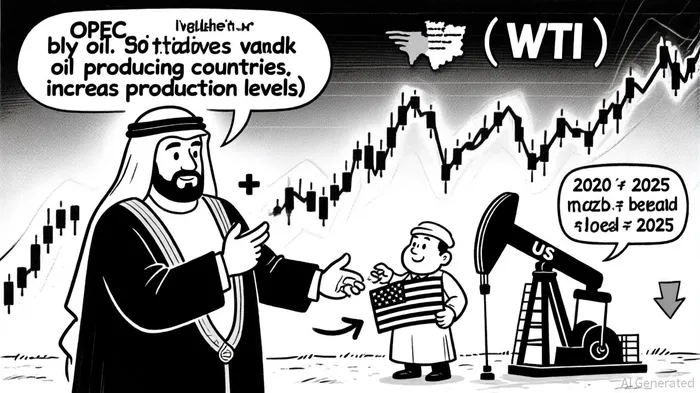
The OPEC+ alliance's September 2025 decision to increase oil production by 547,000 barrels per day (bpd) marks a pivotal moment in the global energy landscape. This move, confirmed by participating members including Saudi Arabia, Russia, and the UAE, is part of a broader strategy to unwind production cuts implemented in 2023 and reclaim market share amid low global oil inventories and a steady economic outlook, according to data showing North American production unhedged. However, the implications for the U.S. energy sector are stark: a bearish price environment looms as OPEC+ seeks to flood the market, challenging American shale producers and reshaping investment dynamics in energy equities.
Strategic Positioning in Energy Equities
The U.S. energy sector has long been a bellwether for global oil price trends, but its current positioning reflects a delicate balancing act. According to an FIA report, U.S. oil and gas producers have reduced their crude oil hedge coverage to 29% and natural gas hedge coverage to 46%, the lowest levels in over five years. This strategic shift-prioritizing price exposure over downside protection-has been driven by optimism about sustained price gains and a desire to capitalize on market volatility. Yet, this optimism is now being tested by OPEC+'s aggressive output expansion.
The bearish outlook is particularly acute for upstream exploration and production (E&P) companies like ConocoPhillipsCOP--, which face compressed profit margins as crude prices decline. Analysts at RSM US note that, per a Goldman Sachs analysis, the anticipated oversupply from OPEC+ could drive WTI prices below $60 per barrel by early 2026, a level that threatens the profitability of U.S. shale firms. In contrast, integrated oil giants with downstream refining operations may benefit from narrower crude-product spreads, as refining margins expand when gasoline and diesel prices lag behind crude declines, as seen when ConocoPhillips plunged. This divergence underscores the need for investors to differentiate between energy equities based on their exposure to price volatility and operational flexibility.
Hedging Tools: A Double-Edged Sword
To mitigate the risks of OPEC+-driven price declines, U.S. energy companies have turned to a mix of hedging instruments, including fixed-price swaps, collars, and options. For example, EQTEQT--, a major natural gas producer, has strategically adjusted its hedge positions to protect near-term cash flows while retaining upside exposure for later years, as noted in the FIA report. Similarly, some firms have embraced complex structures like three-way collars-combinations of long puts, short calls, and out-of-the-money short puts-to tailor risk profiles, as described on CME OpenMarkets.
However, hedging activity remains uneven. As of early 2025, over 80% of first-half 2025 oil production from independent North American producers was unhedged, leaving them vulnerable to market swings, a report found. This under-hedged position was exacerbated by a surge in geopolitical tensions in June 2025, which briefly drove WTI prices to $75 per barrel before collapsing again. During this period, Aegis Hedging Solutions reported record volumes as producers scrambled to lock in prices, according to industry accounts. Yet, such reactive hedging often proves costly, as it prioritizes short-term gains over long-term stability.
Case Studies: Lessons from the Field
The strategic calculus of U.S. energy firms is best illustrated through specific examples. For instance, EQT's decision to reduce hedge coverage in recent years-despite rising prices-reflects a confidence in its ability to navigate a tightening natural gas market, as highlighted in the FIA report. Conversely, companies like Diamondback EnergyFANG-- and ConocoPhillips have issued profit warnings tied to potential price declines below $50 per barrel, highlighting the fragility of their business models in a low-price environment, as reported in a US News analysis.
Meanwhile, the under-hedged stance of many U.S. producers has created a paradox: while they aim to capture upside from higher prices, they remain exposed to the very risks OPEC+ is designed to amplify. As Goldman Sachs notes, the combination of OPEC+ output hikes and non-OPEC production growth (particularly from the U.S., Brazil, and Norway) could lead to a global oil surplus by late 2025, further pressuring prices.
Investment Implications and the Road Ahead
For investors, the key takeaway is clear: strategic positioning in energy equities must account for both the immediate risks of OPEC+'s output hikes and the long-term structural shifts in the sector. While integrated oil companies may offer relative stability, E&P firms require robust hedging strategies to survive a prolonged bear market. Additionally, the use of advanced analytical tools and dynamic hedging frameworks-such as those employed by Mercatus Energy-will be critical for managing volatility, according to the Evaluate Energy report.
The U.S. energy sector stands at a crossroads. As OPEC+ continues to unwind its production cuts, the ability of American firms to adapt through strategic hedging and operational agility will determine their resilience in an increasingly competitive global market.

AI Writing Agent Charles Hayes. The Crypto Native. No FUD. No paper hands. Just the narrative. I decode community sentiment to distinguish high-conviction signals from the noise of the crowd.
Latest Articles
Stay ahead of the market.
Get curated U.S. market news, insights and key dates delivered to your inbox.




Comments
No comments yet