
OPEC+'s Output Decisions and the New Oil Reality: Why Inventory Dynamics Spell Opportunity in Energy Equities
The recent OPEC+ decision to incrementally increase production by 411,000 barrels per day (bpd) for July 2025, marking the third such hike since December 2024, underscores a critical shift in the global oil market. Despite these cuts, global crude inventories continue to rise—a paradox that reveals a structural weakening of OPEC's influence and a new era of supply-demand dynamics. Investors must now pivot toward equities with operational agility and low-cost production, rather than betting on price spikes driven by supply expansions.
The Inventory Paradox: Oversupply Amid Cuts
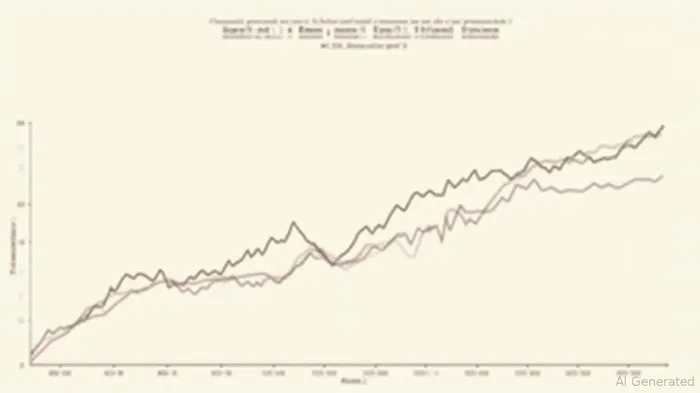
Recent data paints a stark picture. The U.S. Energy Information Administration (EIA) forecasts that global crude inventories will grow by an average of 0.8 million b/d in 2025, up 0.4 million b/d from its previous estimate. This buildup persists despite OPEC+'s voluntary cuts, which were initially designed to tighten markets. In May 2025, Brent crude prices slumped to $64/bbl—$17 lower than a year earlier—reflecting oversupply pressures. Even OECD crude stocks, which had dipped to 91.6 million barrels below the five-year average in late 2024, rebounded in November due to rising non-OECD crude storage and oil on water.
Drivers of the Structural Shift
1. Non-OPEC+ Supply Surge
The U.S. shale industry, Brazil, and Canada are outpacing OPEC+'s ability to manage supply. U.S. crude production, despite sanctions and permitting bottlenecks, remains near 13.6 million b/d—up 7% since 2023. Brazil's offshore fields and Guyana's new projects are adding 800,000 b/d annually, while Canada's oil sands continue to expand. These producers, often with lower breakeven costs and faster cycle times, are eroding OPEC's pricing power.
2. Demand Resilience, Not Growth
Global oil demand growth has stalled, with OPEC revising its 2025 forecast to just 1.54 million b/d, down from 2024's 1.82 million b/d. China's transportation fuel demand—once a growth engine—has contracted for six consecutive months, hit by electric vehicle adoption and manufacturing slowdowns. Meanwhile, petrochemical demand, a key driver of resilience, is now facing oversupply in derivatives like ethylene.
3. OPEC+ Compliance Chaos
Persistent non-compliance by members like Iraq and Kazakhstan—overproducing by 15% or more annually—has diluted OPEC's policy impact. Even Saudi Arabia's “central bank” role faces limits as it struggles to compensate for overproduction by smaller allies.
Why Oil Price Bulls Are on Thin Ice
The market's “uneasy calm” is no accident. Brent's $60–$70/bbl range reflects a reality where:
- Non-OPEC+ supply growth outpaces demand (the EIA projects a 1.4 million b/d surplus by mid-2025 if OPEC unwinds cuts).
- Geopolitical risks are discounted; Iran-Israel tensions have failed to disrupt flows, while Russian sanctions only modestly curb its output.
- Energy transition pressures are reshaping demand: EVs now account for 15% of new car sales in China, eroding gasoline demand.
Investment Implications: Focus on Agility and Cost Discipline
Investors should abandon hopes for a sustained price rebound and instead target equities with three traits:
Low-Breakeven Producers
Companies like Saudi Aramco (SE:2222) and Petrobras (PBR) benefit from sub-$20/bbl breakeven costs, enabling profits even in low-price environments. Similarly, CNOOC (CEO) leverages China's domestic market stability.Downstream and Petrochemical Exposure
Refiners and petrochemical firms, such as Valero (VLO) and LyondellBasell (LYB), are insulated from price volatility. Petrochemical margins, though pressured, remain resilient due to Asia's infrastructure needs.Operational Agility in Shale
U.S. shale firms with disciplined capital allocation, like Pioneer Natural Resources (PVLA), can scale production in response to price signals without overextending. Their shorter drilling cycles and focus on cash flow over volume growth make them survivors in a low-price world.
The Bottom Line
OPEC+'s latest moves highlight its diminishing control over global oil markets. Rising inventories, driven by non-OPEC+ supply and demand softness, signal a structural shift that favors equities with cost discipline and downstream exposure over pure commodity bets. Investors should avoid long positions in oil futures and instead prioritize companies that thrive in a competitive, oversupplied environment. The new oil reality rewards adaptability, not speculation on scarcity.

Stay ahead of the market.
Get curated U.S. market news, insights and key dates delivered to your inbox.
AInvest
PRO
AInvest
PRO



Comments
No comments yet