
OPEC's Oil Gamble: A Volatile Present, But a Renewable Future?
The OPEC+ alliance's decision to boost August crude production by 548,000 barrels per day (bpd) marks a bold attempt to stabilize oil markets amid geopolitical tensions and slowing demand. While the move has sent Brent crude prices tumbling to $68 per barrel—a 16% drop from earlier June highs—the strategy highlights a deeper truth: fossilFOSL-- fuel equities face mounting structural risks as the global energy transition accelerates. For investors, the short-term volatility of oil markets must be weighed against the long-term inevitability of renewables reshaping the sector.
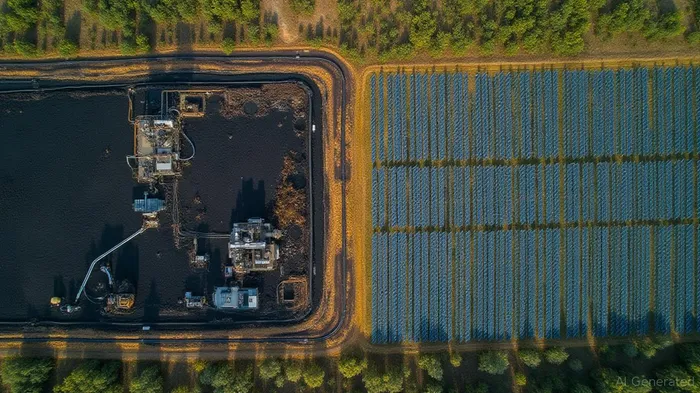
The Immediate Impact: A Price Relief That May Be Temporary
The August production hike, announced on July 5, was larger than the 411,000 bpd initially expected, signaling OPEC+'s urgency to offset oversupply fears. reveal the market's sensitivity: prices dipped below $70 in late June but spiked to $81 earlier in the month amid fears of an Iran-Israel conflict disrupting Middle East exports. Analysts now warn that even with the OPEC+ boost, prices could sink toward $60 by year-end due to rising global supply and economic headwinds. However, the cartel's ability to control output is hampered by non-compliance from members like Kazakhstan, which has consistently exceeded its quota.
The short-term picture is one of volatility. OPEC+'s decision may ease price pressures temporarily, but it also underscores the cartel's diminishing influence in a fragmented market. Geopolitical risks—from U.S. trade policies to shale oil competition—remain ever-present, making fossil fuels a high-risk bet for investors focused on steady returns.
The Structural Risks: Why Fossil Fuels Are Losing Their Luster
Beneath the noise of daily price swings lies a seismic shift in energy economics. The fossil fuel sector is increasingly at odds with two unstoppable forces: ESG-driven capital reallocation and accelerating renewable adoption.
1. ESG Funds Are Shunning Fossil Fuels
In Q2 2025, ESG equity strategies underperformed benchmarks for the first time in 2025, largely due to their underweight exposure to energy stocks. While this underperformance was driven by falling oil prices, it also reflects a strategic shift. ESG funds, which now command $2 trillion in assets, are systematically sidelining fossil fuel companies to meet climate goals. For instance, the largest ESG funds hold energy stocks with 40% lower carbon intensity than their benchmarks—a move that aligns with global net-zero targets but leaves investors exposed to fossil fuel volatility.
2. Renewables Are Eating Fossil Fuels' Lunch
The renewable energy sector is outpacing fossil fuels in capital allocation. In 2025, global clean energy investments are projected to hit $2.2 trillion—double the $1.1 trillion earmarked for oil, gas, and coal. Solar power, now the cheapest energy source in history, is leading the charge, with $450 billion allocated to solar PV in 2025 alone. show renewables consistently outpacing traditional energy.
Even OPEC+ members are feeling the heat. China, the world's largest energy investor, now allocates 33% of its energy spending to renewables, up from 25% a decade ago. Meanwhile, Africa—a continent with 20% of the world's population—receives just 2% of global clean energy investment, highlighting both underdevelopment and potential for growth.
3. Policy and Technology Are Driving the Transition
Governments are codifying the shift to renewables. The U.S. Inflation Reduction Act's $27 billion Greenhouse Gas Reduction Fund aims to deploy 36 GW of renewables by 2030, while the EU's Corporate Sustainability Reporting Directive (CSRD) mandates detailed climate disclosures. Even OPEC's core members are hedging their bets: Saudi Arabia's Vision 2030 plan includes $180 billion for renewables, and the UAE's Masdar City is a global hub for green innovation.
The Investment Playbook: Betting on the Future
For investors, the writing is on the wall: fossil fuels are a fading bet. The structural risks—from stranded assets to regulatory headwinds—outweigh the short-term gains of oil market volatility. Here's how to position portfolios for the energy transition:
- Go All-In on Solar and Storage
- Solar PV: With costs plummeting and adoption soaring, solar is the cleantech sector to own. Companies like First SolarFSLR-- and JinkoSolarJKS-- are leaders in manufacturing.
Battery Storage: Tesla's Powerwall and CATL's lithium-ion innovations are critical to grid stability. shows this sector is booming.
Invest in Grid Infrastructure
The $400 billion annual grid investment shortfall is a glaring opportunity. Firms like Siemens Energy and NextEraNEE-- are modernizing grids to handle renewables' variability.
Back Climate Tech Startups
AI-driven energy optimization (e.g., Netsoon.AI's Datagreen data centers) and green hydrogen projects are reshaping energy systems. Venture capital is pouring into these areas, with $71 billion allocated to cleantech by Q3 2024.
Avoid Fossil Fuel Equities
- Even OPEC+ members' stocks are vulnerable. ChevronCVX-- and ExxonXOM-- have underperformed the S&P 500 over the past year, while smaller shale players face existential risks as ESG screens tighten.
Conclusion: The End of an Era
OPEC+'s August production hike may offer a temporary reprieve for oil prices, but it cannot reverse the energy transition. As renewables eat into fossil fuels' market share and ESG capital flows shift decisively toward sustainability, investors must ask: Is a bet on short-term oil volatility worth the long-term risk of backing the wrong energy future? The answer, increasingly, is no. The renewables revolution is here—and it's time to reallocate capital accordingly.
The era of easy oil is ending. The question now is whether investors will be ready for what comes next.

Stay ahead of the market.
Get curated U.S. market news, insights and key dates delivered to your inbox.




Comments
No comments yet