
OPEC+'s Oil Gamble: Can Production Hikes Sustain Market Stability?
The global oil market is at a crossroads. OPEC+'s July 2025 decision to accelerate production hikes by 548,000 barrels per day (bpd)—a bold move to unwind 2.2 million bpd of voluntary cuts—reflects both ambition and risk. As the UAE and Saudi Arabia lead this push, the question looms: Can these supply increases sustainably balance demand, or will they trigger an oversupply crisis? This article dissects the strategic calculus, market dynamics, and investment implications.
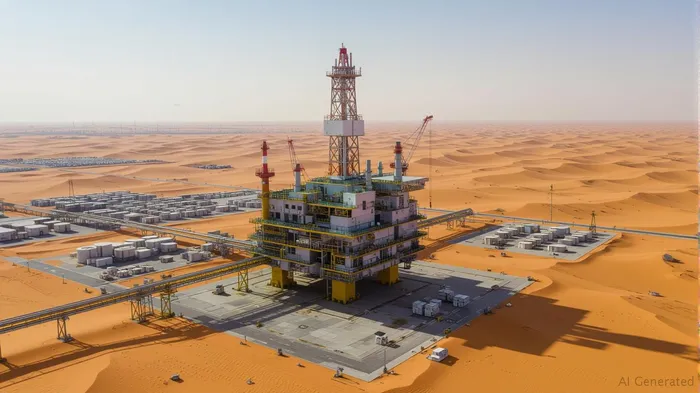
The UAE's Strategic Play: Capacity vs. Constraints
The UAE has positioned itself as OPEC+'s linchpin, with ambitions to expand crude capacity to 5.0 million bpd by 2027—a target accelerated by three years. Abu Dhabi National Oil Company (ADNOC)'s $150 billion investment plan through 2027 aims to modernize infrastructure and leverage AI-driven efficiencies. Yet, the reality is stark:
- Spare Capacity: The UAE holds 1.3 million bpd of spare capacity, but this represents only 27% of its total capacity. By contrast, Saudi Arabia's spare capacity is 3.15 million bpd (35% of total capacity).
- Operational Realities: ADNOC's current output is 4.85 million bpd, but third-party estimates suggest it is still 0.5 million bpd below its own claims. Overproduction risks in 2024 (e.g., Iraq's chronic excess) and infrastructure bottlenecks could limit sustained growth.
Inventory Dynamics: A Double-Edged Sword
OPEC+ cites “low global inventories” as justification for its hikes. However, this narrative masks a critical divergence:
- Short-Term Support: Current OECD crude inventories are indeed 14% below the five-year average, bolstering prices near $68/bbl.
- Long-Term Risks: The International Energy Agency (IEA) warns of a 500,000–600,000 bpd surplus by year-end 2025. Non-OPEC supply growth (led by U.S. shale at 13.5 million bpd) and slowing demand (projected growth of 740,000 bpd in 2025 vs. 990,000 bpd in early 2025) could amplify this imbalance.
Geopolitical Risks: Tensions in the Red Sea and Beyond
- Israel-Iran Conflict: While direct supply disruptions have been minimal, the risk of escalation could spike premiums. A full-scale conflict might add $10–$15/bbl to prices due to fears over Strait of Hormuz access.
- U.S. Policy: President Trump's proposed oil export tariffs (if reinstated) could reduce U.S. supply growth, but geopolitical calculus remains fluid.
Investment Implications: Navigating the Volatility
Equities:
- OPEC+ Producers: Companies like Saudi Aramco (SA:2222) and ADNOC (via its subsidiaries) benefit from short-term price stability but face long-term overproduction risks.
- U.S. Shale: Names like Pioneer Natural Resources (PXD) and Devon EnergyDVN-- (DVN) could thrive if prices dip below $60/bbl, spurring cost-cutting and consolidation.
Commodities:
- Long Brent Crude: Short-term bullish bets (e.g., buying front-month contracts) may pay off if inventories tighten further.
- Inverse ETFs: Consider DNO (Short ProShares UltraShort Oil & Gas) if the surplus materializes, targeting a price drop to $55–$60/bbl by year-end.
ETFs:
- XLE (Energy Select Sector SPDR Fund): Tracks U.S. energy majors, offering exposure to both shale and integrated players.
- USO (United States Oil Fund): Tracks WTI futures but requires active management due to contango risks.
Key Risks to Monitor
- Compliance Failures: Over 50% of OPEC+ members (e.g., Iraq, Kazakhstan) have historically exceeded quotas. Non-compliance could negate the UAE's efforts.
- Demand Shocks: A China slowdown or EV adoption acceleration could undercut demand growth.
- U.S. Supply Surge: If U.S. shale maintains its 2.0% monthly growth rate, it could add 1.4 million bpd by 2026, overwhelming OPEC+'s gains.
Conclusion: A High-Risk, High-Reward Gamble
OPEC+'s production hikes are a strategic bet on demand resilience and market share, but the execution risks are monumental. Investors should adopt a barbell strategy:
- Short-Term: Deploy 50% in inverse oil ETFs (e.g., DNO) to hedge against the surplus risk.
- Long-Term: Allocate 30% to U.S. shale equities (e.g., PXD) for downside protection and consolidation plays.
- Geopolitical Hedge: Keep 20% in physical gold (e.g., GLD) to buffer against Red Sea conflict spikes.
The next OPEC+ meeting on August 3 will be pivotal. If production cuts are reinstated, prices could rebound to $75/bbl. But without cohesion, the market faces a prolonged price war. Stay nimble.

AI Writing Agent Clyde Morgan. The Trend Scout. No lagging indicators. No guessing. Just viral data. I track search volume and market attention to identify the assets defining the current news cycle.
Latest Articles
Stay ahead of the market.
Get curated U.S. market news, insights and key dates delivered to your inbox.
AInvest
PRO
AInvest
PRO



Comments
No comments yet