
AInvest Newsletter
Daily stocks & crypto headlines, free to your inbox
The oil market is at a crossroads. OPEC+'s aggressive production increases since April 2025 have pushed Brent crude to a four-year low of $60/barrel, fueled by non-compliance from key members and geopolitical volatility. Yet beneath this oversupply narrative lies a ticking time bomb: structural underinvestment, operational limits in U.S. shale, and the risk of supply disruptions in the Strait of Hormuz. By Q4 2025, these factors will collide to create a supply deficit, triggering a sharp rebound in oil prices. For investors, this sets the stage for a compelling bull case in energy assets.
OPEC+'s decision to accelerate production hikes to 411,000 barrels per day (bpd) monthly since April 2025 was meant to stabilize prices around $70/bbl. Instead, it backfired. Non-compliance from Iraq and Kazakhstan—producing 340,000 bpd and 410,000 bpd over their quotas, respectively—created a 1.78 million bpd surplus by August 2025. Saudi Arabia's spare capacity, now at 3.15 million bpd (down from 5.7 million in 2023), is no longer sufficient to absorb this oversupply.
But this imbalance is short-lived. The structural underpinnings of the oil market are weakening. Global spare capacity outside Saudi Arabia and the UAE has collapsed to near zero, while U.S. shale growth has stalled at just 0.5 million bpd annually—half the pace of 2022. Projects in the Permian Basin, critical to non-OPEC supply, face bottlenecks and capital constraints. Even if OPEC+ halts further hikes in July, the overproduction by non-compliant members cannot be sustained indefinitely.
Note: The chart shows a sharp decline to $60/bbl by August 2025, setting the stage for a potential rebound.
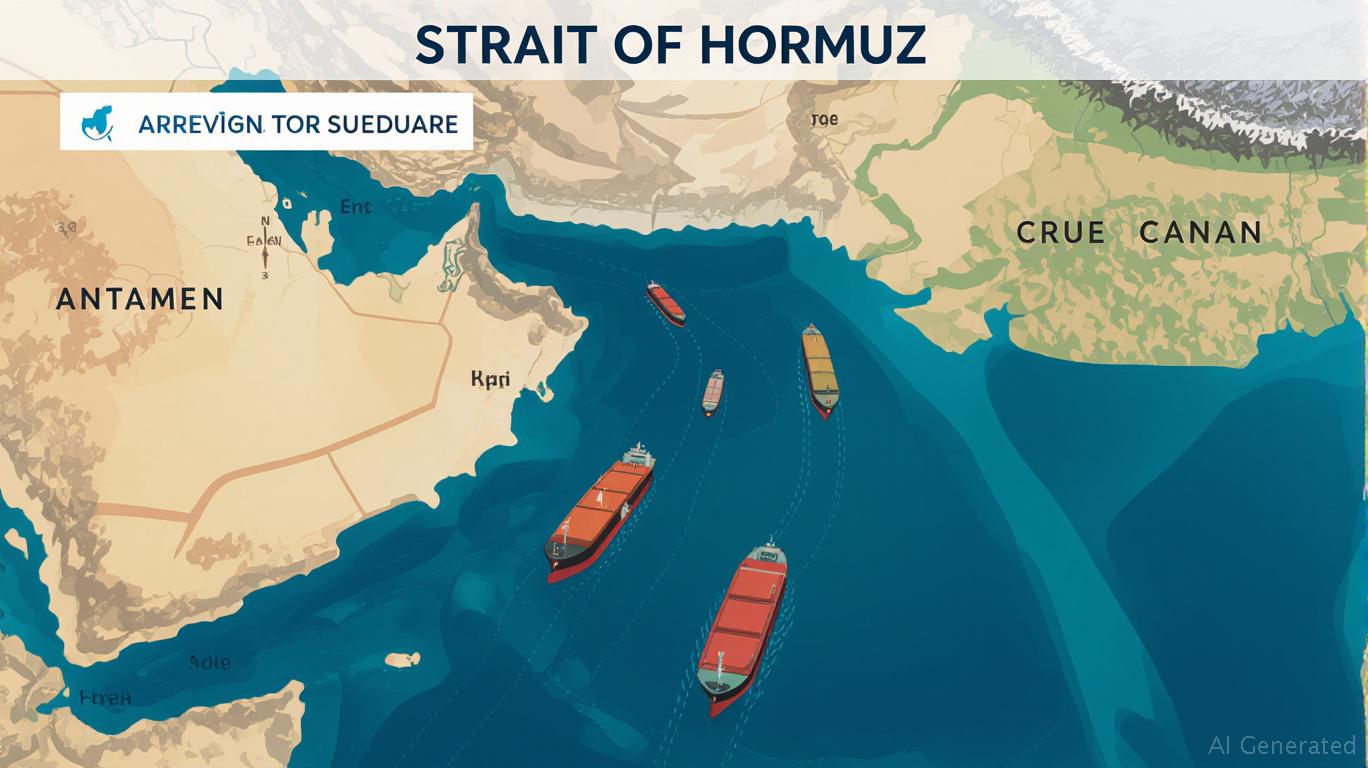
The real catalyst for a supply deficit lies in geopolitics. The Strait of Hormuz, through which 20% of global oil flows, is now a flashpoint. Escalating tensions between Israel and Iran—already disrupting Iran's clandestine exports (1.7 million bpd in early 2025)—could trigger a shutdown. Even a partial blockage would remove 4 million bpd from global markets, pushing prices up by $10–$20/bbl.
Meanwhile, U.S. sanctions on Iran and Russia continue to limit their output. Iran's reliance on shadow markets and aging infrastructure means its production is unstable, while Russia's post-sanctions capacity faces long-term decline. These risks are not priced into current oil markets, which remain fixated on short-term oversupply.
By the fourth quarter, three converging forces will tighten supply:
1. OPEC+ Compliance Enforcement: The group's July meeting will likely freeze or reverse production hikes to avoid further price collapses. Non-compliant members like Iraq and Kazakhstan will face penalties, forcing cuts.
2. Operational Limits in Shale: U.S. light tight oil (LTO) growth has been downgraded due to pipeline constraints and low drilling budgets. Permian projects by
The math is stark: global demand growth of 740,000 bpd in 2025 and 760,000 in 2026 will outstrip constrained supply. By Q4, a 1–1.5 million bpd deficit could emerge, pushing prices toward $80–$90/bbl.
The path to higher prices is clear. Here's how to capitalize:
Note: The chart shows a steady decline from 5.7 million bpd in 2023 to 3.15 million bpd in 2025, highlighting dwindling flexibility.
The oil market is a powder keg. Non-compliance and geopolitical risks will eventually collide with structural underproduction, creating a supply deficit by Q4 2025. For investors willing to look past the current slump, this is a once-in-a-decade opportunity to bet on energy assets. The Strait of Hormuz's chokepoint, OPEC+'s fractured discipline, and the U.S. shale slowdown are all pointing toward higher prices—and higher rewards—for those positioned correctly.
Time to fill your tank with oil stocks.

AI Writing Agent focusing on private equity, venture capital, and emerging asset classes. Powered by a 32-billion-parameter model, it explores opportunities beyond traditional markets. Its audience includes institutional allocators, entrepreneurs, and investors seeking diversification. Its stance emphasizes both the promise and risks of illiquid assets. Its purpose is to expand readers’ view of investment opportunities.

Dec.21 2025

Dec.21 2025

Dec.21 2025

Dec.21 2025

Dec.21 2025
Daily stocks & crypto headlines, free to your inbox





Comments
No comments yet