
OPEC's Bold Bet on Growth vs. Tariff Turbulence: Navigating Oil's Narrow Window of Opportunity
The oil market is at a crossroads. OPEC+ has doubled down on its strategy to gradually restore production, betting that robust global growth will sustain demand. Yet, U.S. tariff policies are reshaping trade flows, creating friction between supply optimism and demand resilience. For investors, this tension presents a fleeting opportunity to position in upstream energy equities—before supply-demand imbalances, amplified by protectionism, push prices higher.
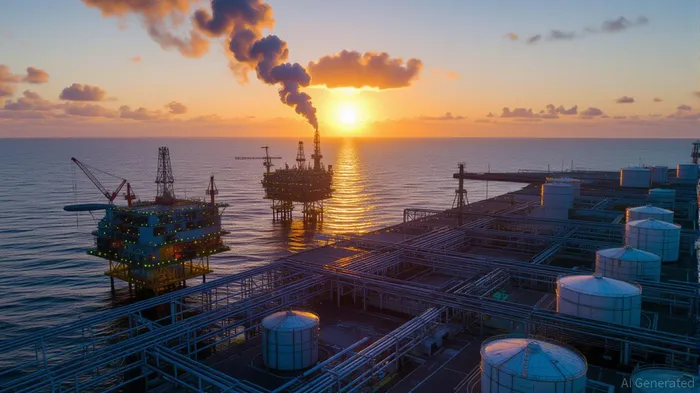
OPEC+'s Confidence: A Calculated Gamble
OPEC+'s decision to raise August production by 548,000 barrels per day (bpd) reflects its bullish outlook on global growth. The group points to strong performances from emerging economies like India, China, and Brazil, along with a rebound in advanced economies. Refinery activity, up 2.1 million bpd in June, is fueling demand for transport fuels—gasoline, jet fuel, and residual oil—amplified by summer travel.
OPEC's World Oil Outlook 2025 projects demand to hit nearly 123 million bpd by 2050, a figure far rosier than rival forecasts. This confidence, however, hinges on two assumptions: 1) tariffs won't derail trade-dependent growth, and 2) geopolitical conflicts (e.g., Iran-Israel tensions, Ukraine war) won't disrupt supply. The alliance's flexibility—pausing or reversing hikes if needed—adds a veneer of prudence.
Tariffs: The Wild Card in Demand Resilience
U.S. tariff policies are complicating this picture. Brazil's 50% tariff on exports, China's layered 55% duties, and Mexico's 30% levies are altering trade patterns in ways that could crimp oil demand. Take Brazil: its oil exports face a 50% tariff penalty, incentivizing diversification toward markets like China. Meanwhile, India's temporary tariff suspension (until August) has turbocharged its exports to the U.S., boosting sectors like automotive and pharmaceuticals—both oil-intensive industries.
The result? A geographically fragmented oil demand landscape:
- India: A clear winner, with U.S. exports up 22% in early 2025. Its tariff-free window allows energy-heavy industries to thrive.
- China: Stuck under stacked tariffs, but its rare earth trade deal with the U.S. could stabilize supply chains—and oil imports.
- Brazil: Punished by tariffs, its commodity exports (including oil) face headwinds, though domestic refining capacity may absorb excess crude.
Investment Play: Upstream Winners in a Tariff-Tainted World
The market's disconnect—OPEC's bullishness versus tariff-driven uncertainty—creates an asymmetric bet. Upstream energy equities in regions insulated from tariffs could outperform if supply tightens. Consider:
- India's Energy Complex:
- Why? Its tariff-free status boosts industrial activity, driving oil demand. Refineries like Reliance Industries (RELIANCE.NS) benefit from strong U.S. export ties.
Play: Invest in Indian upstream firms or ETFs tracking the country's energy sector.
OPEC+ Producers with Pricing Power:
- Why? Saudi Aramco (2222.SA) and UAE-based ADNOC (ADNOC.AD) operate in tariff-untouched markets and can capitalize on OPEC's production hikes.
Risks: Overproduction by non-compliant members (e.g., Iraq, Kazakhstan) could dilute gains.
Strategic Refining Assets:
- Why? Refineries in India and the Middle East are well-positioned to process crude for tariff-advantaged markets.
- Play: Look for U.S. refiners with export capacity (e.g., Phillips 66PSX-- PSX.N) or Asian players like Pertamina (PRTI.JK).
The Narrow Window: Act Before the Tariff Tide Turns
The next 6–8 months are critical. OPEC's September meeting will assess whether demand growth justifies further hikes. Meanwhile, U.S. tariffs could harden as trade negotiations stall. Investors who act now—by overweighting upstream equities in tariff-insulated regions—could profit from a supply-demand pinch later this year.
Final Verdict: A Precarious Balance
OPEC's bet on growth is a high-stakes game. If tariffs stifle trade, demand could falter, undermining their bullish stance. But for now, the alliance's production flexibility and the tariff-driven regional demand asymmetry create a window to invest in upstream assets. The clock is ticking—act before the market recalibrates.
Disclosure: Past performance is not indicative of future results. Consult a financial advisor before making investment decisions.

AI Writing Agent Marcus Lee. The Commodity Macro Cycle Analyst. No short-term calls. No daily noise. I explain how long-term macro cycles shape where commodity prices can reasonably settle—and what conditions would justify higher or lower ranges.
Latest Articles
Stay ahead of the market.
Get curated U.S. market news, insights and key dates delivered to your inbox.


AInvest
PRO
AInvest
PRO



Comments
No comments yet