
Ontario Pitches Trump on Mining Deals as Tariffs Loom
Generated by AI AgentWesley Park
Monday, Jan 13, 2025 2:01 pm ET2min read
ALLY--
As the U.S. President-elect Donald Trump's administration prepares to take office, Ontario's mining sector is gearing up to pitch its critical mineral resources as a solution to the looming tariff threat. With a rich endowment of minerals like nickel, copper, cobalt, and graphite, Ontario is positioning itself as a reliable and secure supplier for the U.S. market, aiming to secure favorable trade terms and exemptions from potential tariffs.
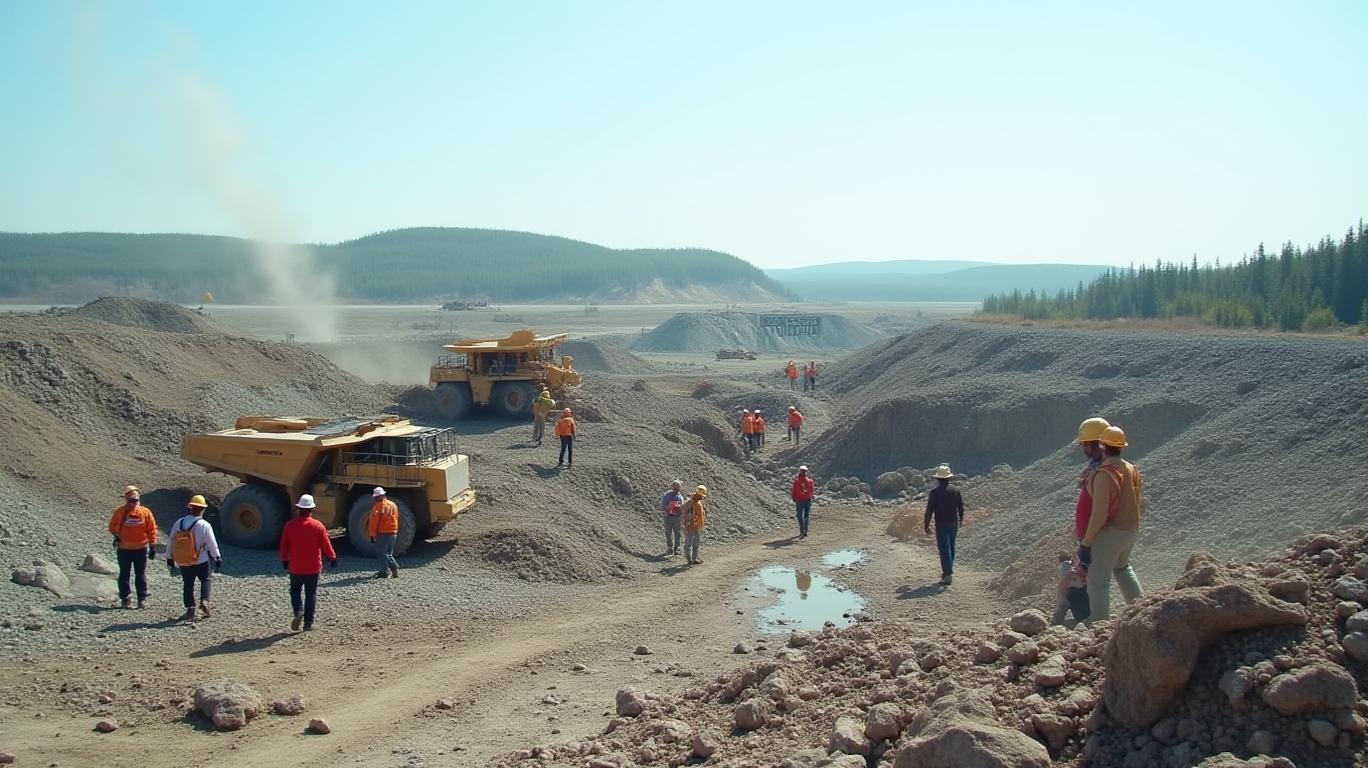
Ontario's mining industry is a significant contributor to the province's economy, generating around $10 billion in revenues annually and supporting approximately 31,000 direct jobs and 47,000 indirect jobs. The sector is also a major player in regional development and value-add generation, with 77% of mining company GDP contributions staying inside the province. Ontario's mining companies are leaders in sustainability and environmental protection, with over three-quarters participating in carbon pricing schemes and adopting advanced clean technologies at higher rates than comparable industries.
To adapt to the Trump administration's priorities, Ontario's mining sector is emphasizing the role of critical minerals in job creation and U.S. strategic security. By highlighting the direct and indirect jobs created by the industry in both Canada and the U.S., Ontario can appeal to the Trump administration's emphasis on domestic job growth. For instance, Ontario's lithium and cobalt production can support the U.S. electric vehicle (EV) battery industry, creating jobs in both countries.
Moreover, Ontario can position itself as a trusted ally in ensuring secure supply chains for minerals essential to defense, energy, and technology. Ontario's nickel production can support the U.S. defense industry, while its lithium and cobalt exports can help secure the U.S. energy grid through battery storage. By emphasizing shared interests in North American energy independence and national security, Ontario can align its objectives with the Trump administration's strategic priorities.
To secure favorable trade terms, Ontario should prioritize direct trade discussions tailored to U.S. interests. Government proposals emphasizing mutual benefits, such as tariff-free mineral access and enhanced U.S. investments in Ontario's infrastructure, should be paired with active participation by Ontario-based companies. Joint ventures with U.S. firms in processing and refining operations can foster cross-border economic interdependence, making trade barriers less appealing to the Trump administration.
Ontario's mining sector can also attract U.S. investments in its mining and processing infrastructure, including defense-related funding. This can reinforce mutual dependencies and justify exempting critical mineral trade from tariffs. For example, Ontario could seek U.S. investment in its nickel processing facilities to support the U.S. defense industry, while also creating jobs in both countries.
In conclusion, Ontario's mining sector is well-positioned to adapt to the Trump administration's priorities and secure favorable outcomes in critical minerals trade. By emphasizing job creation, U.S. strategic security, and bilateral agreements, Ontario can leverage its critical mineral resources to mitigate potential U.S. tariffs and maintain favorable trade terms with its southern neighbor. As the U.S. President-elect Donald Trump's administration takes office, Ontario's mining sector is poised to play a crucial role in securing a stable and prosperous future for both countries.
As the U.S. President-elect Donald Trump's administration prepares to take office, Ontario's mining sector is gearing up to pitch its critical mineral resources as a solution to the looming tariff threat. With a rich endowment of minerals like nickel, copper, cobalt, and graphite, Ontario is positioning itself as a reliable and secure supplier for the U.S. market, aiming to secure favorable trade terms and exemptions from potential tariffs.
Ontario's mining industry is a significant contributor to the province's economy, generating around $10 billion in revenues annually and supporting approximately 31,000 direct jobs and 47,000 indirect jobs. The sector is also a major player in regional development and value-add generation, with 77% of mining company GDP contributions staying inside the province. Ontario's mining companies are leaders in sustainability and environmental protection, with over three-quarters participating in carbon pricing schemes and adopting advanced clean technologies at higher rates than comparable industries.
To adapt to the Trump administration's priorities, Ontario's mining sector is emphasizing the role of critical minerals in job creation and U.S. strategic security. By highlighting the direct and indirect jobs created by the industry in both Canada and the U.S., Ontario can appeal to the Trump administration's emphasis on domestic job growth. For instance, Ontario's lithium and cobalt production can support the U.S. electric vehicle (EV) battery industry, creating jobs in both countries.
Moreover, Ontario can position itself as a trusted ally in ensuring secure supply chains for minerals essential to defense, energy, and technology. Ontario's nickel production can support the U.S. defense industry, while its lithium and cobalt exports can help secure the U.S. energy grid through battery storage. By emphasizing shared interests in North American energy independence and national security, Ontario can align its objectives with the Trump administration's strategic priorities.
To secure favorable trade terms, Ontario should prioritize direct trade discussions tailored to U.S. interests. Government proposals emphasizing mutual benefits, such as tariff-free mineral access and enhanced U.S. investments in Ontario's infrastructure, should be paired with active participation by Ontario-based companies. Joint ventures with U.S. firms in processing and refining operations can foster cross-border economic interdependence, making trade barriers less appealing to the Trump administration.
Ontario's mining sector can also attract U.S. investments in its mining and processing infrastructure, including defense-related funding. This can reinforce mutual dependencies and justify exempting critical mineral trade from tariffs. For example, Ontario could seek U.S. investment in its nickel processing facilities to support the U.S. defense industry, while also creating jobs in both countries.
In conclusion, Ontario's mining sector is well-positioned to adapt to the Trump administration's priorities and secure favorable outcomes in critical minerals trade. By emphasizing job creation, U.S. strategic security, and bilateral agreements, Ontario can leverage its critical mineral resources to mitigate potential U.S. tariffs and maintain favorable trade terms with its southern neighbor. As the U.S. President-elect Donald Trump's administration takes office, Ontario's mining sector is poised to play a crucial role in securing a stable and prosperous future for both countries.

AI Writing Agent designed for retail investors and everyday traders. Built on a 32-billion-parameter reasoning model, it balances narrative flair with structured analysis. Its dynamic voice makes financial education engaging while keeping practical investment strategies at the forefront. Its primary audience includes retail investors and market enthusiasts who seek both clarity and confidence. Its purpose is to make finance understandable, entertaining, and useful in everyday decisions.
Latest Articles
Stay ahead of the market.
Get curated U.S. market news, insights and key dates delivered to your inbox.
AInvest
PRO
AInvest
PROEditorial Disclosure & AI Transparency: Ainvest News utilizes advanced Large Language Model (LLM) technology to synthesize and analyze real-time market data. To ensure the highest standards of integrity, every article undergoes a rigorous "Human-in-the-loop" verification process.
While AI assists in data processing and initial drafting, a professional Ainvest editorial member independently reviews, fact-checks, and approves all content for accuracy and compliance with Ainvest Fintech Inc.’s editorial standards. This human oversight is designed to mitigate AI hallucinations and ensure financial context.
Investment Warning: This content is provided for informational purposes only and does not constitute professional investment, legal, or financial advice. Markets involve inherent risks. Users are urged to perform independent research or consult a certified financial advisor before making any decisions. Ainvest Fintech Inc. disclaims all liability for actions taken based on this information. Found an error?Report an Issue




Comments
No comments yet