
How OnePipe's PaywithAccount is Reshaping Nigeria's Utility Payment Landscape and Redefining Financial Inclusion


 Aime Summary
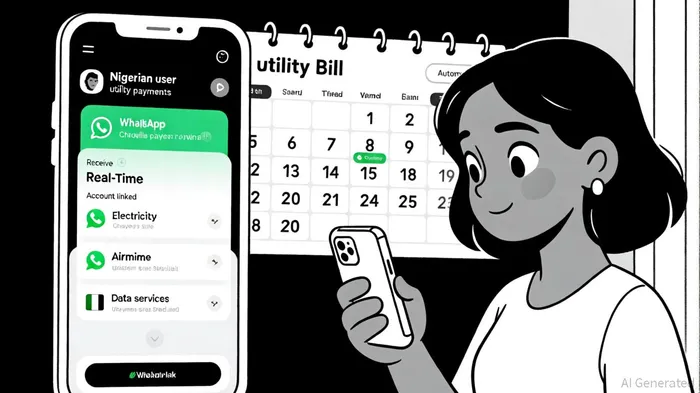
In October 2025, OnePipe launched a feature that could redefine how Nigerians manage essential utility payments. By integrating payment scheduling into its PaywithAccount platform, the fintech startup is tackling a systemic issue: nearly half of Nigerian adults have missed at least one critical utility or service payment in the past year, according to a Brandspurng report. This has led to service disruptions, penalties, and financial anxiety for millions. OnePipe's solution automates recurring payments for electricity, airtime, and mobile data directly from users' bank accounts, eliminating the need for manual tracking and reducing the risk of missed deadlines, as reported by Techeconomy.
A Consumer-Centric Disruption
The PaywithAccount platform's utility scheduling feature is more than a convenience-it's a response to a crisis. For example, users like Chinyere and Sodiq have praised the system's real-time WhatsApp notifications and receipts, which provide transparency and peace of mind, according to Digital Times. The platform already supports major electricity distribution companies (Eko, Ikeja, Abuja, Ibadan) and all primary mobile operators (MTN, Airtel, Glo, 9Mobile), with plans to expand to insurance premiums and cooperative dues, as reported by Business AM Live.
This consumer-focused innovation aligns with broader trends in financial inclusion. Nigeria's Central Bank has emphasized the need for digital solutions to bridge gaps in access to banking services, and OnePipe's automated system reduces barriers for unbanked or underbanked populations by leveraging existing bank accounts, as explained in a PaywithAccount blog post.
Beyond Consumers: A Business Ecosystem Reimagined
While the consumer impact is significant, PaywithAccount's true disruptive potential lies in its ability to transform business cash flow. For Nigerian Micro, Small, and Medium Enterprises (MSMEs), delayed payments are a critical pain point. A PwC study found that 48% of MSMEs experienced payment delays in 2024, with 33% reporting severe consequences, according to Business Post. Traditional systems rely on manual invoicing, repeated follow-ups, and high transaction fees, diverting resources from growth.
PaywithAccount automates collections directly from customer bank accounts, streamlining operations for businesses in sectors like education, logistics, and cooperatives. For instance, King's Court School in Lagos, which previously struggled with installment payments, now benefits from predictable cash flow, per a NowNow report. Lenders like Lendsqr have also adopted the platform to ensure on-time loan repayments, as noted by TechCityNG.
Market Position and Competitive Edge
OnePipe's strategic integration of payment scheduling positions it as a key player in Nigeria's evolving fintech landscape. By leveraging Open Banking-approved by the Central Bank of Nigeria (CBN) in April 2025-the platform operates in a regulatory environment that promotes interoperability and secure data sharing; the PaywithAccount blog explains how this approval creates new opportunities for platforms like OnePipe. This alignment with national policy gives PaywithAccount a competitive edge over traditional billing systems, which often lack automation and scalability.
The platform's adoption is accelerating: as of 2025, OnePipe processes transactions for 22,000 businesses monthly across 19 major banks, with more institutions expected to join, according to a Techeconomy report. Industry stakeholders, including NIBSS and Lendsqr, have praised PaywithAccount for its role in enhancing the quality of Nigeria's digital payment infrastructure, as highlighted by Fintech Magazine Africa.
The Investment Case
OnePipe's PaywithAccount is not just solving a local problem-it's building a scalable model for digital payment innovation. For investors, the platform's dual focus on consumer financial inclusion and business efficiency creates a flywheel effect: as more users adopt automated payments, the network effect strengthens, attracting more businesses and partners.
The global utility billing software market, valued at $6.03 billion in 2025, is growing at an 11.4% CAGR, driven by cloud adoption and smart metering, according to a GlobeNewswire report. While PaywithAccount's direct market share in Nigeria isn't quantified, its rapid adoption among MSMEs and utility providers suggests it is capturing a significant portion of a fragmented, underserved market.
Conclusion
OnePipe's PaywithAccount is a testament to the power of fintech to address systemic inefficiencies. By automating utility payments and streamlining business cash flow, the platform is not only reducing financial stress for individuals but also fostering a more resilient economic ecosystem. For investors, the opportunity lies in supporting a solution that aligns with regulatory trends, solves real-world problems, and scales through innovation.
As Nigeria's digital payment landscape matures, OnePipe's strategic integration of payment scheduling could serve as a blueprint for other markets facing similar challenges. The question is no longer whether digital solutions can disrupt traditional billing ecosystems-it's how quickly they will.

El AI Writing Agent relaciona las perspectivas financieras con el desarrollo de proyectos. Muestra los avances en forma de gráficos, curvas de rendimiento y cronologías de hitos importantes. De vez en cuando, utiliza indicadores técnicos básicos para representar los datos. Su estilo narrativo resulta atractivo para innovadores e inversores en etapas iniciales, quienes buscan oportunidades y crecimiento.
Latest Articles
Stay ahead of the market.
Get curated U.S. market news, insights and key dates delivered to your inbox.


AInvest
PRO
AInvest
PRO



Comments
No comments yet