
Ondo and Sui: A New Frontier in DeFi Infrastructure and Governance Token Utility
 Aime Summary
The decentralized finance (DeFi) landscape in 2025 is marked by a confluence of technological innovation, institutional curiosity, and regulatory experimentation. At the heart of this evolution lies the SuiSUI-- blockchain, a platform that has emerged as a critical player in scaling DeFi infrastructure while navigating the turbulence of a volatile market. For investors, the interplay between Sui's technical advancements and the strategic initiatives of projects like OndoONDO-- Finance offers a compelling case study in how governance token utility and real-world asset (RWA) integration are reshaping the value proposition of blockchain-based ecosystems.
Sui's DeFi Infrastructure: Growth Amidst Volatility
Sui's DeFi ecosystem has experienced explosive growth in 2025, with total value locked (TVL) reaching $909.51 million and decentralized exchange (DEX) trading volumes surging to $1.464 billion over seven days, despite a 2.63% decline in recent weeks. This growth is underpinned by a maturing stablecoin ecosystem, where native tokens like USDi and suiUSDe have reduced reliance on USDC, signaling a shift toward self-sufficiency. Meanwhile, institutional adoption has accelerated, with partnerships between Sui and firms like Grayscale, Franklin Templeton, and Google Cloud expanding its reach into regulated markets.
However, the October 2025 flash crash-where SUI's price plummeted from $3.80 to $0.50-exposed vulnerabilities in token economics, particularly around token unlocks and macroeconomic pressures according to the report. Yet, the platform's technical infrastructure has continued to evolve, with protocol upgrades and developer activity suggesting resilience. For investors, this duality-growth and fragility-highlights the importance of evaluating not just metrics like TVL, but also the quality of governance and token utility.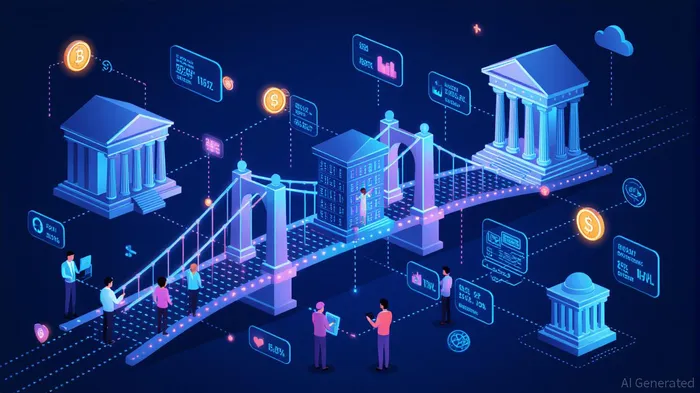
Ondo's RWA Strategy: Bridging Traditional and Decentralized Finance
Ondo Finance has positioned itself as a bridge between traditional finance and DeFi by tokenizing institutional-grade assets. Its flagship product, USDY-a tokenized U.S. Treasury security-has been integrated onto the Sui blockchain, enabling on-chain access to stable, yield-generating assets according to Ondo's announcement. This move aligns with Ondo's broader vision of democratizing access to RWAs, a strategy that has attracted over $1.8 billion in TVL by late 2025.
The ONDO tokenONDO--, which governs the Ondo DAO, plays a pivotal role in this ecosystem. Holders can vote on protocol upgrades, fee distribution, and access to premium financial products, such as OUSG (tokenized Treasuries for institutional investors) and USDY (a permissionless yield-bearing option) according to the blog post. By allocating 52% of its total supply to ecosystem growth, Ondo has signaled a commitment to community-driven development, a trait that resonates with DeFi's ethos of decentralization.
Governance Token Utility: Beyond Speculation
The utility of the ONDO token extends beyond speculative trading. It is integral to fee-sharing mechanisms and staking incentives, which are critical for sustaining network security and liquidity according to Phemex. For instance, Ondo's partnerships with custody providers like Komainu and Copper enhance the token's utility by enabling institutional-grade security for tokenized assets. Additionally, the platform's expansion into tokenized equities and structured products suggests a roadmap where ONDO's role in facilitating access to complex financial instruments becomes increasingly valuable according to Ondo's blog.
Sui's Delegated Proof-of-Stake (DPoS) mechanism further amplifies the token's utility. With 75.4% of the eligible SUI supply staked as of Q3 2025, the network's security and decentralization are bolstered, creating a robust foundation for DeFi applications according to Sui's blog. This infrastructure not only supports projects like Ondo but also attracts institutional players seeking scalable, secure platforms for asset tokenization.
Institutional Adoption and Regulatory Alignment
Ondo's strategic alignment with regulatory frameworks is another key differentiator. The platform's comment letter to the SEC on tokenized securities underscores its commitment to navigating regulatory complexities while advocating for innovation. This approach is critical in a market where compliance can be a barrier to entry for traditional institutions. By positioning itself as a compliance-first player, Ondo is not only mitigating risks but also enhancing its appeal to a broader investor base.
Institutional adoption is further evidenced by the Grayscale Sui Trust's listing on OTCQX and the proliferation of ETF filings from firms like 21Shares. These developments indicate a growing acceptance of blockchain assets in traditional financial markets, a trend that could drive long-term demand for both SUI and ONDO tokens.
Investment Outlook: Balancing Risks and Opportunities
While the October 2025 flash crash serves as a cautionary tale, the underlying fundamentals of Sui's ecosystem and Ondo's RWA strategy suggest a resilient long-term outlook. Price predictions for ONDO range from $0.4 to $0.8 in 2025, with bullish projections of $25 to $41 by 2030, contingent on regulatory clarity and institutional adoption. For SUI, the fixed supply of 10 billion tokens and gradual vesting schedules create a predictable supply dynamic, though ongoing unlocks may exert downward pressure on price.
Investors must also consider the broader macroeconomic context. The integration of tokenized assets into DeFi infrastructure could mitigate some of the volatility inherent in crypto markets by anchoring value to real-world collateral. However, the success of this model depends on sustained demand for RWAs and the ability of platforms like Ondo to maintain compliance with evolving regulations.
Conclusion
The convergence of Sui's scalable infrastructure and Ondo's RWA-driven governance model represents a significant evolution in DeFi. While challenges such as market volatility and regulatory uncertainty persist, the strategic integration of institutional-grade assets and community-driven governance offers a compelling value proposition. For investors with a mid-term horizon, the combination of technical innovation, institutional adoption, and token utility positions both SUI and ONDO as key players in the next phase of decentralized finance.

Stay ahead of the market.
Get curated U.S. market news, insights and key dates delivered to your inbox.






Comments
No comments yet