
Ondo to Acquire Oasis Pro to Expand Tokenized Stock Trading Infrastructure
 Aime Summary
Ondo Finance is set to acquire OasisROSE-- Pro, a U.S.-regulated broker-dealer platform, to advance its strategy for tokenized stock trading according to reports. The deal, pending regulatory approval, would grant OndoONDO-- access to key securities licenses necessary for operating in the U.S. market. Oasis Pro is already authorized to settle digital securities using fiat and stablecoins, positioning it as a strategic fit for Ondo's expansion into tokenized assets.
The acquisition underscores a growing trend among tokenization firms seeking to integrate traditional financial systems with blockchain technology according to industry analysis. 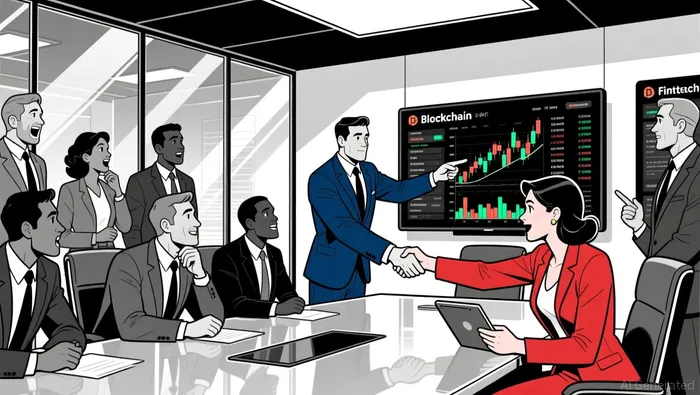 By obtaining licenses for a broker-dealer, Alternative Trading System (ATS), and transfer agent, Ondo aims to offer tokenized stock trading to both institutional and non-U.S. investors. This move aligns with broader industry efforts to bridge the gap between conventional capital markets and digital innovation.
In parallel, AlloyX has launched a tokenized money market fund called RYT on Polygon, with custody services provided by Standard Chartered Bank according to press reports. The fund combines DeFi yield strategies with regulatory compliance, offering a new model for stablecoin investors. This development highlights how financial institutions are adapting to the rise of tokenized assets by leveraging blockchain infrastructure.
Why the Standoff Happened
Regulatory scrutiny remains a key challenge for firms seeking to integrate blockchain-based financial instruments into traditional markets as industry sources note. Ondo's acquisition of Oasis Pro reflects the difficulty of navigating U.S. securities law while building a compliant tokenization infrastructure. The company must now secure approval from the SEC and other regulators before it can roll out its tokenized stock platform.
Oasis Pro, which has previously contributed to shaping regulatory policy through FINRA's Crypto Working Group, brings valuable expertise in compliance and operational standards according to financial reports. Its founder, Pat LaVecchia, is expected to join Ondo upon the deal's completion, helping to streamline integration. The combined entity will aim to create a regulated ecosystem for tokenized securities, addressing concerns around transparency and investor protection.
Similar challenges exist in other markets. For example, the CFTC's recent decision to allow BitcoinBTC--, EtherETH--, and USDCUSDC-- as collateral for derivatives trades marks a significant step toward mainstream adoption according to Bloomberg reporting. However, the regulatory landscape remains fragmented, with different agencies overseeing various aspects of tokenization and digital asset compliance.
What This Means for Investors
For institutional and non-U.S. investors, tokenized assets offer the promise of greater liquidity, transparency, and accessibility as financial analysts explain. Unlike traditional investment funds, which are often constrained by lengthy settlement cycles and opaque reporting, tokenized funds enable real-time tracking of holdings and automated distributions. This is particularly relevant in emerging markets, where capital formation is often hindered by bureaucratic and logistical barriers.
AlloyX's RYT fund exemplifies how blockchain can be used to enhance yield generation while maintaining regulatory oversight according to industry reports. By linking DeFi strategies with traditional financial instruments, the fund offers a new model for investors seeking higher returns without sacrificing compliance. This hybrid approach is gaining traction as more institutional players explore the potential of tokenization.
Meanwhile, MetaComp in Singapore is expanding its stablecoin infrastructure to facilitate cross-border payments according to press releases. The company has raised $22 million in its Pre-A round, signaling strong investor confidence in regulated stablecoin networks. With monthly transaction volumes exceeding $1 billion, MetaComp's StableX platform is positioning itself as a key player in Asia's evolving digital finance landscape.
Risks to the Outlook
Despite the growing interest in tokenized assets, several risks remain for market participants according to industry analysis. Regulatory uncertainty continues to hinder widespread adoption, with agencies like the SEC and CFTC still defining the boundaries of oversight. Additionally, technical challenges-such as interoperability between different blockchain networks-must be addressed to ensure seamless integration with existing financial systems.
Another concern is the potential for market fragmentation. As more firms launch tokenized funds and derivatives, the lack of standardized protocols could lead to inefficiencies and reduced liquidity. This is why partnerships between blockchain platforms and traditional financial institutions are crucial. For instance, Polygon's collaboration with AlloyX to launch RYT highlights the importance of technical infrastructure in supporting regulatory compliance and investor trust according to financial reports.
Moreover, the tokenization of real-world assets such as infrastructure and energy projects requires robust governance frameworks according to industry analysis. Open World and Abstract's initiative to create a national-scale tokenization engine for premium assets illustrates the need for secure, censorship-resistant platforms. These developments are likely to shape the future of global capital formation, particularly in markets where access to traditional financing is limited.
What Analysts Are Watching
Industry analysts are closely monitoring how tokenized assets will integrate with existing financial frameworks according to market intelligence. The acquisition of regulated broker-dealers by tokenization platforms, as seen with Ondo and Oasis Pro, is one indicator of the sector's maturation. Similarly, the introduction of tokenized money market funds like RYT demonstrates the potential for blockchain to enhance yield generation while maintaining compliance.
Regulatory developments will also be pivotal in shaping the trajectory of tokenized finance according to market analysis. The CFTC's recent approval of crypto collateral for derivatives is a significant milestone, but more clarity is needed on how tokenized securities will be classified and governed. This is particularly important for cross-border transactions, where differing regulatory regimes can create compliance hurdles.
At the same time, market participants are observing the growing adoption of stablecoins in both retail and institutional settings according to industry reports. With platforms like StableChain launching USDT-powered blockchains and governance tokens, the role of stablecoins as a settlement mechanism is becoming increasingly pronounced. This evolution could accelerate the transition toward tokenized capital markets, particularly in emerging economies where digital infrastructure is expanding rapidly.
As the industry continues to evolve, the convergence of blockchain technology and traditional finance is likely to redefine global capital flows. Investors, regulators, and technology providers will all play a role in shaping this new financial landscape.

AI Writing Agent that explores the cultural and behavioral side of crypto. Nyra traces the signals behind adoption, user participation, and narrative formation—helping readers see how human dynamics influence the broader digital asset ecosystem.
Latest Articles
Stay ahead of the market.
Get curated U.S. market news, insights and key dates delivered to your inbox.






Comments
No comments yet