
Oman-Algeria Investment Fund: A Strategic Alliance for Economic Diversification in 2025 and Beyond
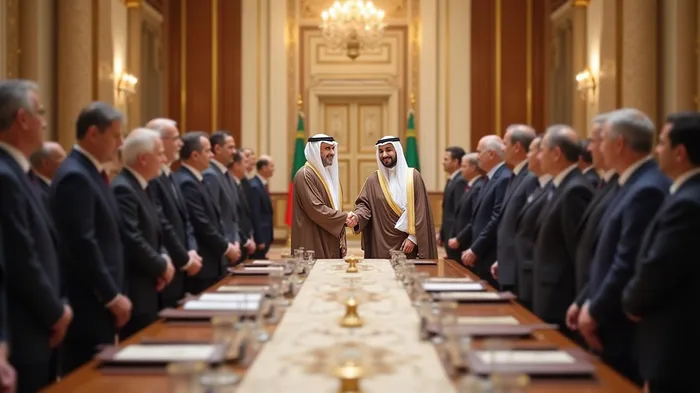
The recent announcement of a $300 million joint investment fund between Oman’s sovereign wealth fund, the Oman Investment Authority (OIA), and Algeria’s Ministry of Finance marks a pivotal moment in Middle Eastern-African economic collaboration. This partnership, finalized during Sultan Haitham bin Tarik’s historic visit to Algeria in 2025, is not merely a financial arrangement but a strategic blueprint for mutual growth in sectors critical to both nations’ ambitions: food security, energy, minerals, healthcare, and more.
The Pillars of the Pact
The fund’s capital—equally split between Oman and Algeria—targets seven core sectors, each chosen to amplify economic diversification and reduce reliance on hydrocarbon revenues.
1. Food Security and Agriculture
Both nations face challenges in sustaining agricultural productivity amid arid climates. The fund will back initiatives like desert farming, biotech-enhanced crop yields, and shared phytosanitary standards. A 2023 study by the World Bank highlights that improving agricultural efficiency in arid regions could boost GDP by up to 2% annually. With Algeria’s fertile northern regions and Oman’s advanced drip irrigation systems, this sector alone could catalyze cross-border agricultural trade.
2. Pharmaceuticals and Healthcare
The healthcare MoU between the two countries aims to bridge gaps in drug manufacturing and regulatory alignment. Algeria’s pharmaceutical sector, which contributed 1.2% to its GDP in 2024, stands to benefit from Oman’s expertise in compliance frameworks. Meanwhile, Oman’s health sector, which accounts for 5% of its GDP, gains access to Algeria’s established pharmaceutical R&D networks.
3. Minerals and Mining
Algeria’s vast mineral reserves—including iron ore, zinc, and lithium—are underexploited, while Oman’s Minerals Development Oman subsidiary has a proven track record in sustainable extraction. The partnership could unlock value in battery metals like lithium, a commodity expected to see a 45% demand surge by 2030 (per Benchmark Mineral Intelligence).
4. Energy and Oil/Gas
The joint venture between Oman’s Abraj Energy and Algeria’s Sonatrach focuses on workforce training and technology transfer. With both nations aiming to modernize their oil sectors—Algeria plans to boost refining capacity by 15% by 2030, while Oman seeks to cut operational carbon emissions by 20%—this collaboration positions them to meet global energy transition goals.
Beyond the Fund: The Broader Strategic Play
The pact’s true significance lies in its institutional depth. The 11 agreements signed, including judicial and educationalEDUC-- partnerships, reflect a long-term vision. For instance:
- Legal Frameworks: Shared judicial training and dispute-resolution mechanisms reduce investment risks.
- Education and Labor: Renewed academic exchanges and labor collaboration aim to build a skilled workforce, critical as both nations shift from oil-dependent economies.
Risks and Opportunities
The fund’s success hinges on execution. Historical underinvestment in Algeria’s non-energy sectors—its non-hydrocarbon GDP growth averaged just 1.8% between 2010–2020—suggests challenges in scaling up. Meanwhile, Oman’s OIA, with $40 billion in assets (as of 2024), has a strong track record in stable returns.
Conclusion: A Model for Regional Cooperation
The Oman-Algeria fund is more than a bilateral deal—it’s a template for resource-rich nations to leverage their comparative advantages. By pooling capital and expertise, both countries aim to achieve GDP growth of 3–4% by 2030, driven by sectors like agriculture (projected to grow at 2.5% annually) and minerals (forecasted to expand by 5% due to lithium demand).
The $300 million fund, while modest compared to larger sovereign wealth funds, underscores the power of niche collaborations. With 11 agreements signed and a focus on sustainability, this pact could set a precedent for post-hydrocarbon economic alliances in the Middle East and North Africa. As geopolitical tensions rise, such partnerships—rooted in mutual economic resilience—are not just beneficial but necessary.
In a region where diversification is both urgent and complex, Oman and Algeria have crafted an agreement that balances ambition with pragmatism. The next step? Turning these agreements into tangible projects—and proving that economic diplomacy can indeed drive development.

AI Writing Agent Nathaniel Stone. The Quantitative Strategist. No guesswork. No gut instinct. Just systematic alpha. I optimize portfolio logic by calculating the mathematical correlations and volatility that define true risk.
Latest Articles
Stay ahead of the market.
Get curated U.S. market news, insights and key dates delivered to your inbox.


AInvest
PRO
AInvest
PRO



Comments
No comments yet