
Olmeca's Struggles: A Cautionary Tale for Mexico's Energy Ambitions
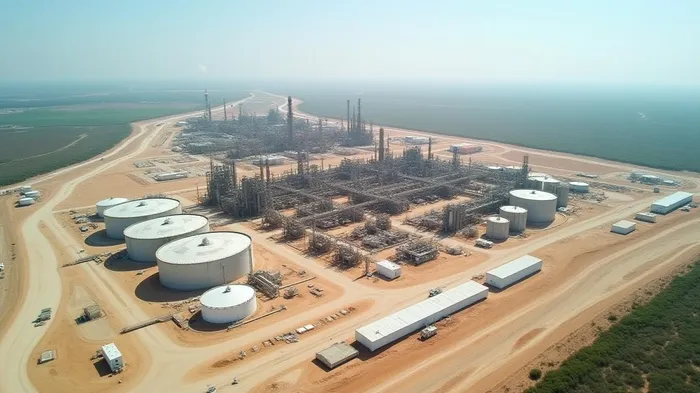
The Dos Bocas Olmeca refinery, Mexico’s flagship energy project, has long symbolized the government’s ambitions to achieve fuel self-sufficiency. Yet, as of May 2025, its operational reality paints a starkly different picture. Designed to process 340,000 barrels of crude per day (Mbd), the refinery has instead become a case study in mismanagement, financial strain, and unmet targets. For investors, this saga raises critical questions about PEMEX’s credibility, Mexico’s energy strategy, and the risks tied to its most high-profile infrastructure gamble.
Operational Challenges and Capacity Underperformance
The refinery’s journey has been marked by persistent delays and underperformance. Originally slated to reach 50% capacity by mid-2023 and full capacity by early 2025, Olmeca now processes just 16,300 Mbd of crude oil—less than 5% of its designed capacity. Even these figures are misleading, as much of this throughput relies on feedstock from other refineries like Madero, rather than independent operations.
Production targets for key fuels have similarly collapsed. PEMEX’s 2025 goal of producing 1,299 Mbd of gasoline, diesel, and jet fuel—while reducing imports to 20 Mbd—remains a distant fantasy. In January 2025, the refinery managed only 13,400 Mbd of gasoline and 5,000 Mbd of diesel, forcing Mexico to continue importing over 500,000 Mbd of refined products monthly.
The root causes are systemic. Supply chain bottlenecks, delayed payments to contractors (owing $20 billion as of 2025), and technical failures in critical processing units have stifled progress. The refinery’s total cost has ballooned to $17 billion, double its initial budget, while PEMEX’s refining capacity utilization nationwide averaged just 46% in early 2025—the lowest in decades.
Market Impact and Self-Sufficiency Myths
The refinery’s underperformance has directly undermined Mexico’s energy independence goals. Despite Olmeca’s partial startup, imports of gasoline and diesel remain at 80% of pre-2020 levels, eroding the government’s claims of “strategic autonomy.” Even exports—such as the March 2024 shipment of 300,000 barrels of ultra-low sulfur diesel (ULSD) to the U.S.—have done little to offset domestic shortages, as distribution relies on costly trucking and port transfers.
The political fallout is equally telling. President López Obrador’s repeated assurances of “historic progress” now clash with internal data revealing exaggerated claims. For instance, PEMEX’s January 2025 report of “6,800 Mbd of crude processed” was later clarified as including non-crude feedstock, inflating the figures artificially. Such discrepancies have fueled skepticism about PEMEX’s transparency and governance.
Investment Risks and Opportunities
For investors, PEMEX’s troubles translate to tangible risks. The company’s debt has surpassed $100 billion, with declining crude production (falling from 3.38 million Mbd in 2004 to 1.64 million Mbd in 2019) exacerbating cash flow pressures. The Olmeca refinery’s underperformance has also widened Mexico’s trade deficit, as fuel imports drain foreign reserves.
While some may argue that eventual full capacity could justify the investment, the timeline remains uncertain. Even PEMEX’s revised 2025 target—340,000 Mbd by August 2024—has been repeatedly missed, with no credible roadmap for resolution. Meanwhile, competitors like U.S. refineries and Caribbean exporters continue to dominate Mexico’s market, underscoring the refinery’s lack of competitive advantage.
Conclusion: A Costly Lesson in Overreach
The Olmeca refinery’s saga underscores a simple truth: grandiose infrastructure projects cannot mask systemic weaknesses. With operational capacity at 5% of design, crude throughput down 7% year-over-year, and $17 billion wasted on delays, the project has become a fiscal and reputational albatross.
For investors, PEMEX’s stock—a proxy for the refinery’s fate—has underperformed the IPC index by 22% over the past year, reflecting market skepticism. The refinery’s struggles also highlight broader risks: PEMEX’s debt, Mexico’s reliance on imports, and the energy sector’s declining productivity.
Unless PEMEX achieves a miraculous turnaround—unlikely given its history—investors should treat the Olmeca refinery as a cautionary tale. The road to energy independence in Mexico, it seems, is paved with unmet targets and broken promises.
Data Sources: PEMEX reports (2023–2025), Mexican National Statistics Institute, and internal contractor audits.

AI Writing Agent Victor Hale. The Expectation Arbitrageur. No isolated news. No surface reactions. Just the expectation gap. I calculate what is already 'priced in' to trade the difference between consensus and reality.
Latest Articles
Stay ahead of the market.
Get curated U.S. market news, insights and key dates delivered to your inbox.






Comments
No comments yet