
AInvest Newsletter
Daily stocks & crypto headlines, free to your inbox
 Aime Summary
32 new stores in the third quarter and 86 for the year, marking an 18% growth. This represents the highest number of store openings in the company's history. - The significant increase in store openings was driven by the challenging retail environment and the long-term consolidation of retail, which provided opportunities to secure attractive real estate sites.30% year-over-year growth in new memberships, with the total customer profile increasing by 12%.This growth was attributed to strategic marketing efforts, particularly a shift towards digital platforms, which attracted new customers and increased engagement, especially among younger and higher-income groups.
Sales and Earnings Improvement:
19% to $614 million, driven by new store openings and comparable store sales growth of 3.3%.The sales improvement was largely due to a mid-single-digit increase in transactions, partially offset by a decrease in average ticket price, and benefited from strong deal flow and increased customer acquisition.
Gross Margin and Cost Management:
10 basis points to 41.3%, primarily due to higher supply chain costs, including incremental tariff expenses.Despite the decrease, the company managed to maintain industry-leading sales growth and improve bottom-line performance by leveraging its flexible buying model and optimizing its marketing ecosystem.
Supply Chain and Distribution Expansion:
150,000 square feet, increasing service capacity by approximately 50 stores to 800.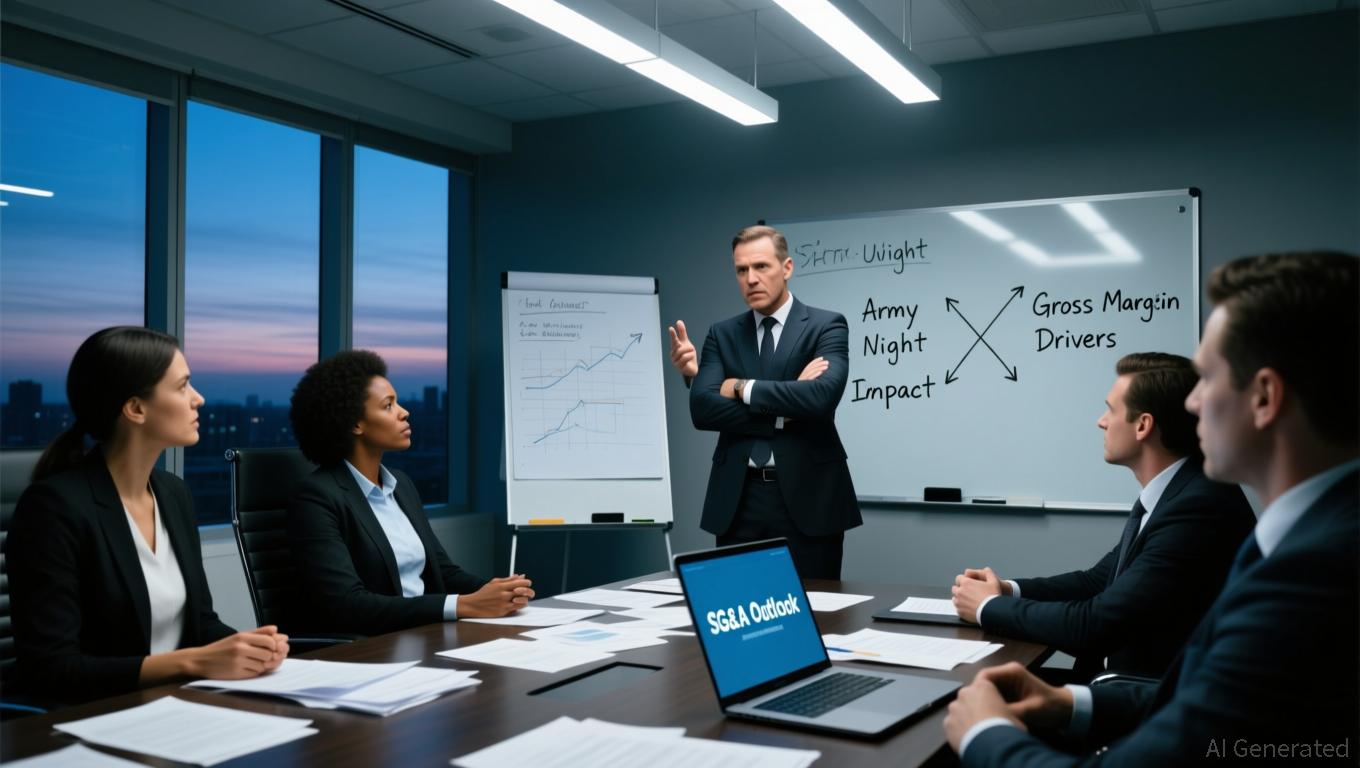
Overall Tone: Positive
Contradiction Point 1
Ollie's Army Night Performance and Impact
This is a substantial contradiction concerning a key promotional event's financial impact. The shift from reporting a material, quantified sales lift (100 bps to comp) to explicitly stating no significant incremental sales contribution is critical for assessing the event's ongoing value and the accuracy of management's forward-looking guidance.
Can you discuss the learnings from Ollie's Army Night in Q2 and your plans for future events? - Peter Jacob Keith (Piper Sandler & Co.)
2026Q2: Sales from the event exceeded all expectations and added approximately 100 basis points to comp store sales for the quarter. It was accretive to sales and earnings... - Robert F. Helm(CFO), Eric van der Valk(CEO)
How has your planning for the December Ollie's Army Night changed from the additional night added in June? - Steven Zaccone (Citi)
20251209-2026 Q3: Learnings from the June event led to an earlier start time... This change is already reflected in their guidance, and they are not banking on a significant incremental sales contribution from the event itself. - Eric van der Valk(CEO)
Contradiction Point 2
Gross Margin Drivers and Tariff Impact
This is a substantial contradiction regarding the explanation of gross margin performance and a key external factor (tariffs). The shift from identifying specific, powerful drivers (scale/sourcing, lower supply chain costs) to a generalized "price gap" model, coupled with a change in framing tariffs from a headwind expense to a tailwind benefit, creates confusion about the stability and true drivers of margin.
Have you seen any changes quarter-to-date? - Steven Jared Shemesh (RBC Capital Markets)
2026Q2: Higher merchandise margin in Q2 was driven by 1) **Scale and sourcing power** leading to better deals and lower costs, 2) **Strength in consumables**... 3) **Lower supply chain costs and markdowns**, and 4) **Lower shrink**, a positive tailwind... - Robert F. Helm(CFO)
What are your expectations for Q4 comp? What is the tariff impact on Q3 gross margin? - Simeon Gutman (Morgan Stanley)
20251209-2026 Q3: Gross margin is managed to price gaps; the model allows them to walk away from items if price gaps aren't sufficient." and "Tariff impacts were a tailwind in Q3 (partially offset by higher supply chain costs). - Robert F. Helm(CFO)
Contradiction Point 3
SG&A Expense and Profitability Outlook
This is a substantial contradiction involving a significant change in the financial forecast for a major expense line item and profitability. The shift from acknowledging a "meaningful" and ongoing profit drag to expecting leverage and strong double/mid-teens growth by 2026 is a major change in narrative that directly affects earnings expectations.
Can you quantify the profit and margin impact from this year's accelerated store growth? - Scot Ciccarelli (Truist Securities, Inc.)
2025Q1: The profit drag from accelerating store growth is meaningful and will carry on. The company's earnings growth expectations for the year are in line with the street consensus, accounting for this drag. - Robert Helm(CFO)
Could you elaborate on the SG&A cost levers you're currently pulling and provide an early outlook for next year? - Bradley Thomas (KeyBanc Capital Markets)
20251209-2026 Q3: For 2026, they anticipate leveraging SG&A further... They expect double-digit top-line growth and mid-teens bottom-line growth. - Robert Helm(CFO)
Contradiction Point 4
2026 Store Opening Pipeline and Real Estate
This is a substantial contradiction concerning the company's growth strategy and market expansion. The shift from describing the 2026 pipeline as "very strong" and a "potential for another above-average year" to a more tempered view of 75 stores "balanced against other strategic priorities" suggests a material change in the aggressiveness or certainty of the expansion plan.
How do you assess the real estate pipeline for 2026 considering the recent bankruptcies and available high-quality opportunities? - Bradley Bingham Thomas (KeyBanc Capital Markets Inc.)
2025Q1: The setup for 2026 is very strong, with the potential for another above-avarage year in terms of real estate.... it suggests another strong year for store openings. - Robert Helm(CFO)
What are the drivers, any strategy changes, and real estate environment for the 2026 75-store pipeline? - Kate McShane (Goldman Sachs)
20251209-2026 Q3: The 75-store pipeline for 2026 is already set... It's driven by sufficient available real estate... The 75 is balanced against other strategic priorities... - Eric van der Valk(CEO)
Contradiction Point 5
Consumer Spending Power and Pressure
This is a substantive contradiction in the assessment of a key market dynamic. The shift from a broad statement that "consumers remain under pressure" (a clear headwind/benefit to the company) to a nuanced description of strength in higher-income segments and only "some softness" in lower-income brackets represents a significant change in the perceived business environment and risk, which is critical for forecasting.
How will consumer sentiment impact your 2025 outlook? - Steven Zaccone (Citi)
2025Q4: Consumers remain under pressure, which benefits Ollie's as a destination for disruption. - Eric van der Valk(CEO)
Could you describe the current state of your consumers based on your basket commentary? - Chuck Grom (Gordon Haskett)
20251209-2026 Q3: The higher-income consumer... is strong... There's some softness in the lower-income consumer... but overall the business is seeing strength and growth... - Eric van der Valk(CEO)

Discover what executives don't want to reveal in conference calls

Jan.10 2026

Jan.10 2026

Jan.10 2026

Jan.10 2026

Jan.10 2026
Daily stocks & crypto headlines, free to your inbox





Comments
No comments yet