
The Ollie's Bargain Outlet Q2 Earnings Report and Retail Sector Implications: Leveraging Retail Resilience Amid Economic Uncertainty
 Aime Summary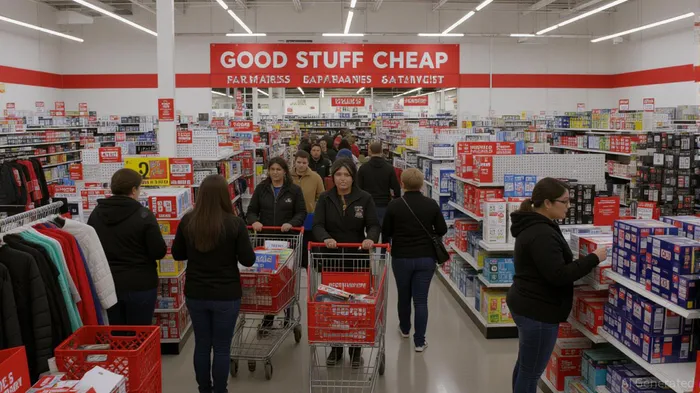
In a retail landscape still grappling with inflationary pressures and shifting consumer priorities, Ollie's Bargain OutletOLLI-- (NASDAQ: OLLI) has emerged as a standout performer. The company's Q2 2025 earnings report, released on August 28, 2025, underscores its ability to thrive in an environment where price sensitivity and demand for durable goods are reshaping spending habits. For investors, Ollie's results offer a blueprint for identifying undervalued retail assets poised to capitalize on macroeconomic tailwinds.
Ollie's Q2 2025: A Case Study in Retail Resilience
Ollie's reported $578 million in net sales for Q2 2025, a 12% year-over-year increase, driven by 5.8% same-store sales growth and the addition of new locations. This performance outpaces many of its peers, reflecting a strategic alignment with inflation-adjusted consumer behavior. The company's focus on categories like room air, sporting goods, and consumables—items with inelastic demand—has proven critical. These categories not only saw strong sales but also benefited from Ollie's ability to source brand-name products at deep discounts, a model that gains traction as consumers seek value without sacrificing quality.
Gross margin dipped slightly to 37.9%, a trade-off for a sales mix skewed toward lower-margin but high-volume items. However, disciplined SG&A expense management (down to 25.2% of net sales) and a 16% increase in operating income to $61 million highlight operational efficiency. The company's balance sheet remains robust, with $353 million in cash and no debt, providing flexibility to fund expansion and share repurchases.
Shifting Consumer Behavior: The Inflation-Adjusted Playbook
Ollie's success is rooted in its ability to adapt to a post-pandemic economy where consumers are prioritizing value over convenience. The 14.5 million members of its loyalty program, Ollie's Army, now account for 80% of total sales, demonstrating the power of customer retention in a competitive retail environment. This loyalty base is further strengthened by the recent launch of a co-branded VisaV-- credit card, which rewards spending with points and cashback, deepening engagement while providing valuable data on consumer spending patterns.
The company's expansion into 34 states and its acquisition of 99 Cents Only stores illustrate a strategic pivot toward high-growth markets like Texas and the Midwest. These moves capitalize on industry consolidation, as competitors struggle with rising costs and inventory management. Ollie's ability to acquire and integrate underperforming locations at a discount—while leveraging its existing distribution network—positions it to scale profitably even in a high-interest-rate environment.
Retail Sector Implications: The Case for Undervalued Assets
Ollie's Q2 results signal a broader trend: discount retailers are outperforming traditional retailers in an inflationary climate. As consumers trade down to lower-priced alternatives, companies with flexible sourcing models and strong cash flow generation are best positioned to capture market share. For investors, this suggests a focus on retailers that:
1. Prioritize durable goods (e.g., home essentials, sporting goods) with inelastic demand.
2. Leverage loyalty programs to lock in recurring revenue.
3. Maintain lean balance sheets to fund expansion without overleveraging.
Investment Strategy: Capitalizing on Retail Resilience
Ollie's raised its full-year 2024 guidance to $2.276–2.291 billion in sales, with adjusted EPS projected at $3.22–3.30. This optimism is justified by its 10% unit growth target and a capital allocation strategy that includes $104 million in capex for new stores and distribution centers. For investors, the key is to assess whether Ollie's can sustain its same-store sales momentum amid potential headwinds like competitor liquidation sales and supply chain disruptions.
A long-term position in OLLI makes sense for those seeking exposure to the discount retail sector, particularly as the company's store count approaches 1,300. However, short-term volatility could arise from macroeconomic shifts or execution risks in integrating the 99 Cents Only stores. Diversifying across other undervalued retail assets—such as Dollar General (DG) or Family Dollar (FDO)—could further hedge against sector-specific risks.
Conclusion: The Value Play in a High-Cost World
Ollie's Bargain Outlet exemplifies how retailers can thrive by aligning with macroeconomic realities. Its Q2 results highlight a model that balances aggressive expansion with operational discipline, making it a compelling case study for investors. As inflation-adjusted spending and durable goods demand remain structural trends, companies like Ollie's will continue to outperform. For those seeking to leverage retail resilience, the message is clear: undervalued assets with strong cash flow and customer loyalty are the new frontier.

Delivering real-time insights and analysis on emerging financial trends and market movements.
Latest Articles
Stay ahead of the market.
Get curated U.S. market news, insights and key dates delivered to your inbox.
AInvest
PRO
AInvest
PRO



Comments
No comments yet