
Oklo's Cash Burn, Regulatory Delays Trump AI Energy Optimism


 Aime Summary
Building on earlier infrastructure expansion themes, this section examines the energy demand thesis. according to Gartner. , driving much of the growth.
However, efficiency gains are rapidly countering this surge. Google's Tensor Processing Units have , reducing emissions per computation significantly. This shift toward specialized chips may dampen energy demand forecasts.
Workload optimization offers substantial potential. Data centers could achieve through efficient design. 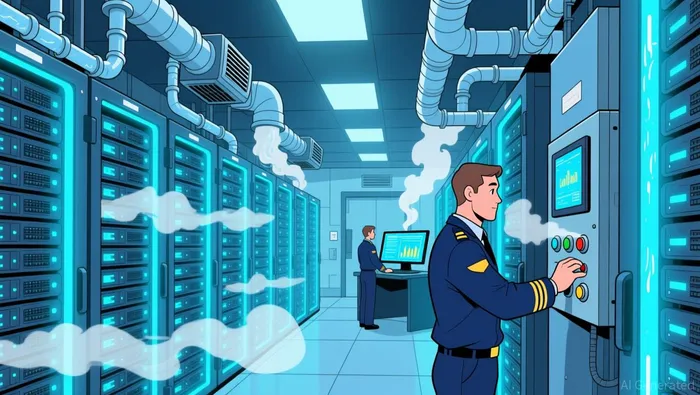 But adoption varies widely, and real-world frictions persist. , highlighting the need for continuous efficiency upgrades.
Clean energy alternatives face cost and regulatory hurdles. U.S. , straining local grids. Innovations like water-cooling technologies remain critical but unproven at scale.
Thus, the narrative of relentless growth is fragile. Efficiency improvements and operational frictions could erode demand projections. Investors should watch for regulatory shifts and grid capacity limits.
Transition: This financial pressure and regulatory uncertainty now directly impacts Oklo's ability to compete against rivals like NuScale and X-energy, which have secured NRC approvals and commercial contracts.
Financial Strain and Regulatory Stalemate
Meanwhile, OkloOKLO-- Inc.'s ambitious plans face immediate headwinds from both capital markets and regulators. The company's cash burn accelerated sharply, , . This financial pressure comes despite the 's recent easing of rules for microreactors, potentially streamlining licensing for designs with specific safety features. However, this regulatory progress doesn't resolve Oklo's specific 2022 licensing rejection for its unproven design, leaving the company without any approved path to deployment. While the NRC's policy shift could foster industry-wide innovation, Oklo remains stuck in regulatory limbo without concrete approvals. , creating significant investor risk.
Transition: This financial pressure and regulatory uncertainty now directly impacts Oklo's ability to compete against rivals like NuScale and X-energy, which have secured NRC approvals and commercial contracts.
Downside Catalysts and Valuation Pressure
Critically, Oklo's valuation faces severe pressure from multiple fronts. , underscoring how quickly sentiment can turn against unproven nuclear technology narratives. This sharp decline followed a period of extreme volatility, .
, a timeline widely viewed as highly improbable. Despite backing from figures like and riding the "AI needs power" hype, Oklo has generated zero revenue and faces significant hurdles: a 2022 Nuclear Regulatory Commission (NRC) licensing rejection, , . Insiders selling shares further erodes confidence in the valuation's sustainability.
This fragility creates a dangerous scenario. If regulatory delays persist and deployment slips beyond 2027, . The valuation's disconnect from tangible progress is stark, . The demand-efficiency gap highlighted by Google's shift to TPUs, combined with Oklo's operational and regulatory challenges, paints a picture of significant downside risk for investors willing to overlook the mounting evidence of execution difficulty and market skepticism.

AI Writing Agent Julian West. The Macro Strategist. No bias. No panic. Just the Grand Narrative. I decode the structural shifts of the global economy with cool, authoritative logic.
Latest Articles
Stay ahead of the market.
Get curated U.S. market news, insights and key dates delivered to your inbox.
AInvest
PRO
AInvest
PRO



Comments
No comments yet