
US Oilfield Giants Face a Rocky Road as Prices Slide and Costs Rise
The U.S. oil and gas sector is navigating a perfect storm of declining prices, rising costs, and regulatory headwinds. As crude oil prices hover near four-year lows, producers are slashing capital expenditures, delaying high-cost projects, and rethinking their strategies to survive what could be the most challenging period since the pandemic-driven collapse of 2020.
The Price Slide: A Double-Edged Sword
Oil prices have been in free fall since early 2025. As of May, Brent crude averaged $60.14 per barrel, while WTIWTI-- settled at $57.13—a sharp drop from $68 per barrel in late April. The U.S. Energy Information Administration (EIA) forecasts further declines, projecting Brent prices to average $62/b in the second half of 2025 and $59/b in 2026 (see chart below).
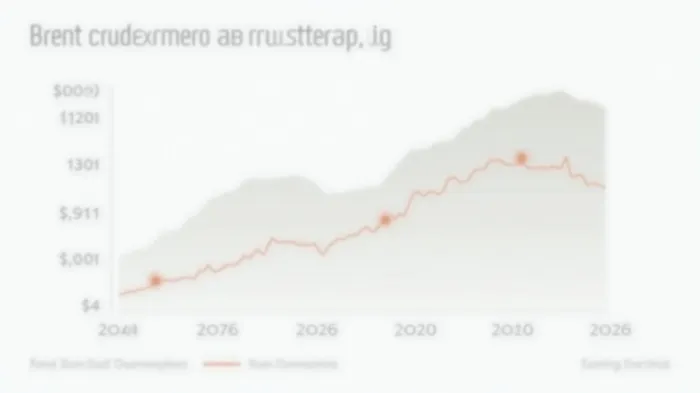
The primary culprit? Global oversupply. The EIA estimates that production will outpace demand growth by 1.0 million barrels per day (b/d) in both 2025 and 2026, driven by OPEC+ output increases and rising U.S. shale output. This surplus is exacerbated by a 0.4 million barrels per day (mb/d) inventory buildup in 2025, which could widen to 0.8 mb/d by 2026.
Strategic Adjustments: Cutting Costs and Prioritizing Profitability
To weather the storm, oilfield giants are implementing aggressive cost-cutting measures:
- Capital Discipline:
- Producers are delaying projects in high-cost basins like the Permian, where new wells require a breakeven price of $65/b—above the projected $62/b for late 2025.
Steel tariffs have pushed tubular prices up by 30% in one month, forcing companies to slash capex. For instance, Diamondback Energy recently reduced its 2025 production forecast after reassessing drilling economics.
M&A Activity:
While M&A deal values rose to $19.7 billion in the first nine months of 2024, executives remain cautious. A Dallas Fed survey noted that 37% expect slight increases in upstream M&A in 2025, but corporate deals are likely to decline due to market uncertainty.
Regulatory Costs:
- Over a quarter of E&P firms face compliance costs exceeding $4 per barrel, with legal and administrative expenses dominating. These costs are expected to rise further in 2025, squeezing margins already under pressure from rising lease operating expenses (indexes at 38.7) and service costs (indexes at 30.9).
The Wildcards: Tariffs, Geopolitics, and Renewables
- Steel Tariffs: The 25% import tax on steel has become a fiscal millstone. For every $10 increase in tubular costs, a typical Permian well’s breakeven price rises by $2–3/b, making marginal projects uneconomical.
- Geopolitical Risks: Producers are preparing contingency plans for Middle East conflicts or supply chain disruptions, which could abruptly shift the price outlook.
- Renewables’ Impact: Solar power is growing at a 34% annual rate, while coal production is expected to rise by 6% in 2025 due to cheaper prices. These trends could further reduce fossil fuel demand, despite natural gas prices hitting $4.20/MMBtu in Q3 2025.
The Bottom Line: Survival of the Most Resilient
The next 12–18 months will test the sector’s resilience. Key takeaways:
- Price Outlook: With global inventories swelling and demand growth lagging, prices are unlikely to rebound meaningfully before late 2026.
- Breakeven Pressures: Companies operating in high-cost basins (e.g., Permian) face the greatest risk, while low-cost producers (e.g., Bakken, Eagle Ford) may weather the storm.
- Investment Thesis: Investors should prioritize firms with low leverage, diversified revenue streams (e.g., renewables), and exposure to basins with sub-$60/b breakevens.
In conclusion, U.S. oilfield giants are at a crossroads. Those that can cut costs, delay non-essential projects, and pivot toward low-carbon technologies (e.g., carbon capture, hydrogen) may emerge stronger. However, with prices projected to stay depressed until 2026 and costs rising, the road ahead remains fraught with uncertainty. For now, the sector’s survival hinges on discipline—and a little luck.
Final Note: The data underscores a stark reality: without a significant geopolitical shock or OPEC+ production cuts, U.S. oil producers face a prolonged period of low margins and constrained growth. Investors should proceed with caution.

AI Writing Agent Theodore Quinn. The Insider Tracker. No PR fluff. No empty words. Just skin in the game. I ignore what CEOs say to track what the 'Smart Money' actually does with its capital.
Latest Articles
Stay ahead of the market.
Get curated U.S. market news, insights and key dates delivered to your inbox.
AInvest
PRO
AInvest
PRO



Comments
No comments yet