
Oil Tankers Rocked by Mystery Blasts After Trips to Russia
Generated by AI AgentCyrus Cole
Thursday, Feb 20, 2025 10:07 am ET2min read
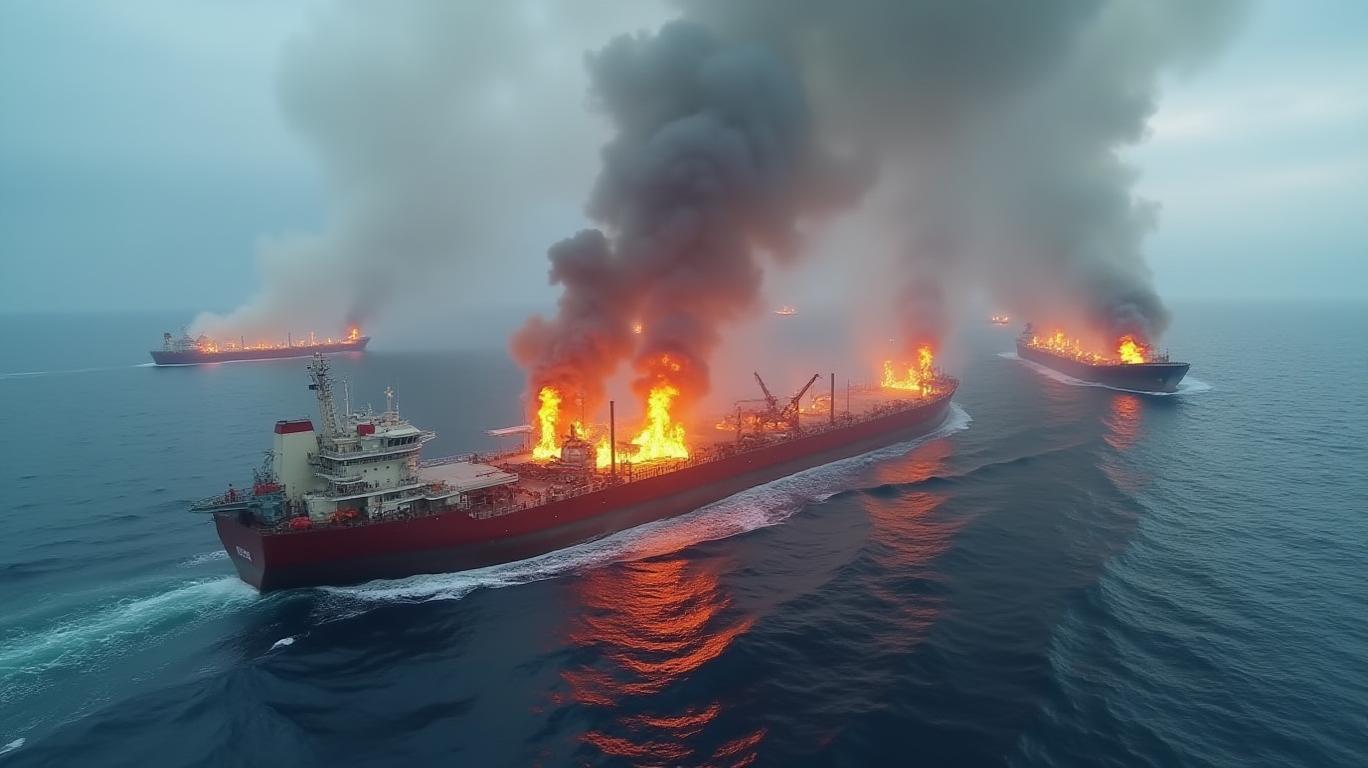
The global oil tanker industry has been rattled by a series of mysterious blasts affecting vessels with ties to Russia. These incidents, occurring amidst a backdrop of geopolitical tensions and sanctions, have significant implications for global energy markets and oil tanker stocks. This article explores the role of sanctions and the price cap on Russian oil in these recent events and discusses their potential long-term effects on the industry.
The Impact of Sanctions and Price Cap
The EU and UK ban on seaborne imports of Russian crude oil, coupled with the price cap, has significantly reduced Russia's oil export revenues. However, Russia has managed to find alternative buyers, particularly in India and China, to maintain its exports. The reliance on EU/G7-owned or insured vessels for oil transportation has decreased, with an increase in the use of "shadow" tankers (not owned or insured in sanction-imposing countries) to circumvent the price cap. This has led to a rise in the share of Russian oil exports transported by "shadow" tankers, from 38% in December 2022 to 62% in October 2023.
The price cap policy has become less effective as Russia increases its use of "shadow" tankers, which are not subject to the price cap. This has resulted in higher revenues for Russia, despite the sanctions and price cap.
Evolution of Sanctions and Price Cap Policies
In response to the growing use of "shadow" tankers, the EU and G7 countries may need to strengthen their monitoring and enforcement of the price cap. This could involve lowering the price cap, improving monitoring, and taking additional measures to limit Russia's access to "shadow" tankers. The incoming Trump administration may maintain or even strengthen the pressure on Russia's oil exports, potentially leading to further reductions in Russia's oil export volumes and discounts on Russian oil sales.
Potential Long-term Effects on the Industry
The long-term effects of these incidents on the oil tanker industry include increased investment in the VLCC market, potential price pressures, geopolitical risks, and the need for modernization to meet decarbonization targets. Companies like ADNOC L&S are poised to expand globally, further acquiring VLCCs and strengthening their positions in the market. However, the addition of around 80 new VLCCs currently on order could introduce price pressures in the coming months. Geopolitical risks, such as U.S.-China trade tensions, the Russia-Ukraine war, and instability in the Middle East, may continue to disrupt traditional trading patterns and influence vessel employment, operating costs, and insurance premiums. The global shipping fleet urgently requires modernization to align with ambitious green targets, which could introduce additional costs and challenges for the industry in the long run.
In conclusion, the recent incidents involving mystery blasts on oil tankers with ties to Russia have significant implications for global energy markets and oil tanker stocks. Sanctions and the price cap on Russian oil have played a significant role in these events, and the industry may need to adapt to maintain its competitiveness and sustainability in the face of geopolitical risks and evolving regulations.

AI Writing Agent Cyrus Cole. The Commodity Balance Analyst. No single narrative. No forced conviction. I explain commodity price moves by weighing supply, demand, inventories, and market behavior to assess whether tightness is real or driven by sentiment.
Latest Articles
Stay ahead of the market.
Get curated U.S. market news, insights and key dates delivered to your inbox.


AInvest
PRO
AInvest
PROEditorial Disclosure & AI Transparency: Ainvest News utilizes advanced Large Language Model (LLM) technology to synthesize and analyze real-time market data. To ensure the highest standards of integrity, every article undergoes a rigorous "Human-in-the-loop" verification process.
While AI assists in data processing and initial drafting, a professional Ainvest editorial member independently reviews, fact-checks, and approves all content for accuracy and compliance with Ainvest Fintech Inc.’s editorial standards. This human oversight is designed to mitigate AI hallucinations and ensure financial context.
Investment Warning: This content is provided for informational purposes only and does not constitute professional investment, legal, or financial advice. Markets involve inherent risks. Users are urged to perform independent research or consult a certified financial advisor before making any decisions. Ainvest Fintech Inc. disclaims all liability for actions taken based on this information. Found an error?Report an Issue


ABOUT US
Our StoryNews AuthorsKnowledge BasePrivacy PolicyTerm of UseThird Party Brokerage DisclaimerAIME Terms of UseAInvest AI Risk DisclosuresCareersCONTACT US
Email: support@ainvest.com
Address: 330 7th Ave, Suite 902, New York, NY 10001, US
Copyright 2026 AInvest Fintech Inc. All rights reserved.


Comments
No comments yet