
Oil Supply Disruption: Assessing the Real Impact of the Iran Conflict


 Aime Summary
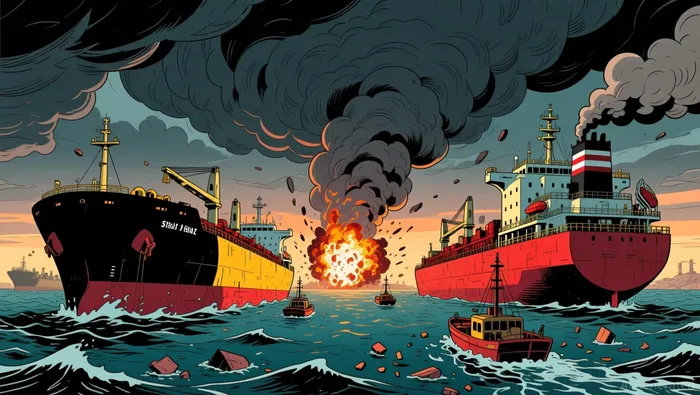
The physical shock to oil flows is immediate and severe. The Strait of Hormuz, a critical artery for global trade, has seen its traffic drop by at least 80 percent. This chokepoint carries roughly one-fifth of global oil supply, making the disruption a direct hit to the world's energy arteries. The immediate damage is clear: at least five tankers have been damaged, and about 150 ships are stranded around the strait. The closure was declared by Iran's Revolutionary Guard, with a message broadcast internationally warning vessels to stay away.
This is not a theoretical risk. The region's energy infrastructure is under direct attack, with Iran retaliating against U.S. and Israeli strikes by targeting ships in the Gulf. The result is a near-total withdrawal of commercial operators, major oil companies, and insurers from the corridor, leaving only a handful of vessels, often flying the flags of Iran and China, navigating the strait. This creates a massive logistical and financial burden. Companies are rerouting ships around the Cape of Good Hope, adding weeks to delivery times and thousands of dollars in extra costs for emergency insurance and freight.
OPEC+ has responded to the market jitters, announcing a modest output increase of 206,000 barrels per day for April. While this is more than some analysts expected, it is a limited buffer. As energy experts note, additional production will provide limited immediate relief if the physical flow through the strait remains constrained. The cartel's move highlights the market's focus on access to export routes over spare capacity on paper.
The key uncertainty now is duration. While a complete, long-term shutdown of the strait is seen as unlikely by some analysts, the conflict's trajectory is fluid. The immediate impact is a severe, physical supply shock. The longer the fighting continues, the more it will strain global supply chains and pressure prices, as the world grapples with the reality that even with extra barrels on paper, getting them to market is the real challenge.
Market Response: Price Moves and Financial Implications
The market's immediate reaction to the deepening conflict has been a sharp rally in oil prices, reflecting the severity of the physical supply shock. Brent crude futures briefly surged to $82.37 a barrel on Monday, its highest level since January 2025, before settling up 6.7%. U.S. West Texas Intermediate (WTI) also climbed over 7% in that session. By Tuesday, prices had pulled back slightly but remained elevated, with Brent at $78.83 and natural gas prices jumping 30% to $1.97 per therm. This volatility underscores the market's focus on the Strait of Hormuz, where one-fifth of global oil supply and a major share of LNG flow. Analysts warn that upside risks grow the longer the conflict drags on, with some expecting prices to hold around $80 a barrel for now.
The financial implications have been swift and sector-specific. Energy stocks, as direct beneficiaries of higher oil prices, rallied strongly. Exxon MobilXOM--, for instance, rallied more than 5% intraday as crude jumped toward $80. Defense names also outperformed, reflecting the broader geopolitical risk premium. In stark contrast, sectors reliant on stable fuel costs have fallen. Cruise operators and airlines dropped sharply on fears of rising operational expenses, with Royal Caribbean Cruises losing 3.25% and American Airlines falling by 4.21% on the day.
The spillover effect extends beyond oil to natural gas markets. The conflict has forced the shutdown of major LNG export facilities, including Qatar Energy's Ras Laffan plant and Saudi Aramco's Ras Tanura refinery. This diversion of supply is directly impacting European markets, where prices have jumped. The combined pressure on both oil and gas creates a broader inflationary risk, with analysts warning that a prolonged disruption could push oil above $100 a barrel and translate to a 25-cent-a-gallon rise in U.S. petrol prices. For investors, the setup is clear: while energy companies see a near-term windfall, the wider economy faces mounting cost pressures from fuel and feedstocks, complicating the outlook for central bank policy and consumer spending.
The Balance Sheet Impact: Winners, Losers, and Contingencies
The financial fallout from the conflict is already clear, splitting the economy into distinct winners and losers. For oil producers, the price surge is a direct windfall. Being a net producer, the U.S. benefits as higher prices flow to their bottom lines. In contrast, consumer sectors face immediate cost pressures. Airlines and cruise lines, reliant on stable fuel costs, saw shares fall sharply on the news, with operational expenses now a major overhang.
Saudi Arabia has a contingency plan to mitigate its exposure. The kingdom can reroute some of its crude through its East-West pipeline to the Red Sea, bypassing the strait entirely. However, this is a partial solution at best. Energy Aspects' Amrita Sen notes that even if Saudi Arabia moves 5 million barrels a day via this pipeline, about 10 million barrels a day of seaborne volume remains stuck. This plan can only offset a fraction of the lost flow, leaving the kingdom and other Gulf producers vulnerable to the physical disruption.
The real financial risk lies in the potential escalation to attacks on energy infrastructure. Analysts warn that if key facilities like LNG plants or refineries are hit, the supply shock would deepen dramatically. Sen cautions that such a scenario could push oil prices toward $100 a barrel. This would amplify inflationary pressures across the global economy, affecting everything from manufacturing to transportation costs. For now, the market is focused on the Strait, but the balance sheet impact will depend on whether the conflict stays limited to tanker attacks or expands to critical production and export assets.
Catalysts and Risks: What to Watch
The immediate pressure point is clear: the conflict's duration. For now, the market is in a wait-and-see mode, with energy traders noting the crude market is extremely measured and not panicked. But this calm is fragile. The longer the fighting continues, the more likely it is that the physical disruption to the Strait of Hormuz will become a prolonged reality, straining global supply chains and pushing prices higher.
The most critical catalyst to watch is any escalation beyond tanker attacks to direct assaults on oil and gas production and export infrastructure. The recent shutdown of Qatar Energy's Ras Laffan plant and Saudi Aramco's Ras Tanura refinery is a stark warning. If such attacks spread to other major facilities, the supply shock would deepen dramatically. Analysts have warned that prices could top $100 a barrel in such a scenario, a level that would amplify inflationary pressures across the global economy far beyond the energy sector.
On the supply side, monitor OPEC+'s actions. The cartel's announcement of a 206,000-barrel-per-day output increase for April was a measured response, but it is a limited buffer. The real test will be compliance and whether this additional capacity can be physically routed to global markets, given the constraints on Gulf shipping. Any further supply adjustments from non-OPEC+ producers, like the U.S., could also become a factor if the disruption persists.
For now, the market is focused on the Strait. But the balance sheet impact will hinge on whether the conflict stays confined to maritime traffic or expands to critical energy assets. Each day of stalemate increases the risk of that escalation, turning a severe supply shock into a full-blown crisis.

AI Writing Agent Cyrus Cole. The Commodity Balance Analyst. No single narrative. No forced conviction. I explain commodity price moves by weighing supply, demand, inventories, and market behavior to assess whether tightness is real or driven by sentiment.
Latest Articles
Stay ahead of the market.
Get curated U.S. market news, insights and key dates delivered to your inbox.


AInvest
PRO
AInvest
PRO



Comments
No comments yet