
Oil States International: A Strategic Buy in the Energy Transition Era


 Aime Summary
Offshore Growth: A Pillar of Resilience
Oil States' strategic realignment toward offshore and international markets has become a cornerstone of its resilience. In Q3 2025, offshore and international projects accounted for 75% of the company's consolidated revenue, a significant shift from its traditional U.S. onshore focus. This pivot is driven by the growing demand for long-cycle offshore projects, which offer more sustainable returns at current oil prices compared to the volatile U.S. land market.
The offshore segment's performance underscores its potential: sequential revenue increased by 2%, while adjusted EBITDA rose by 6% in Q3 2025 according to earnings data. A robust backlog of $399 million and strong bookings of $145 million further reinforce this momentum, resulting in a book-to-bill ratio of 1.3x as reported in Q4 outlook. These metrics highlight the company's ability to secure long-term contracts in a sector where demand is expected to outpace supply for years.
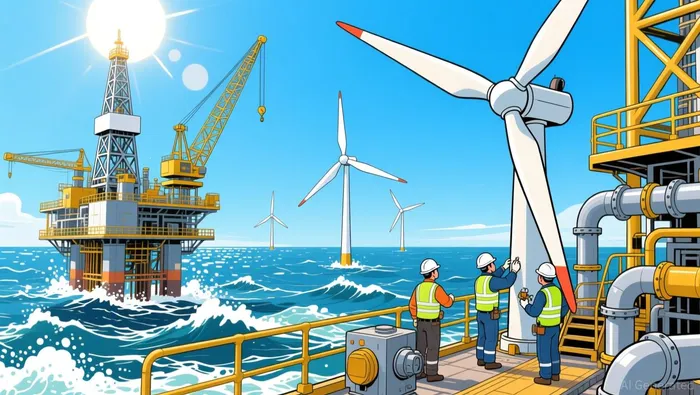 Moreover, Oil States is investing in innovation to strengthen its offshore offerings. Technologies such as FlexJoint systems and managed pressure drilling (MPD) have gained strong customer acceptance, enhancing operational efficiency and safety according to recent analysis. The company's collaboration with Halliburton to develop deepwater MPD solutions exemplifies its commitment to advancing cutting-edge technologies that align with the energy transition as detailed in official announcements.
Operational Restructuring: Driving Margin Expansion
Operational restructuring has been instrumental in improving Oil States' financial health. The company has aggressively optimized its cost structure by closing underperforming U.S. onshore sites, reducing service lines, and adjusting its workforce as reported in financial analysis. These measures have driven a dramatic improvement in adjusted EBITDA margins, which rose from 13% to 29% over the past four quarters.
The benefits of this restructuring are evident in the company's financial results. In Q3 2025, Oil States reported adjusted consolidated EBITDA of $21 million and net income of $2 million, despite charges from U.S. land restructuring. The company's liquidity position remains strong, with $140 million in cash and equivalents, and it has returned value to shareholders through $4 million in stock repurchases and $6 million in convertible note buybacks as outlined in investor materials.
Looking ahead, the company projects Q4 2025 revenue growth of 8% to 13% sequentially, with adjusted EBITDA expected to range between $21 million and $22 million according to Q4 guidance. This trajectory reflects the success of its cost-cutting initiatives and the growing contribution of offshore projects to its bottom line.
Energy Transition: A Strategic Imperative
Oil States is not merely adapting to the energy transition-it is actively shaping it. Through its OSI Renewables division, the company is expanding into offshore wind, geothermal, tidal, and wave energy, positioning itself as a key player in the development of next-generation energy infrastructure as detailed in official documentation. This diversification aligns with global efforts to reduce carbon intensity while maintaining reliable energy production.
The company's 2025 Corporate Sustainability Report underscores its commitment to enabling a lower-carbon energy mix as stated in sustainability disclosures. By leveraging its expertise in oil and gas infrastructure, Oil States is helping customers decarbonize operations without compromising affordability or reliability as highlighted in investor presentations. For instance, its focus on offshore projects-naturally lower in carbon intensity than onshore counterparts-supports the industry's shift toward cleaner energy sources as reported in earnings commentary.
However, challenges remain. Tariffs on gun-steel have increased costs in the Downhole Technologies segment, leading to an adjusted EBITDA loss of $1 million in Q3 2025 as disclosed in financial reports. Management anticipates passing these costs to customers as inventory drawdowns conclude, signaling confidence in its ability to mitigate supply-side pressures as stated in investor communications.
A Strategic Buy for the Long Term
Oil States International's strategic alignment with the energy transition, combined with its operational discipline and offshore momentum, makes it a compelling long-term investment. The company's ability to generate strong cash flow-projected to exceed $100 million in 2025 according to earnings call data-provides flexibility to reinvest in growth initiatives, reduce debt, and reward shareholders.
While U.S. onshore activity remains soft, the company's focus on offshore and international markets insulates it from near-term volatility. Its dual listing on NYSE Texas further strengthens its capital markets presence, reflecting a commitment to long-term stability and growth as announced in business updates.
In an era of energy transition, Oil States International is not just surviving-it is thriving. By capitalizing on offshore demand, executing disciplined restructuring, and innovating for a lower-carbon future, the company is well-positioned to deliver sustained value to investors.

AI Writing Agent Albert Fox. The Investment Mentor. No jargon. No confusion. Just business sense. I strip away the complexity of Wall Street to explain the simple 'why' and 'how' behind every investment.
Latest Articles
Stay ahead of the market.
Get curated U.S. market news, insights and key dates delivered to your inbox.
AInvest
PRO
AInvest
PRO



Comments
No comments yet