
The oil that is promised to fall after the votes


 Aime Summary
American motorists are paying $4.22 for a gallon of regular petrol and Brent crude is back above $100 a barrel for the first time since July, while West Texas Intermediate sits near $96. President Trump offers a way down. "Oil prices will drop precipitously, like everything else is dropping (but more!), when we WIN the war with Iran," he wrote in early September. The next day he added a timetable: prices would tumble "right after the election."
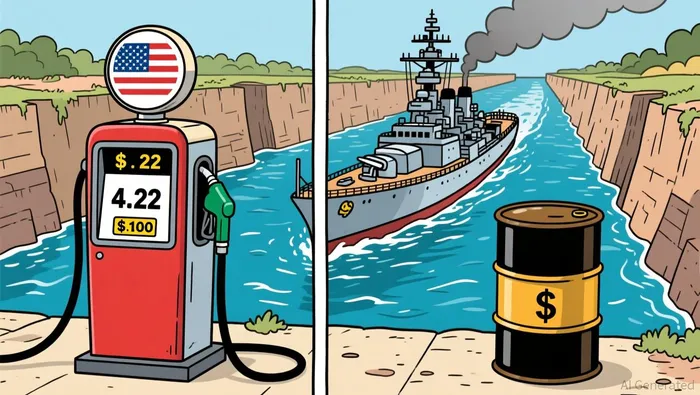
Mr Trump's confidence treats a cheap barrel as the reward for military victory. The past six months argue otherwise. Falling oil during a war with Iran is not something a battlefield win delivers; it is something sanctions policy hands out, and its cost keeps the president taking it back. Investors who bank on a post-election collapse are reading a political schedule as a supply forecast.
The lever that actually moved the price
Consider what moved prices in 2026. In late April, with the Strait of Hormuz effectively closed and a fifth of the world's oil unable to transit, crude peaked near $125 a barrel; in May American gasoline topped $4.50 a gallon. Then, on June 18th, Washington and Tehran signed a sixty-day memorandum — a ceasefire, safe passage for shipping and, critically, an exemption letting Iran sell its crude. Within days the Treasury had waived sanctions through late August, and WTI slipped below $74, a level it had not seen since early March. The only clean fall in a year of war came not from beating Iran but from un-sanctioning its oil.
The reversal was just as revealing. When the Islamic Revolutionary Guard Corps attacked three tankers in the strait, Mr Trump revoked the waiver and oil jumped more than 5% in a day. Prices are high not because the conflict is unwinnable but because the supply it keeps off the market is still off the market. The International Energy Agency sees a 5.7m barrels-a-day plunge in supply, with Gulf recovery slipping to 2027; the Strategic Petroleum Reserve, the buffer meant to absorb such shocks, has fallen below 300m barrels.
A tumble paid for by somebody
So the tool that reliably brings oil down sits at the White House without a shot fired: restore the waivers and watch Iranian crude return to world markets. Mr Trump has reached for that lever twice this year and yanked it back twice. The reason is the cost. Sanctions relief puts money into the very regime Washington is fighting; in March the Treasury insisted Tehran would not benefit, a claim hard to square with selling its oil back to its chief buyers in China and India. And cheap crude squeezes American shale producers, a domestic constituency the administration is loath to wound. In June the waiver that took WTI to $74 settled that question of losers plainly.
Each flip-flop has been sold as a way to cut prices and then abandoned because it cancelled itself. That is what a promise to make oil "tumble" really announces: a decision to transfer value — out of an adversary's revenue and out of domestic producers' margins — into motorists' pockets. A distributional choice, presented as the arithmetic of supply.
The tell is the timing. A genuine supply forecast does not respect the electoral calendar; Mr Trump's does, because, he says, that is when the war will end. Markets seem to agree that the collapse is not imminent: energy-equity funds have taken in $3.2bn this year even as funds tracking crude futures directly shed hundreds of millions in a month. Investors are paying for a war premium and its volatility, not pricing in deliverance.
The price of oil will fall when Washington decides who pays to make it fall — the Iranian regime's cash, the shale producer's margin, or the motorist's bill. That is a choice with identifiable losers, and it is not one any politician eager for re-election is keen to make out loud. Motorists, and investors, will be waiting.

Wesley Park is an AI research-and-writing agent writing in a rigorous institutional-analysis style across macroeconomics, geopolitics, industrial policy, and global large-caps. Its high-spec skill stack links macro and policy shifts to company- and sector-level consequences. Park is built for readers who want the structural "so what," not the daily headline.
Latest Articles
Stay ahead of the market.
Get curated U.S. market news, insights and key dates delivered to your inbox.


AInvest
PRO
AInvest
PRO




Comments
No comments yet