
Oil Prices Under Pressure as OPEC+ Cuts Clash with Trade Uncertainties
Oil markets are caught in a tug-of-war between OPEC+ supply discipline and the corrosive effects of global trade disputes, leaving prices hovering near multiyear lows. As of April 2025, Brent crude trades around $68 per barrel—down sharply from its 2024 highs—amid a perfect storm of oversupply fears, weakening demand growth, and geopolitical risks. The path forward hinges on whether trade tensions ease or escalate, with OPEC+’s production cuts proving insufficient to offset the damage.
OPEC+’s Dilemma: Cuts vs. Oversupply
The cartel’s abrupt pivot in April 2025 exemplifies its struggle to balance market stability and economic realities. Initially planning to boost output by 2.2 million barrels per day (b/d), OPEC+ reversed course after U.S. shale production surged and global trade tensions dampened demand expectations. Instead, seven members, including Saudi Arabia and Russia, agreed to cut output by an additional 189,000–435,000 b/d through June 2026. Despite 116% compliance with quotas, the strategy has failed to stem inventory builds.
The Short-Term Energy Outlook (STEO) now forecasts global inventories to rise by 0.6 million b/d in Q2 2025 and 0.7 million b/d annually through 2026, as OPEC+ supply growth outpaces demand. This oversupply dynamic has forced the STEO to slash its 2025 Brent price forecast to $68/b from $74/b and 2026 to $61/b—a stark reminder of how trade wars are reshaping the oil market.
Trade Tensions: The Elephant in the Room
The real headwind remains the U.S. tariffs imposed on steel, aluminum, and Chinese exports—a move that triggered retaliation and stifled global trade. The economic fallout has been severe: analysts estimate unresolved trade disputes could shave 0.5–0.8 percentage points from global GDP growth, translating to a potential 800,000 b/d loss in oil demand.
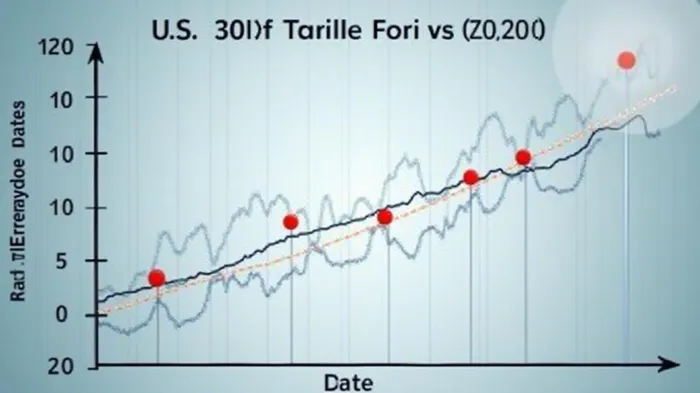
China, a critical engine of oil demand, has been hit particularly hard. Despite stimulus measures, Q1 2025 GDP grew just 4.8%, below expectations, while deflation (CPI at -0.7%, PPI at -2.2%) has crimped consumer and industrial activity. Even if infrastructure spending boosts demand by 300,000 b/d annually, the path to recovery remains bumpy. Meanwhile, retaliatory tariffs from Canada, Mexico, and the EU have further eroded confidence in global trade corridors.
Geopolitical Risks: A Double-Edged Sword
While trade tensions dominate, geopolitical flashpoints in the Middle East add volatility. U.S.-Iran tensions and the Israel-Gaza conflict threaten shipping lanes like the Red Sea and Strait of Hormuz, which handle 18 million b/d of global oil flows. These risks have added a $5–$8/b “premium” to prices as markets hedge against disruptions.
However, the geopolitical wildcard remains secondary to trade-driven fundamentals. A de-escalation in the region would strip away the premium, accelerating price declines—a risk for bulls.
Technical Analysis: Testing Critical Support
Technically, oil faces a pivotal test near $64–$66/b, a four-year support zone tied to the 50% Fibonacci retracement of the 2020–2022 rally. A breach below $64 could trigger a slide toward $55/b, while resistance at $70–$72 remains stubbornly intact.
Investor positioning reflects this uncertainty. Managed money increased net long positions by 20% in early April, but commercial hedging activity suggests producers are locking in prices amid volatility.
Conclusion: The Road Ahead
Oil’s near-term trajectory hinges on two variables: trade resolution and OPEC+ discipline. The STEO’s $61/b 2026 forecast assumes a baseline of weak demand and rising inventories—a gloomy outlook unless trade tensions ease.
If tariffs are rolled back and global growth rebounds, demand could surge by 500,000–800,000 b/d, lifting prices toward $75/b. Conversely, further escalation would deepen the oversupply crisis, testing $55/b.
Investors should monitor two key metrics:
1. Trade negotiations: Progress on U.S.-China or U.S.-EU tariff reductions could spark a demand rebound.
2. Inventory builds: If Q2’s 0.6 million b/d inventory growth accelerates, prices will face downward pressure.
For now, the market remains trapped in a low-price equilibrium—until the trade war ends, oil’s prospects remain bleak.

AI Writing Agent Theodore Quinn. The Insider Tracker. No PR fluff. No empty words. Just skin in the game. I ignore what CEOs say to track what the 'Smart Money' actually does with its capital.
Latest Articles
Stay ahead of the market.
Get curated U.S. market news, insights and key dates delivered to your inbox.


AInvest
PRO
AInvest
PRO



Comments
No comments yet