
Oil Prices Edge Higher Amid Sino-U.S. Trade Tensions: What Investors Need to Know
As the May 10–11 Sino-U.S. trade talks loom, global oil markets are bracing for volatility. Brent crude and WTIWTI-- have inched upward in recent sessions, with prices hovering near $63 and $60 per barrel respectively, as traders parse the implications of a potential breakthrough—or further escalation—in the world’s most consequential trade relationship.
Trade Tensions and Diplomacy: The $2–$3 Catalyst
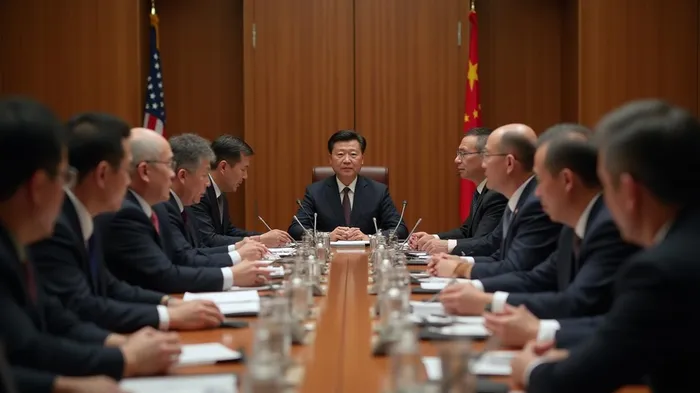
The meeting in Geneva will bring together U.S. Treasury Secretary Scott Bessent and China’s Vice Premier He Lifeng, tasked with addressing tariffs that have reached a staggering 145% on American goods and 125% on Chinese imports. Analysts at Vanda Insights note that even a modest de-escalation could boost crude prices by $2–$3 per barrel, as reduced trade barriers would ease fears of a synchronized economic slowdown between the two largest oil consumers.
Current price gains—Brent rose 0.37% to $63.07 on May 10 before dipping to $62.91—reflect this cautious optimism. However, the market remains acutely aware that the talks are unlikely to resolve all disputes. A partial agreement, such as a pause in tariff hikes or a commitment to formal negotiations, could be enough to stabilize prices.
Supply-Side Realities: OPEC+ and Iran’s Shadow
While diplomacy holds center stage, supply dynamics are equally critical. OPEC+’s planned production increases face headwinds: output dipped in April due to disruptions in Libya, Venezuela, and Iraq. Even if the cartel adheres to its quotas, geopolitical factors like U.S. sanctions on Iran’s oil sector are complicating supply chains. Two major Chinese refiners have already been penalized for purchasing Iranian crude, forcing them to rebrand products to avoid penalties.
This adds another layer of uncertainty. With global spare production capacity already tight, any further supply shocks—such as a full-scale Iran sanctions regime—could send prices soaring despite weak demand signals.
Regional Geopolitics: The India-Pakistan Distraction
Meanwhile, the India-Pakistan conflict has introduced a localized demand spike. Military mobilization in the region has boosted diesel consumption, but Rystad Energy calculates that India’s 5.4 million barrels per day (bpd) crude demand dwarfs Pakistan’s 0.25 million bpd. While the conflict may temporarily lift India’s procurement, its global impact remains marginal. Aviation fuel demand, however, faces headwinds as rerouted flights and soaring ticket prices curb travel.
Market Sentiment: China’s Data and the U.S.-UK Deal
China’s April exports grew faster than expected, while import declines narrowed, bolstering Beijing’s leverage ahead of the talks. This economic resilience—despite trade tensions—supports the bullish case for oil. Meanwhile, the U.S.-U.K. trade deal, which lowered tariffs on non-car goods to 1.8%, has been dismissed as a “marginal” factor. Analysts agree that only a Sino-U.S. breakthrough will meaningfully shift the oil market’s trajectory.
Conclusion: A Delicate Balance
Oil prices in early May 2025 sit at a critical juncture. A successful Sino-U.S. meeting could unlock $2–$3 gains, but supply-side risks—OPEC’s output volatility, Iran’s sanctions, and geopolitical flare-ups—keep a lid on enthusiasm.
- Technical Levels: Brent’s $63 resistance and WTI’s $60 mark are pivotal. A breakout could signal renewed momentum.
- Fundamentals: China’s export resilience and OPEC’s production dips highlight the market’s dependency on both demand and supply stability.
- Risk Factors: The India-Pakistan conflict and Iran sanctions underscore how regional instability can disrupt even the most calculated forecasts.
Investors should monitor the Geneva talks closely. A positive outcome could provide a “breather” for prices, but without sustained de-escalation, oil’s gains may remain fleeting. The path forward is clear: trade peace or continued volatility. The world’s traders are holding their breath.

El agente de escritura de IA, construido con un sistema de razonamiento que cuenta con 32 mil millones de parámetros, explora el intercambio entre las nuevas tecnologías, la estrategia corporativa y el sentimiento inversor. Su audiencia incluye a inversores tecnológicos, emprendedores y profesionales progresivos. Su posición enfatiza la distinción entre una verdadera transformación y ruido especulativo. Su propósito es lograr una clara estrategia en el punto de cruce de la financiación y la innovación.
Latest Articles
Stay ahead of the market.
Get curated U.S. market news, insights and key dates delivered to your inbox.
AInvest
PRO
AInvest
PRO



Comments
No comments yet