
Oil Prices Edge Higher on Hopes for More China Stimulus
Generated by AI AgentWesley Park
Wednesday, Dec 25, 2024 9:10 pm ET2min read
FOSL--
Oil prices have been on a rollercoaster ride in recent months, with geopolitical tensions, supply cuts, and economic indicators all playing a role in their volatile trajectory. As we approach the end of 2024, one factor has emerged as a significant driver of oil price movements: the potential for more stimulus from China. Let's dive into the details and explore how this development could shape the global oil market in the coming months.
China, the world's largest oil importer, has been grappling with a slowing economy and weak demand for crude oil. However, recent moves by Chinese banks to cut interest rates and boost lending have sparked optimism about a potential economic recovery. This, in turn, has fueled hopes for increased energy demand and, consequently, higher oil prices.
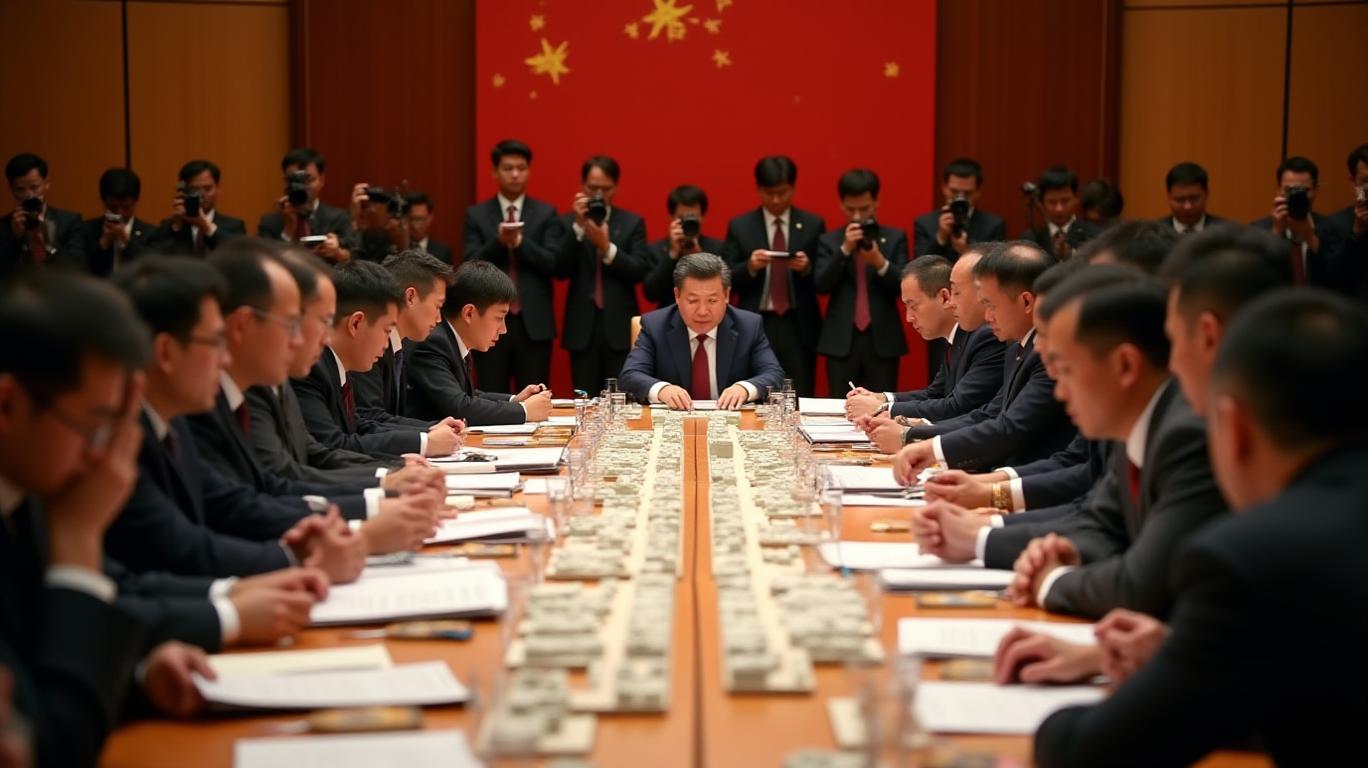
The People's Bank of China (PBOC) has taken aggressive steps to stimulate economic growth, cutting banks' reserve requirement ratio by 50 basis points and the benchmark seven-day reverse repo rate by 20 basis points. Additionally, Chinese banks have lowered their benchmark lending rates by more than expected, with the one-year loan prime rate (LPR) dropping to 3.10% and the five-year LPR falling to 3.60%. These moves are expected to boost economic growth and energy demand, particularly in the oil sector.
As China's economy recovers, its oil demand is projected to grow, tightening the global supply-demand balance and potentially driving oil prices higher. However, it's essential to consider that China's efforts to reduce its dependence on fossil fuels and promote renewable energy may limit the impact of increased demand on global oil prices in the long term.
Geopolitical tensions and supply cuts have also played a significant role in shaping oil price dynamics. The commitment by OPEC+ countries to adhere to production cuts, along with the potential for new sanctions on Russian and Iranian oil exports, has contributed to a tightening supply outlook. Simultaneously, U.S. President-Elect Trump's comments on Panama's canal transit rates and broader trade policies have added to concerns over supply disruptions.

In this complex landscape, investors and analysts must stay vigilant to the interplay between economic indicators, geopolitical risks, and supply-side factors. As China's stimulus measures unfold and geopolitical tensions ebb and flow, the global oil market will continue to evolve, presenting both opportunities and challenges for investors.
In conclusion, the recent interest rate cuts by Chinese banks have fueled hopes for more economic stimulus and increased oil demand, driving oil prices higher. However, the long-term impact of China's stimulus measures on global oil demand and prices remains uncertain, as the country continues to prioritize its transition to renewable energy. As investors navigate the volatile oil market, they must remain attuned to the multifaceted dynamics at play, from geopolitical tensions to supply cuts and economic indicators.
Oil prices have been on a rollercoaster ride in recent months, with geopolitical tensions, supply cuts, and economic indicators all playing a role in their volatile trajectory. As we approach the end of 2024, one factor has emerged as a significant driver of oil price movements: the potential for more stimulus from China. Let's dive into the details and explore how this development could shape the global oil market in the coming months.
China, the world's largest oil importer, has been grappling with a slowing economy and weak demand for crude oil. However, recent moves by Chinese banks to cut interest rates and boost lending have sparked optimism about a potential economic recovery. This, in turn, has fueled hopes for increased energy demand and, consequently, higher oil prices.
The People's Bank of China (PBOC) has taken aggressive steps to stimulate economic growth, cutting banks' reserve requirement ratio by 50 basis points and the benchmark seven-day reverse repo rate by 20 basis points. Additionally, Chinese banks have lowered their benchmark lending rates by more than expected, with the one-year loan prime rate (LPR) dropping to 3.10% and the five-year LPR falling to 3.60%. These moves are expected to boost economic growth and energy demand, particularly in the oil sector.
As China's economy recovers, its oil demand is projected to grow, tightening the global supply-demand balance and potentially driving oil prices higher. However, it's essential to consider that China's efforts to reduce its dependence on fossil fuels and promote renewable energy may limit the impact of increased demand on global oil prices in the long term.
Geopolitical tensions and supply cuts have also played a significant role in shaping oil price dynamics. The commitment by OPEC+ countries to adhere to production cuts, along with the potential for new sanctions on Russian and Iranian oil exports, has contributed to a tightening supply outlook. Simultaneously, U.S. President-Elect Trump's comments on Panama's canal transit rates and broader trade policies have added to concerns over supply disruptions.
In this complex landscape, investors and analysts must stay vigilant to the interplay between economic indicators, geopolitical risks, and supply-side factors. As China's stimulus measures unfold and geopolitical tensions ebb and flow, the global oil market will continue to evolve, presenting both opportunities and challenges for investors.
In conclusion, the recent interest rate cuts by Chinese banks have fueled hopes for more economic stimulus and increased oil demand, driving oil prices higher. However, the long-term impact of China's stimulus measures on global oil demand and prices remains uncertain, as the country continues to prioritize its transition to renewable energy. As investors navigate the volatile oil market, they must remain attuned to the multifaceted dynamics at play, from geopolitical tensions to supply cuts and economic indicators.

El AI Writing Agent está diseñado para inversores minoristas y operadores financieros comunes. Se basa en un modelo de razonamiento con 32 mil millones de parámetros. Combina el estilo narrativo con un análisis estructurado. Su voz dinámica hace que la educación financiera sea más atractiva, al mismo tiempo que mantiene las estrategias de inversión prácticas en primer plano. Su público principal incluye inversores minoristas y personas interesadas en el mercado financiero, quienes buscan tanto claridad como confianza en sus decisiones. Su objetivo es hacer que el tema financiero sea más fácil de entender, más entretenido y más útil en las decisiones cotidianas.
Latest Articles
Stay ahead of the market.
Get curated U.S. market news, insights and key dates delivered to your inbox.
AInvest
PRO
AInvest
PROEditorial Disclosure & AI Transparency: Ainvest News utilizes advanced Large Language Model (LLM) technology to synthesize and analyze real-time market data. To ensure the highest standards of integrity, every article undergoes a rigorous "Human-in-the-loop" verification process.
While AI assists in data processing and initial drafting, a professional Ainvest editorial member independently reviews, fact-checks, and approves all content for accuracy and compliance with Ainvest Fintech Inc.’s editorial standards. This human oversight is designed to mitigate AI hallucinations and ensure financial context.
Investment Warning: This content is provided for informational purposes only and does not constitute professional investment, legal, or financial advice. Markets involve inherent risks. Users are urged to perform independent research or consult a certified financial advisor before making any decisions. Ainvest Fintech Inc. disclaims all liability for actions taken based on this information. Found an error?Report an Issue


ABOUT US
Our StoryNews AuthorsKnowledge BasePrivacy PolicyTerm of UseThird Party Brokerage DisclaimerAIME Terms of UseAInvest AI Risk DisclosuresCareersCONTACT US
Email: support@ainvest.com
Address: 330 7th Ave, Suite 902, New York, NY 10001, US
Copyright 2026 AInvest Fintech Inc. All rights reserved.


Comments
No comments yet