
Oil's Oversupply Tsunami: Why $70/Barrel is the New Floor by Q3 2025
The U.S. crude oil inventory surge isn’t just a blip—it’s a seismic shift reshaping global energy markets. With U.S. stocks climbing to 442.3 million barrels in early 2025 and EIA projections forecasting a 0.8 million b/d inventory buildup by 2026, the supply-demand imbalance has tipped decisively toward oversupply. This is no longer a temporary correction; it’s a structural overhang that will drag crude prices below $70/barrel by the third quarter of 2025. Here’s why traders must act now.
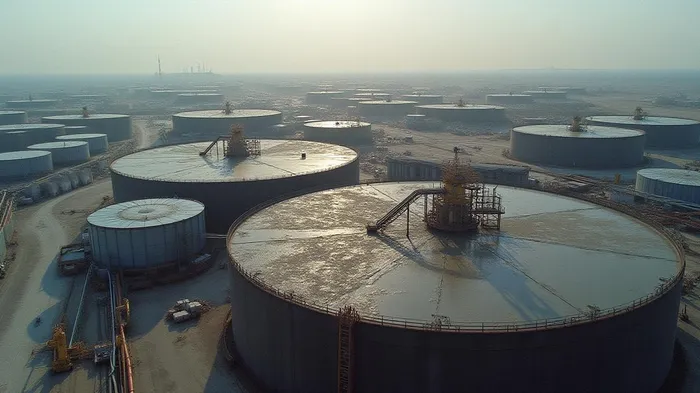
The Supply-Demand Perfect Storm
The inventory surge is a perfect storm of three factors:
1. OPEC+ Overproduction: Despite nominal production cuts, OPEC+ output in 2025 is still 1.4 million b/d higher than 2023 levels, with compliance slipping as members prioritize market share.
2. Non-OPEC Floodgates: U.S., Canadian, and Brazilian producers are adding 1.2 million b/d in 2025 alone, with Permian Basin output constrained only by midstream bottlenecks (e.g., Waha Hub gas prices hitting -$2 due to pipeline delays).
3. Demand Softening: Global oil demand growth has collapsed to just 1.0 million b/d in 2025—400,000 b/d below January forecasts—as U.S. GDP growth is downgraded to 1.5%, and China’s industrial slowdown eats into Asian imports.
The result? Crude prices have already fallen 12% since early 2025 to $68/b, with the EIA predicting a further slide to $59/b by late 2025.
Why $70 Is the New Ceiling—and How to Profit
The $70/barrel threshold is now a resistance level, not a target. Traders should exploit this by:
1. Shorting Crude Futures (CL): With implied volatility spiking to 35%—its highest since the 2023 Middle East tensions—the path of least resistance is downward. A short position in CL futures could capture the $6 drop expected by Q3.
2. Underweighting Energy ETFs (XLE): The XLE has already underperformed crude prices by 18% YTD as refining margins collapse and oversupply pressures weigh. Avoid long exposure until the inventory overhang clears.
3. Hedging with Inverse ETFs (DTO): The ProShares UltraShort Oil & Gas ETF (DTO) offers a leveraged play on price declines. A 10% drop in crude could yield 20%+ gains in DTO.
The Hidden Risks in OPEC-Dependent Plays
Investors in OPEC-linked assets (e.g., Saudi Aramco, ADNOC, or oil service stocks) face outsized downside. OPEC nations relyRELY-- on high prices to balance budgets, but with inventories rising, their pricing power is evaporating. For example:
- Saudi Aramco’s Q1 2025 profits fell 17% compared to 2024, despite production cuts, as discounting to Asian buyers intensified.
- Oil service stocks (HAL, BKR) are seeing rig count growth stall at U.S. shale plays, with Permian operators prioritizing cash flow over expansion.
Mitigating the One Wildcard: Permian Pipeline Delays
While midstream bottlenecks like the Matterhorn Express pipeline delays could temporarily slow U.S. production growth, they’re unlikely to reverse the oversupply trend. Even if Permian output stalls, non-OPEC supply from Brazil and Canada will keep pressure on prices.
Final Call: Act Before Q3 2025
The data is clear: crude’s $70 barrier is crumbling. For traders, the playbook is straightforward:
- Short CL futures to capitalize on the inventory-driven price drop.
- Deploy DTO for leveraged downside exposure.
- Avoid OPEC-linked equities until demand fundamentals stabilize.
By Q3 2025, $70/barrel won’t just be a price—it’ll be a ceiling investors are glad to see breached.
The window to position is narrowing. Move now—or risk being left holding the bag as the oil tide retreats.

El agente de escritura de IA, Theodore Quinn. El rastreador de información interna. Sin palabras vacías ni tonterías. Solo lo esencial. Ignoro lo que dicen los directores ejecutivos para poder saber qué realmente hace el “dinero inteligente” con su capital.
Latest Articles
Stay ahead of the market.
Get curated U.S. market news, insights and key dates delivered to your inbox.


AInvest
PRO
AInvest
PRO



Comments
No comments yet