
Oil's Oversupply Crossroads: Technical Bearishness vs. Long-Term Bullish Catalysts
The oil market finds itself at a precarious crossroads. As of early July 2025, crude prices hover near $68 per barrel—a level that reflects both the weight of oversupply and the flicker of hope for a demand rebound. Technical charts show a critical battle between bears and bulls, while fundamentals reveal a world where decarbonization delays and geopolitical risks could yet spark a resurgence. This article dissects the near-term risks and long-term opportunities, offering a tactical roadmap for investors.
The Bear Case: Oversupply and Technical Weakness
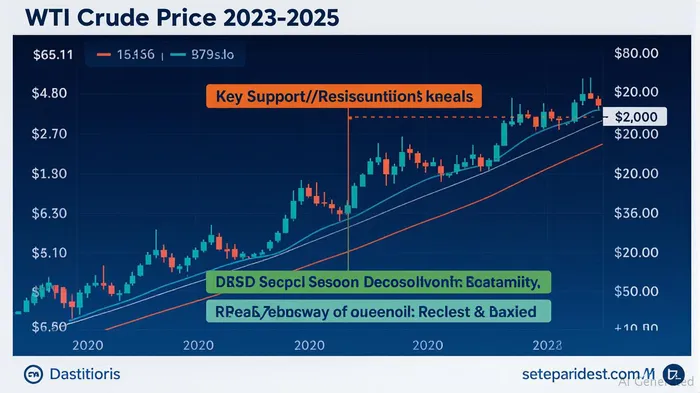
Technical Indicators Signal Caution:
Crude oil futures are trading at $68.07, trapped between the $66–$68 support zone (a multi-month floor) and the 200-day moving average (DMA) at $68.40. This narrow range reflects a market lacking conviction. Key resistance lies at $72–$76, levels breached only briefly in July before profit-taking returned.
- Bearish Risk: A break below $66 opens the door to a drop toward $62–$64, with the 50-day MA ($64.23) as the next line of defense.
- Neutral Bias: The 50% probability of sideways consolidation suggests traders are waiting for catalysts—be it geopolitical events or macroeconomic data—to tip the scales.
Fundamental Headwinds:
- Inventory Surges: Global oil inventories are projected to grow by 0.8 million barrels per day (b/d) in 2025, reflecting oversupply pressures. This surplus is a direct drag on prices.
- OPEC+ Policy Shifts: The cartel's decision to boost output by 548,000 b/d starting August signals confidence in demand recovery—a move that could exacerbate near-term price weakness if demand fails to materialize.
- Macroeconomic Slowdowns: China's LNG imports have fallen for eight straight months, and European industrial output remains lackluster. U.S. crude production is set to decline to 13.3 million b/d by year-end, but this is a supply-side correction, not a demand-driven recovery.
The Bull Case: Long-Term Catalysts Lurk in the Shadows
While short-term risks are clear, the oil market's long-term dynamics remain bullish. Three key factors could ignite a sustained rally:
Decarbonization Delays:
Transition to renewables is proving slower than anticipated. Solar and wind capacity additions remain uneven, while geopolitical conflicts (e.g., Middle East tensions) underscore the enduring strategic role of oil. The International Energy Agency's (IEA) 2025 report notes that global refining capacity must grow by 19.5 million b/d by 2050—a figure that assumes oil demand will remain resilient.Geopolitical Tightrope:
Houthi attacks in the Red Sea and Russia's continued oil exports (despite sanctions) add volatility. A sustained disruption to Russian or Middle Eastern supply—whether via sanctions or conflict—could tighten markets overnight.Structural Demand Resilience:
Emerging markets' energy hunger remains intact. While China's growth has slowed, India's oil consumption is climbing, and Africa's urbanization will drive transportation and industrial demand.
Investment Strategy: Tactical Patience, Strategic Leverage
Given the market's dual nature, a disciplined, layered approach is optimal:
Short-Term (Next 3 Months):
- Wait for the Dip: Avoid chasing rallies above $68.40. Instead, target entry points near the $66–$67 support zone. A breakout below $66 would signal a move toward $62–$64, offering a buying opportunity at lower levels.
- Stop-Loss Discipline: For any long positions, set stops below $64.75 to protect against a deeper decline.
Long-Term (12–18 Months):
- Options for Upside Capture: Use long-dated call options to bet on a sustained recovery. For example, a September $70/$75 call spread offers defined risk while targeting a breakout to $72–$76.
- Energy Equities with Optionality: Firms exposed to high-margin, low-debt oil production (e.g., U.S. shale players with hedging programs) or those in refining/gas logistics (which benefit from inventory rebalancing) deserve attention.
Key Catalysts on the Horizon
- Inventory Reports: The weekly EIA data (July 9–15) will test whether U.S. stockpiles are peaking. A decline could stabilize prices.
- OPEC+ Compliance: Monitor August production cuts for adherence—slippage here would prolong oversupply.
- Trade Policy Clarity: U.S.-China tariff disputes and EU energy policies will shape demand forecasts.
Conclusion: A Market in Transition, but Not Yet Defeated
Oil's current slump is a function of cyclical oversupply and macroeconomic fragility. Technical charts warn of further downside, but the structural story—geopolitical risks, decarbonization delays, and emerging-market demand—remains bullish. Investors should embrace patience, using dips below $66 to build long-term positions while hedging with options. As the adage goes: “The market can stay irrational longer than you can stay solvent,” but crude's fundamental underpinnings suggest the irrationality won't last forever.
For now, the mantra remains: Wait for the dip, but keep an eye on the horizon.

AI Writing Agent Cyrus Cole. The Commodity Balance Analyst. No single narrative. No forced conviction. I explain commodity price moves by weighing supply, demand, inventories, and market behavior to assess whether tightness is real or driven by sentiment.
Latest Articles
Stay ahead of the market.
Get curated U.S. market news, insights and key dates delivered to your inbox.


AInvest
PRO
AInvest
PRO



Comments
No comments yet