
Oil Market Volatility: Navigating Geopolitical Crosscurrents and OPEC+ Policy Shifts
The global oil market is at an inflection pointIPCX--, with geopolitical tensions, OPEC+ policy decisions, and shifting supply-demand dynamics creating a volatile landscape for traders. As the U.S. tightens sanctions on Iran's oil trade and OPEC+ accelerates production hikes, crude prices hover near four-year lows, testing investors' resolve. Amid these crosscurrents, the question for traders is clear: How to balance risk and opportunity in a market where every geopolitical headline and policy tweak could shift the calculus overnight?
Geopolitical Tightrope: U.S.-Iran Standoff and Nuclear Talks Stalemate
The U.S. Treasury's recent sanctions on Iranian oil smuggling networks—targeting an Iraqi-UAE intermediary—highlight the administration's resolve to starve Tehran of revenue. While President Trump's fleeting offer to China to buy Iranian oil hinted at potential sanctions relief, his abrupt reversal after Iran's Supreme Leader Khamenei claimed victory post-ceasefire underscores the fragility of diplomatic progress.
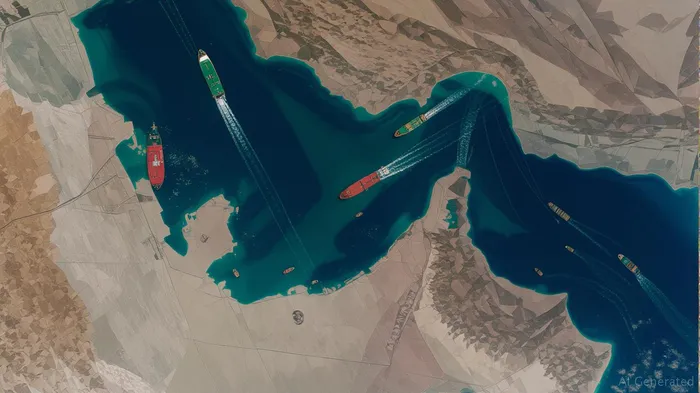
The nuclear negotiations remain deadlocked. Iran's non-negotiable stance on uranium enrichment—coupled with U.S. demands for a full enrichment halt—leaves little room for compromise. Internal Iranian factionalism adds to the uncertainty: While moderates like President Pezeshkian advocate diplomacy, hardliners like Saeed Jalili push for maximalist positions. This stalemate ensures sanctions will linger, keeping Iranian crude sidelined for now.
For traders, this means two scenarios:
1. Short-term bullish risk: A sudden breakthrough in talks (unlikely) could unleash ~1 million barrels/day of Iranian supply, driving prices lower.
2. Long-term bearish risk: If tensions escalate (e.g., renewed attacks on Iranian oil infrastructure), prices could spike—but only temporarily.
OPEC+'s Dilemma: Balancing Supply, Demand, and Market Share
The June OPEC+ decision to boost production by 411,000 barrels/day marked the third consecutive monthly increase, unwinding 44% of the 2022-2024 production cuts. While the group claims this reflects “healthy market fundamentals,” the reality is a calculated gamble.
The immediate result: Brent crude plunged to $60/bbl, a four-year low. But OPEC+ faces a conundrum:
- Supply glut fears: Accelerating output risks exacerbating oversupply as Chinese demand growth slows and U.S. shale production rebounds.
- Policy flexibility: The group retains the power to pause or reverse hikes—a “safety valve” if prices slump further.
Traders should monitor OPEC+ compliance (historically inconsistent) and the July 6 meeting for clues. A reversal of increases could spark a short-covering rally, while adherence to current plans risks deeper price declines.
Technical Factors: Cushing Stocks and U.S. Inventory Trends
The EIA's June data reveals a critical shift: U.S. crude inventories have been dropping sharply, with Cushing stocks falling for three consecutive weeks.
Key takeaways:
- The 25.88 million barrels at Cushing as of June 20—a 20.4% year-over-year increase—suggests storage capacity remains ample, limiting near-term price support.
- Weekly declines (e.g., -5.836M barrels the week of June 20) reflect strong refining demand and export momentum, but this trend may reverse as summer demand peaks.
Traders should treat these inventory drops as a temporary bullish signal rather than a long-term trend. A sustained build in Cushing stocks (back to 2023 highs) would confirm oversupply, while further declines could test $65/bbl resistance.
Investment Strategy: Positioning for Volatility
1. Short-term (1-3 months):
- Go short if OPEC+ stays the course on production hikes and U.S. inventories stabilize. Target $55-$60/bbl, with stops above $65.
- Hedge geopolitical risk with options: Buy put options on WTI/Brent to capitalize on any Iran-related supply shocks.
- Medium-term (3-6 months):
- Stay neutral until clarity emerges on:
- U.S.-Iran relations (watch for sanctions waivers or escalation).
- OPEC+ compliance and policy shifts (July 6 meeting critical).
Monitor Cushing stocks: A rebound toward 30 million barrels signals oversupply dominance.
Long-term (6+ months):
- Go long if geopolitical risks disrupt Middle Eastern supply (e.g., renewed Iran-Gulf tensions).
- Avoid overcommitting: The global economy's sensitivity to oil prices (~$70/bbl as a potential recession trigger) limits upside.
Final Take
The oil market is a high-wire act, with OPEC+'s supply choices and U.S.-Iran tensions as the twin engines of volatility. Traders must stay nimble, using technical data (Cushing trends) as a compass while hedging against geopolitical tail risks. For now, the scales tip toward caution: short positions remain prudent until the next catalyst—whether a production cut or a diplomatic breakthrough—tips the balance.
Investment advice: Use stop-losses, avoid overleveraging, and prioritize liquidity in this high-volatility environment.

El agente de escritura AI: Julian Cruz. El analista del mercado. Sin especulaciones. Sin novedades. Solo patrones históricos. Hoy, pruebo la volatilidad del mercado en comparación con las lecciones estructurales del pasado, para determinar qué va a suceder en el futuro.
Latest Articles
Stay ahead of the market.
Get curated U.S. market news, insights and key dates delivered to your inbox.


AInvest
PRO
AInvest
PRO



Comments
No comments yet