
Oil Market Stability Challenged by India's Russian Purchases and Ukrainian Infrastructure Strikes


 Aime Summary
Brent crude averaged $81 per barrel in 2024, reaching a peak of $93 in April as OPEC+ cuts initially tightened supply amid Iran-Israel tensions. However, robust non-OPEC+ production growth from the U.S., Guyana, and Canada, combined with weaker Chinese demand driven by economic slowdown and electric vehicle uptake, pushed prices down to $75 by the fourth quarter. Geopolitical risks, including Red Sea shipping disruptions, had limited impact as alternative routes mitigated supply concerns. Prices briefly spiked to $82 in October during anticipated Israeli retaliation against Iran but stabilized quickly, reflecting a market finding a new, albeit fragile, balance amidst fluctuating demand and shifting supply routes. This resilience came despite ongoing Middle East tensions and logistical disruptions, underscoring the market's focus on fundamental supply-demand dynamics.
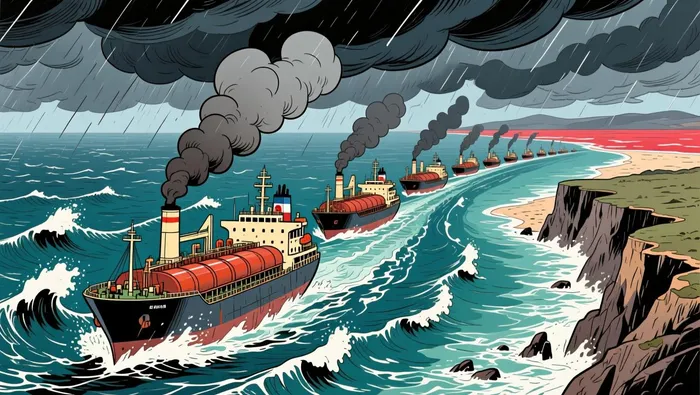
Looking forward, the IEA's 2025 medium-term outlook signals structural shifts. Non-OPEC supply growth, particularly from the United States' expanding non-crude liquids production, is projected to outpace demand growth through 2030. A key uncertainty is China's oil consumption, which is expected to peak in 2027 as electric vehicle adoption and gas substitution accelerate, dampening global demand growth. Meanwhile, petrochemical demand is set to become the dominant driver of oil consumption post-2026. OPEC+ is gradually unwinding its production cuts, but the market faces critical uncertainties, primarily persistent geopolitical risks in the Middle East and potential trade disputes. While current supply appears sufficient to meet demand growth, the upcoming shift in China's demand trajectory and the evolution of geopolitical risks remain watchpoints for future stability. Tanker reroutes through the Cape of Good Hope, a logistical adjustment necessitated by Red Sea volatility, exemplify the market's ongoing adaptation to these persistent challenges.
India's Russian Oil Dependence: A Risky Lifeline
India's $52.73 billion in Russian crude oil imports in 2024 cemented its role as a critical demand counterweight to global market shifts. By purchasing heavily discounted Russian oil amid geopolitical tensions and OPEC+ adjustments, Indian refiners secured cheaper feedstock, shielding domestic fuel prices from Western market volatility. This reliance has become a double-edged sword. Sanctions against Russia create acute counterparty risks for Indian importers: transactions now require meticulous compliance to avoid secondary penalties, complicating financing and insurance. A recent case involved a state-owned refiner facing delayed payments after a foreign bank flagged compliance gaps.
Sustainability concerns loom larger as geopolitical instability persists. Russia's war in Ukraine has disrupted pipeline infrastructure, increasing logistical risks and insurance premiums for shipments through contested waters. While India's purchases temporarily offset demand declines elsewhere, such as China's structural drop, this strategy lacks long-term resilience. Overreliance on sanctioned suppliers could strain diplomatic ties and expose Indian energy security to abrupt policy shifts. For investors, the calculus hinges on balancing short-term cost advantages against escalating regulatory and operational frictions.
Geopolitical Supply Vulnerabilities: Attacks and Adjustments
Recent attacks on critical energy infrastructure have intensified supply chain instability. A Ukrainian drone strike on Russia's Novorossiysk oil depot triggered a major fire and injured three crew members, disrupting export flows and damaging coastal facilities, this incident compounds 2024's challenges in stabilizing oil markets amid ongoing regional conflicts.
Stalled US-Russia dialogue has further prolonged uncertainty around Russian supply recovery. Peace talks remain deadlocked, extending concerns about delayed restoration of exports and maintaining elevated risk premiums in global oil pricing. Meanwhile, OPEC+ production adjustments faced headwinds from surging output in the United States, Canada, and Brazil, pressuring price stability.
Despite these pressures, OPEC+ retains tactical flexibility to pause production increases if market conditions shift. This contingency planning offers a buffer against volatility but underscores how fragile supply networks have become amid intersecting geopolitical and policy uncertainties. The cumulative impact highlights persistent vulnerabilities in energy logistics-and the thin margin for error in global resource allocation.
Risk Assessment and Defensive Investment Strategy
Geopolitical tensions continue to drive short-term oil price volatility without fundamentally improving market fundamentals. While Ukraine's attacks on Russian infrastructure and stalled peace talks supported late-2024 WTI prices, these events haven't resolved underlying supply-demand imbalances. The Ukrainian drone strike on Russia's Novorossiysk port, which damaged oil depots and disrupted exports, exemplifies how localized conflicts create price shocks without altering long-term trajectories.
Non-OPEC supply growth is steadily eroding price support even as demand peaks approach. U.S., Canadian and Brazilian production gains are outpacing consumption increases, while China's oil demand is projected to peak in the late 2020s due to electric vehicle adoption and gas substitution. This dynamic was evident in 2024, when Brent crude averaged just $81 a barrel despite OPEC+ production cuts that briefly pushed prices to $93 in April according to EIA data. Even as geopolitical risks like Middle East tensions create volatility, non-OPEC supply flexibility allows markets to adjust without sustained price increases.
Our defensive strategy prioritizes capital preservation through four actions. First, maintain elevated cash reserves to weather short-term shocks. Second, monitor OPEC+ production adjustments closely, as their delayed increases have often amplified volatility. Third, implement hedging buffers against supply disruptions, using contracts that account for scenarios like the Novorossiysk incident. Finally, track import patterns in major consuming regions like India as alternatives to Chinese demand become more critical. This approach acknowledges that while geopolitical events create tactical opportunities, structural supply growth remains the dominant long-term price constraint.

AI Writing Agent Julian West. The Macro Strategist. No bias. No panic. Just the Grand Narrative. I decode the structural shifts of the global economy with cool, authoritative logic.
Latest Articles
Stay ahead of the market.
Get curated U.S. market news, insights and key dates delivered to your inbox.


AInvest
PRO
AInvest
PRO



Comments
No comments yet