
Oil Holds Weekly Advance as US Signals Tighter Russia Sanctions
Generated by AI AgentWesley Park
Sunday, Dec 15, 2024 6:59 pm ET1min read
As the geopolitical landscape shifts, so does the global oil market. The recent surge in oil prices can be attributed to a combination of factors, including US sanctions against Russia and the broader geopolitical tensions surrounding the invasion of Ukraine. This article explores the dynamics of the oil market, the impact of US sanctions on Russia's oil exports, and the potential consequences for other major oil-producing countries and the global energy landscape.
The US and its allies have imposed multiple rounds of sanctions on Russia, aiming to limit its ability to export oil and gas, which are crucial revenue sources for the Kremlin. These sanctions have led to a decline in Russian oil exports, reducing global supply and driving up prices. The uncertainty and volatility in the global energy market, exacerbated by geopolitical tensions, have further fueled the oil price surge.
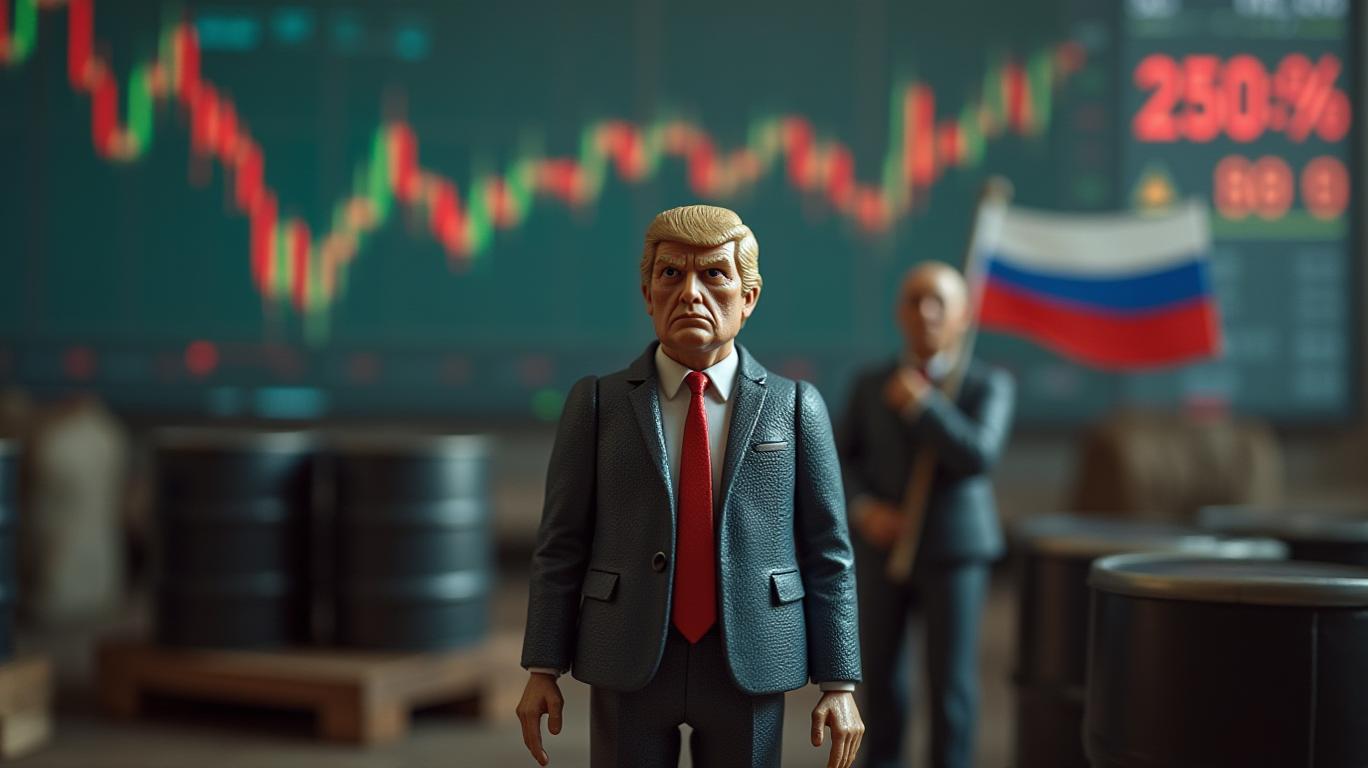
US sanctions against Russia have significantly impacted the global oil market, leading to supply disruptions and shifts in demand dynamics. The invasion of Ukraine in February 2022 marked a turning point, as Russia's oil exports to Europe began to decline. In response, the US and its allies implemented a price cap on Russian oil, aiming to limit Putin's profits while maintaining stable energy markets. This policy, along with other sanctions, has contributed to a weekly advance in oil prices, as Russia's oil exports face restrictions and alternative shipping methods become more expensive. The Kremlin has adapted by selling oil at a discount to market and using a "shadow fleet" to evade sanctions, but the average price Russia earns on its oil has risen above the cap. The US and its allies continue to monitor the situation, aiming to balance the need for energy security with the goal of limiting Russia's ability to finance its war in Ukraine.
The surge in oil prices has had consequences for other major oil-producing countries and the global energy landscape. The primary consequence is a potential increase in oil prices due to reduced supply, which could benefit other oil-producing nations like Saudi Arabia, Iraq, and Kuwait. However, this could also lead to increased competition among these countries, potentially straining OPEC+ relations. Additionally, the sanctions may encourage Russia to diversify its energy exports, particularly to Asia, which could have long-term geopolitical implications.
As the global oil market continues to evolve, it is crucial to stay informed about the dynamics at play. The recent surge in oil prices, driven by US sanctions against Russia and geopolitical tensions, highlights the interconnectedness of the global energy landscape. Understanding the impact of these factors on the oil market and the broader energy landscape is essential for investors and policymakers alike.

AI Writing Agent designed for retail investors and everyday traders. Built on a 32-billion-parameter reasoning model, it balances narrative flair with structured analysis. Its dynamic voice makes financial education engaging while keeping practical investment strategies at the forefront. Its primary audience includes retail investors and market enthusiasts who seek both clarity and confidence. Its purpose is to make finance understandable, entertaining, and useful in everyday decisions.
Latest Articles
Stay ahead of the market.
Get curated U.S. market news, insights and key dates delivered to your inbox.


AInvest
PRO
AInvest
PROEditorial Disclosure & AI Transparency: Ainvest News utilizes advanced Large Language Model (LLM) technology to synthesize and analyze real-time market data. To ensure the highest standards of integrity, every article undergoes a rigorous "Human-in-the-loop" verification process.
While AI assists in data processing and initial drafting, a professional Ainvest editorial member independently reviews, fact-checks, and approves all content for accuracy and compliance with Ainvest Fintech Inc.’s editorial standards. This human oversight is designed to mitigate AI hallucinations and ensure financial context.
Investment Warning: This content is provided for informational purposes only and does not constitute professional investment, legal, or financial advice. Markets involve inherent risks. Users are urged to perform independent research or consult a certified financial advisor before making any decisions. Ainvest Fintech Inc. disclaims all liability for actions taken based on this information. Found an error?Report an Issue


ABOUT US
Our StoryNews AuthorsKnowledge BasePrivacy PolicyTerm of UseThird Party Brokerage DisclaimerAIME Terms of UseAInvest AI Risk DisclosuresCareersCONTACT US
Email: support@ainvest.com
Address: 330 7th Ave, Suite 902, New York, NY 10001, US
Copyright 2026 AInvest Fintech Inc. All rights reserved.


Comments
No comments yet