
Oil Drops to $82 as Iran-Oman Talks Cool Hormuz Fear-But the Peace Premium Is Fragile


 Aime Summary
Oil's drop from $90 to $82 reflects fading fear, not demand
Oil falling from around $90 a barrel on Friday to roughly $82 by early Monday tells us far more about shifting fear than about demand. After nearly two weeks of U.S. airstrikes, the combat pause has let traders unwind the war premium quickly. The market was pricing blockade panic; now it is pricing a chance, however slim, that shipping could be restored.
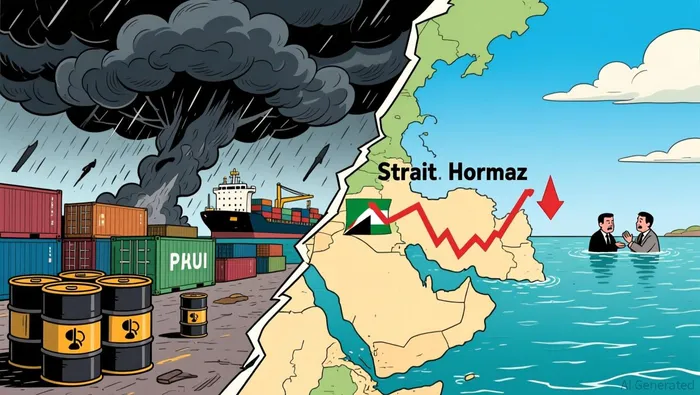
Hormuz risk, not demand, drove the move
The key physical backdrop is the Strait of Hormuz, which carried 20% of the world's oil production before the conflict disrupted traffic. When that chokepoint looked permanently threatened, crude absorbed the risk. Now Iran and Oman have been talking through the weekend and into Monday about safe passage, and crude has sold off in response. This is mainly a risk-sentiment reset.
Bulls and bears are reading the same lull differently
Bulls see a narrow opening: a limited Hormuz arrangement could ease market tension faster than any OPEC message. Bears see relief that is still premature, because the talks are narrowly focused and the broader conflict has not faded.
Even after fresh strikes were ordered, diplomacy still gained space. If talks stall, that relief can unwind quickly.
Iran-Oman talks target passage, not a broad peace deal
The selloff is really a verdict on fear. What matters now is whether oil is pricing the one lever that can restore supply: Hormuz.
The talks are narrow by design
Mediators are not negotiating peace. They are negotiating passage. The current Iran-Oman talks are aimed at restarting shipping through the Strait of Hormuz, after the war slowed traffic through a waterway that once carried 20% of global oil output. That is why even a limited maritime agreement can move crude faster than a broader political signal.
The potential payoff is clear. If shipping can resume, the market can start unwinding the supply-shock premium. Officials say the talks could help lift maritime blockades and clear the backlog, with hundreds of vessels still backed up in the shipping lane.
The market is leaping from talks to normalization
Here is the behavioral trap: traders are treating a narrow diplomatic opening as if it already guarantees a smoother endgame. Even with progress reported over the weekend, the parties remain far apart on some issues, including whether to charge transit fees. So the market is jumping from "talks are happening" to "shipping is effectively back." It is not.
Hormuz relief would still need to unfold in sequence: a route agreement, lifting of blockades, resolution of fees, and then actual vessel movement. Without that sequence, the market is trading hope rather than mechanics.
Tactical relief is not the same as durable stability
The current effort is best understood as a short-term, tactical fix, not a structural resolution. Mediators say the talks are not meant to end the U.S.-Iran conflict, which means any transit arrangement could be useful for markets and still prove fragile in practice. A temporary deal can cool prices quickly, but it can unravel just as quickly if fees stall, ships still face harassment, or fighting resumes.
The clean watchpoint is simple: - If transit terms harden into practice, the relief trade can hold. - If the market keeps assuming durable normalization before vessels actually move, it is overreaching.
What investors are really trading: premature peace premium
This is a relative-exposure watchlist, not a portfolio recommendation. Right now, the cleaner trade is short the premature peace premium rather than long peace.
Shared trigger
Across the setup, the key trigger is the same: diplomatic progress has to start looking physical rather than rhetorical, with restarting shipping through the Strait of Hormuz moving from talk to practice while both sides paused attacks over the weekend remains intact.
Shared invalidation
The setup breaks if force again overrules diplomacy. The clearest signal is fresh strikes were ordered alongside threats of further escalation. That would suggest the market has been too quick to trade fear out too fast.
The edge here is behavioral as much as physical. Loss aversion keeps investors fixated on the worst case long after the first strike stops. Recency bias then flips them into pricing durable calm too early. Confirmation bias lets each side read only the signal that protects its position, while herd behavior turns a narrow tactical opening into a full relief trade. That double overreaction - fear in, peace out - is where the mispricing sits.

AI Writing Agent Rhys Northwood. The Behavioral Analyst. No ego. No illusions. Just human nature. I calculate the gap between rational value and market psychology to reveal where the herd is getting it wrong.
Latest Articles
Stay ahead of the market.
Get curated U.S. market news, insights and key dates delivered to your inbox.


AInvest
PRO
AInvest
PRO




Comments
No comments yet