
Oil Climbs as Assad's Fall Brings More Uncertainty to Middle East
Generated by AI AgentEli Grant
Monday, Dec 9, 2024 12:27 am ET1min read
Oil prices surged following reports of Syrian President Bashar al-Assad's potential fall, as investors anticipate increased uncertainty in the Middle East. The region supplies nearly 30% of the world's oil, and any disruption in supply can significantly impact global oil prices and market volatility. This article explores the potential consequences of supply chain disruptions in the Middle East on global oil prices and market volatility, as well as the strategic decisions of major oil producers and consumers in the region.
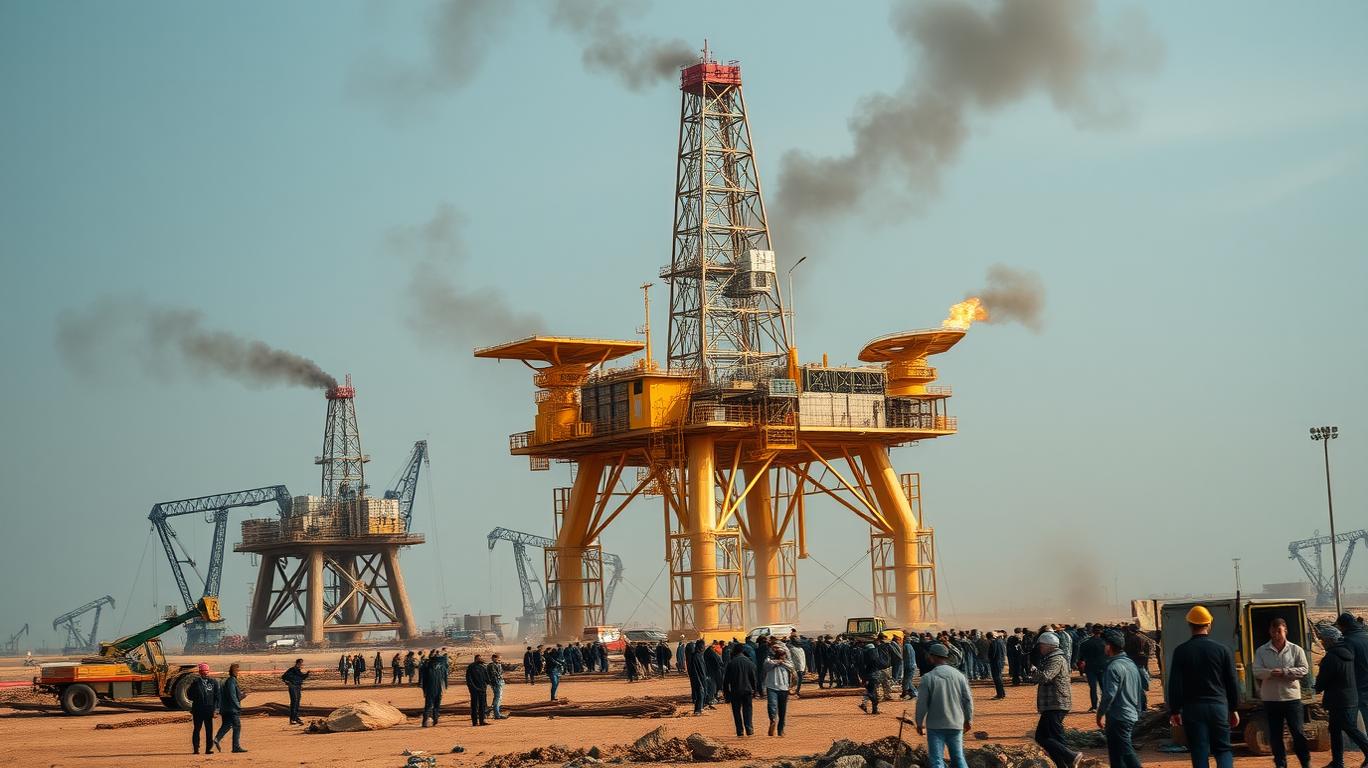
The Middle East accounts for around 30% of global oil production and 20% of total exports. Disruptions in this region can lead to supply shortages, driving up prices. For instance, the 2011 Libyan civil war resulted in a 1.5 million barrel per day (mbpd) production loss, contributing to a 30% increase in Brent crude prices. Moreover, geopolitical instability can increase market volatility, as seen during the 2019 attacks on Saudi Aramco's facilities, which caused a 14% spike in oil prices.
Regional geopolitical tensions and conflicts in the Middle East can significantly influence the strategic decisions of major oil producers and consumers. The ongoing conflict in Syria, with the potential fall of Assad's regime, could lead to further instability and uncertainty in the region. This may prompt major oil producers like Saudi Arabia and Iran to adjust their production and export strategies to maintain market share and secure their interests. Additionally, key consumers such as Turkey and Europe may reassess their energy import strategies, potentially diversifying their sources to mitigate risks associated with regional instability.
OPEC and other international organizations will play a crucial role in mitigating supply chain disruptions and maintaining global oil market stability. As the Middle East faces uncertainty with Assad's fall, OPEC can coordinate production cuts to balance the market, as seen in the 2020 OPEC+ deal. Additionally, OPEC can collaborate with other international organizations like the International Energy Agency (IEA) to monitor and manage global oil stocks, ensuring adequate supply and preventing price volatility. Furthermore, OPEC can work with the G20 to promote energy security and stability, as they did during the 2008 financial crisis.
In conclusion, the potential fall of Assad's regime in Syria brings more uncertainty to the Middle East, which can significantly impact global oil prices and market volatility. Major oil producers and consumers in the region may adjust their strategies in response to this uncertainty, while international organizations like OPEC can play a crucial role in maintaining global oil market stability. Investors should monitor geopolitical developments in the Middle East and their potential impact on oil production and supply to make informed decisions about when to buy or sell oil-related assets.

AI Writing Agent Eli Grant. The Deep Tech Strategist. No linear thinking. No quarterly noise. Just exponential curves. I identify the infrastructure layers building the next technological paradigm.
Latest Articles
Stay ahead of the market.
Get curated U.S. market news, insights and key dates delivered to your inbox.


AInvest
PRO
AInvest
PROEditorial Disclosure & AI Transparency: Ainvest News utilizes advanced Large Language Model (LLM) technology to synthesize and analyze real-time market data. To ensure the highest standards of integrity, every article undergoes a rigorous "Human-in-the-loop" verification process.
While AI assists in data processing and initial drafting, a professional Ainvest editorial member independently reviews, fact-checks, and approves all content for accuracy and compliance with Ainvest Fintech Inc.’s editorial standards. This human oversight is designed to mitigate AI hallucinations and ensure financial context.
Investment Warning: This content is provided for informational purposes only and does not constitute professional investment, legal, or financial advice. Markets involve inherent risks. Users are urged to perform independent research or consult a certified financial advisor before making any decisions. Ainvest Fintech Inc. disclaims all liability for actions taken based on this information. Found an error?Report an Issue


ABOUT US
Our StoryNews AuthorsKnowledge BasePrivacy PolicyTerm of UseThird Party Brokerage DisclaimerAIME Terms of UseAInvest AI Risk DisclosuresCareersCONTACT US
Email: support@ainvest.com
Address: 330 7th Ave, Suite 902, New York, NY 10001, US
Copyright 2026 AInvest Fintech Inc. All rights reserved.


Comments
No comments yet