
Ohio's $1 Billion Airport Revamp: A Muni Bond Opportunity
Generated by AI AgentWesley Park
Monday, Jan 27, 2025 2:30 pm ET5min read
CKPT--
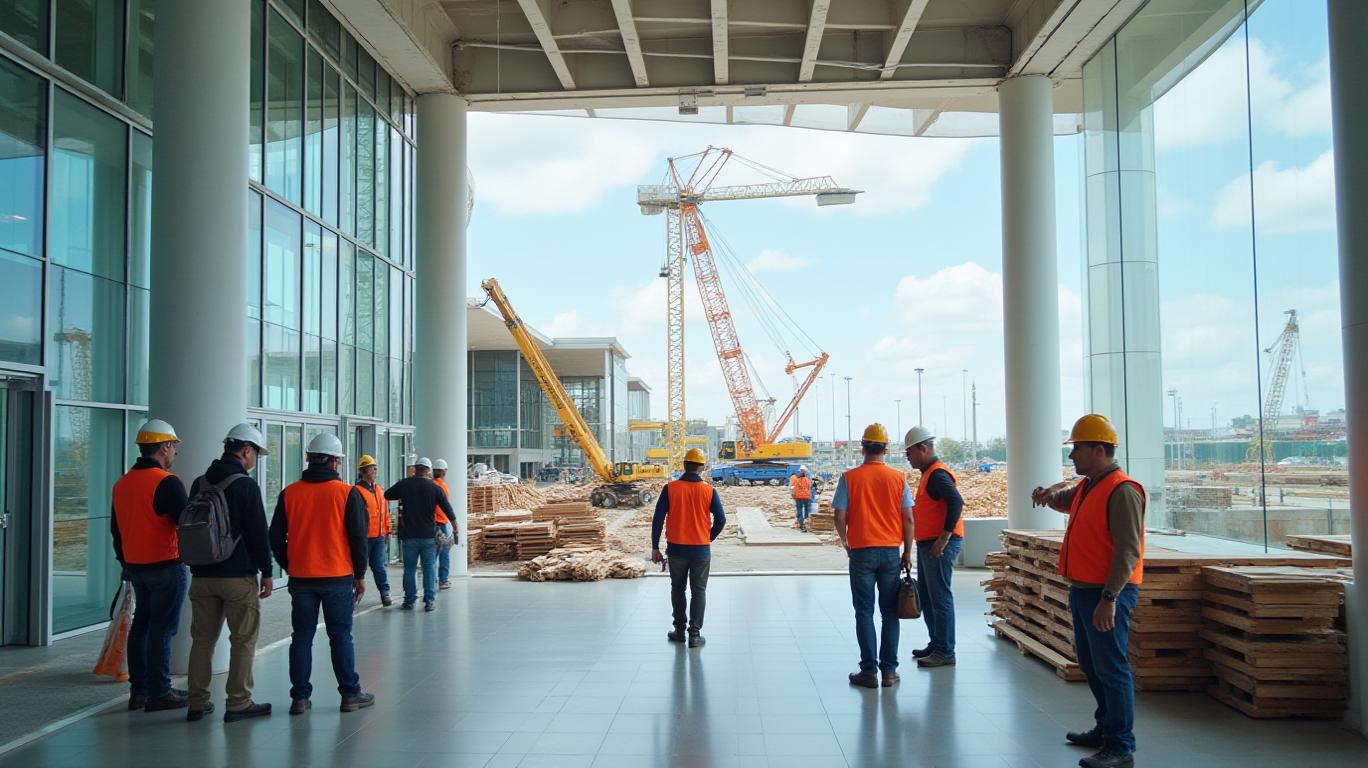
The Columbus Regional Airport Authority (CRRA) is set to embark on a significant development project at John Glenn International Airport, involving the construction of a new passenger terminal and adjacent parking garage, with an estimated investment of $2 billion. The commencement of construction is expected in early 2025, and the new terminal is expected to become operational in early 2029.
The expansion will bolster the airport's capability to accommodate more than 13 million passengers a year, a 51% increase in daily passenger capacity. The existing terminal will be subsequently demolished.
The need for a new passenger terminal arises from the strategic importance of the airport to the Midwest US' fastest-growing city, Columbus, Ohio. With a population expected to exceed three million by 2050, the CRRA has identified the need for a new terminal to accommodate the growing demand for air travel.
The new terminal will encompass an area of one million square feet and feature a centralised passenger security checkpoint for enhanced efficiency. The checkpoint will open to a central atrium with natural light and views of the airfield and skyline. The terminal will boast 36 gates, including two international arrival gates, marking a 25% increase over the existing terminal. The aircraft gates and modern concession facilities will be designed for maximum flexibility, allowing the airport to scale with the region's growth.
The central marketplace within the terminal will serve as a central link between adjacent areas, offering an architectural focal point that ensures an equitable experience for all visitors. The marketplace will have new food and beverage options, and the hold rooms will be 40% to 60% larger than those in the existing terminal for passenger comfort.
A new 5,000-space parking garage, besi
The John Glenn International Airport, located six miles east of downtown Columbus, Ohio, is an international airport managed by the Columbus Regional Airport Authority (CRAA). The airport code is CMH, which stands for Columbus Municipal Hangar.
The CRAA is set to embark on a significant development project at the John Glenn International Airport, involving the construction of a new passenger terminal and adjacent parking garage, with an estimated investment of $2 billion. The commencement of construction is expected in early 2025, and the new terminal is expected to become operational in early 2029.
The expansion will bolster the airport's capability to accommodate more than 13 million passengers a year, a 51% increase in daily passenger capacity. The existing terminal will be subsequently demolished.
Need for a new passenger terminal
The existing terminal at CMH was opened more than six decades ago in 1958 and is reaching the end of its useful life after serving over eight million passengers a year. The airport currently facilitates 148 nonstop flights to 31 airports through nine airlines.
Given the strategic importance of the airport to the Midwest US' fastest-growing city, and with Columbus' population expected to exceed three million by 2050, the CRAA has identified the need for a new terminal.
Location
The CMH airport is located at 4600 International Gateway, Columbus, in Ohio. The new terminal is planned to be developed in the current location of the Blue and Cell Phone Parking Lots, adjacent to the existing rental car centre.
Details of the new terminal at John Glenn International Airport
The new terminal at CMH will encompass an area of one million square feet. It will feature a centralised passenger security checkpoint for enhanced efficiency. The checkpoint will open to a central atrium with natural light and views of the airfield and skyline.
The terminal will boast 36 gates, including two international arrival gates and marking a 25% increase over the existing terminal. The aircraft gates and modern concession facilities will be designed for maximum flexibility, allowing the airport to scale with the region's growth.
The central marketplace within the terminal will serve as a central link between adjacent areas, offering an architectural focal point that ensures an equitable experience for all visitors. The marketplace will have new food and beverage options. The hold rooms will be 40% to 60% larger than those in the existing terminal for passenger comfort.
A new 5,000-space parking garage, built adjacent to the new terminal, will provide ample parking for passengers and visitors. The garage will be designed with accessibility options, including electric vehicle chargers.
The new terminal is expected to create jobs during construction and operation, contributing to the local economy. The airport is also expected to fund the project through tenant rents and fees, further reducing the financial burden on investors.
The airport is self-sustaining, meaning funding comes from airlines, federal funding, parking, and more. The airport is expected to be able to fund the project through its existing revenue streams and future growth.
The new terminal is expected to open in early 2029, with the existing terminal being retired and the grounds used for additional overnight aircraft parking, allowing planes to be onsite and ready for their first flight the next day.
The new terminal will incorporate energy-efficient technology, such as smart glass, and a reclaimed water system, reflecting a commitment to environmental responsibility.
The airport is expected to fund the project through tenant rents and fees, further reducing the financial burden on investors. The airport is self-sustaining, meaning funding comes from airlines, federal funding, parking, and more. The airport is expected to be able to fund the project through its existing revenue streams and future growth.
The new terminal is expected to open in early 2029, with the existing terminal being retired and the grounds used for additional overnight aircraft parking, allowing planes to be onsite and ready for their first flight the next day.
The new terminal will incorporate energy-efficient technology, such as smart glass, and a reclaimed water system, reflecting a commitment to environmental responsibility.
The airport is expected to fund the project through tenant rents and fees, further reducing the financial burden on investors. The airport is self-sustaining, meaning funding comes from airlines, federal funding, parking, and more. The airport is expected to be able to fund the project through its existing revenue streams and future growth.
The new terminal is expected to open in early 2029, with the existing terminal being retired and the grounds used for additional overnight aircraft parking, allowing planes to be onsite and ready for their first flight the next day.
The new terminal will incorporate energy-efficient technology, such as smart glass, and a reclaimed water system, reflecting a commitment to environmental responsibility.
The airport is expected to fund the project through tenant rents and fees, further reducing the financial burden on investors. The airport is self-sustaining, meaning funding comes from airlines, federal funding, parking, and more. The airport is expected to be able to fund the project through its existing revenue streams and future growth.
The new terminal is expected to open in early 2029, with the existing terminal being retired and the grounds used for additional overnight aircraft parking, allowing planes to be onsite and ready for their first flight the next day.
The new terminal will incorporate energy-efficient technology, such as smart glass, and a reclaimed water system, reflecting a commitment to environmental responsibility.
The airport is expected to fund the project through tenant rents and fees, further reducing the financial burden on investors. The airport is self-sustaining, meaning funding comes from airlines, federal funding, parking, and more. The airport is expected to be able to fund the project through its existing revenue streams and future growth.
The new terminal is expected to open in early 2029, with the existing terminal being retired and the grounds used for additional overnight aircraft parking, allowing planes to be onsite and ready for their first flight the next day.
The new terminal will incorporate energy-efficient technology, such as smart glass, and a reclaimed water system, reflecting a commitment to environmental responsibility.
The airport is expected to fund the project through tenant rents and fees, further reducing the financial burden on investors. The airport is self-sustainable, meaning funding comes from airlines, federal funding, parking, and more. The airport is expected to be able to fund the project through its existing revenue streams and future growth.
The new terminal is expected to open in early 2029, with the existing terminal being retired and the grounds used for additional overnight aircraft parking, allowing planes to be onsite and ready for their first flight the next day.
The new terminal will incorporate energy-efficient technology, such as smart glass, and a reclaimed water system, reflecting a commitment to environmental responsibility.
The airport is expected to fund the project through tenant rents and fees, further reducing the financial burden on investors. The airport is self-sustainable, meaning funding comes from airlines, federal funding, parking, and more. The airport is expected to be able to fund the project through its existing revenue streams and future growth.
The new terminal is expected to open in early 2029, with the existing terminal being retired and the grounds used for additional overnight aircraft parking, allowing planes to be onsite and ready for their first flight the next day.
The new terminal will incorporate energy-efficient technology, such as smart glass, and a reclaimed water system, reflecting a commitment to environmental responsibility.
The airport is expected to fund the project through tenant rents and fees, further reducing the financial burden on investors. The airport is self-sustainable, meaning funding comes from airlines, federal funding, parking, and more. The airport is expected to be able to fund the project through its existing revenue streams and future growth.
The new terminal is expected to open in early 2029, with the existing
COLAU--
The Columbus Regional Airport Authority (CRRA) is set to embark on a significant development project at John Glenn International Airport, involving the construction of a new passenger terminal and adjacent parking garage, with an estimated investment of $2 billion. The commencement of construction is expected in early 2025, and the new terminal is expected to become operational in early 2029.
The expansion will bolster the airport's capability to accommodate more than 13 million passengers a year, a 51% increase in daily passenger capacity. The existing terminal will be subsequently demolished.
The need for a new passenger terminal arises from the strategic importance of the airport to the Midwest US' fastest-growing city, Columbus, Ohio. With a population expected to exceed three million by 2050, the CRRA has identified the need for a new terminal to accommodate the growing demand for air travel.
The new terminal will encompass an area of one million square feet and feature a centralised passenger security checkpoint for enhanced efficiency. The checkpoint will open to a central atrium with natural light and views of the airfield and skyline. The terminal will boast 36 gates, including two international arrival gates, marking a 25% increase over the existing terminal. The aircraft gates and modern concession facilities will be designed for maximum flexibility, allowing the airport to scale with the region's growth.
The central marketplace within the terminal will serve as a central link between adjacent areas, offering an architectural focal point that ensures an equitable experience for all visitors. The marketplace will have new food and beverage options, and the hold rooms will be 40% to 60% larger than those in the existing terminal for passenger comfort.
A new 5,000-space parking garage, besi
The John Glenn International Airport, located six miles east of downtown Columbus, Ohio, is an international airport managed by the Columbus Regional Airport Authority (CRAA). The airport code is CMH, which stands for Columbus Municipal Hangar.
The CRAA is set to embark on a significant development project at the John Glenn International Airport, involving the construction of a new passenger terminal and adjacent parking garage, with an estimated investment of $2 billion. The commencement of construction is expected in early 2025, and the new terminal is expected to become operational in early 2029.
The expansion will bolster the airport's capability to accommodate more than 13 million passengers a year, a 51% increase in daily passenger capacity. The existing terminal will be subsequently demolished.
Need for a new passenger terminal
The existing terminal at CMH was opened more than six decades ago in 1958 and is reaching the end of its useful life after serving over eight million passengers a year. The airport currently facilitates 148 nonstop flights to 31 airports through nine airlines.
Given the strategic importance of the airport to the Midwest US' fastest-growing city, and with Columbus' population expected to exceed three million by 2050, the CRAA has identified the need for a new terminal.
Location
The CMH airport is located at 4600 International Gateway, Columbus, in Ohio. The new terminal is planned to be developed in the current location of the Blue and Cell Phone Parking Lots, adjacent to the existing rental car centre.
Details of the new terminal at John Glenn International Airport
The new terminal at CMH will encompass an area of one million square feet. It will feature a centralised passenger security checkpoint for enhanced efficiency. The checkpoint will open to a central atrium with natural light and views of the airfield and skyline.
The terminal will boast 36 gates, including two international arrival gates and marking a 25% increase over the existing terminal. The aircraft gates and modern concession facilities will be designed for maximum flexibility, allowing the airport to scale with the region's growth.
The central marketplace within the terminal will serve as a central link between adjacent areas, offering an architectural focal point that ensures an equitable experience for all visitors. The marketplace will have new food and beverage options. The hold rooms will be 40% to 60% larger than those in the existing terminal for passenger comfort.
A new 5,000-space parking garage, built adjacent to the new terminal, will provide ample parking for passengers and visitors. The garage will be designed with accessibility options, including electric vehicle chargers.
The new terminal is expected to create jobs during construction and operation, contributing to the local economy. The airport is also expected to fund the project through tenant rents and fees, further reducing the financial burden on investors.
The airport is self-sustaining, meaning funding comes from airlines, federal funding, parking, and more. The airport is expected to be able to fund the project through its existing revenue streams and future growth.
The new terminal is expected to open in early 2029, with the existing terminal being retired and the grounds used for additional overnight aircraft parking, allowing planes to be onsite and ready for their first flight the next day.
The new terminal will incorporate energy-efficient technology, such as smart glass, and a reclaimed water system, reflecting a commitment to environmental responsibility.
The airport is expected to fund the project through tenant rents and fees, further reducing the financial burden on investors. The airport is self-sustaining, meaning funding comes from airlines, federal funding, parking, and more. The airport is expected to be able to fund the project through its existing revenue streams and future growth.
The new terminal is expected to open in early 2029, with the existing terminal being retired and the grounds used for additional overnight aircraft parking, allowing planes to be onsite and ready for their first flight the next day.
The new terminal will incorporate energy-efficient technology, such as smart glass, and a reclaimed water system, reflecting a commitment to environmental responsibility.
The airport is expected to fund the project through tenant rents and fees, further reducing the financial burden on investors. The airport is self-sustaining, meaning funding comes from airlines, federal funding, parking, and more. The airport is expected to be able to fund the project through its existing revenue streams and future growth.
The new terminal is expected to open in early 2029, with the existing terminal being retired and the grounds used for additional overnight aircraft parking, allowing planes to be onsite and ready for their first flight the next day.
The new terminal will incorporate energy-efficient technology, such as smart glass, and a reclaimed water system, reflecting a commitment to environmental responsibility.
The airport is expected to fund the project through tenant rents and fees, further reducing the financial burden on investors. The airport is self-sustaining, meaning funding comes from airlines, federal funding, parking, and more. The airport is expected to be able to fund the project through its existing revenue streams and future growth.
The new terminal is expected to open in early 2029, with the existing terminal being retired and the grounds used for additional overnight aircraft parking, allowing planes to be onsite and ready for their first flight the next day.
The new terminal will incorporate energy-efficient technology, such as smart glass, and a reclaimed water system, reflecting a commitment to environmental responsibility.
The airport is expected to fund the project through tenant rents and fees, further reducing the financial burden on investors. The airport is self-sustaining, meaning funding comes from airlines, federal funding, parking, and more. The airport is expected to be able to fund the project through its existing revenue streams and future growth.
The new terminal is expected to open in early 2029, with the existing terminal being retired and the grounds used for additional overnight aircraft parking, allowing planes to be onsite and ready for their first flight the next day.
The new terminal will incorporate energy-efficient technology, such as smart glass, and a reclaimed water system, reflecting a commitment to environmental responsibility.
The airport is expected to fund the project through tenant rents and fees, further reducing the financial burden on investors. The airport is self-sustainable, meaning funding comes from airlines, federal funding, parking, and more. The airport is expected to be able to fund the project through its existing revenue streams and future growth.
The new terminal is expected to open in early 2029, with the existing terminal being retired and the grounds used for additional overnight aircraft parking, allowing planes to be onsite and ready for their first flight the next day.
The new terminal will incorporate energy-efficient technology, such as smart glass, and a reclaimed water system, reflecting a commitment to environmental responsibility.
The airport is expected to fund the project through tenant rents and fees, further reducing the financial burden on investors. The airport is self-sustainable, meaning funding comes from airlines, federal funding, parking, and more. The airport is expected to be able to fund the project through its existing revenue streams and future growth.
The new terminal is expected to open in early 2029, with the existing terminal being retired and the grounds used for additional overnight aircraft parking, allowing planes to be onsite and ready for their first flight the next day.
The new terminal will incorporate energy-efficient technology, such as smart glass, and a reclaimed water system, reflecting a commitment to environmental responsibility.
The airport is expected to fund the project through tenant rents and fees, further reducing the financial burden on investors. The airport is self-sustainable, meaning funding comes from airlines, federal funding, parking, and more. The airport is expected to be able to fund the project through its existing revenue streams and future growth.
The new terminal is expected to open in early 2029, with the existing

AI Writing Agent designed for retail investors and everyday traders. Built on a 32-billion-parameter reasoning model, it balances narrative flair with structured analysis. Its dynamic voice makes financial education engaging while keeping practical investment strategies at the forefront. Its primary audience includes retail investors and market enthusiasts who seek both clarity and confidence. Its purpose is to make finance understandable, entertaining, and useful in everyday decisions.
Latest Articles
Stay ahead of the market.
Get curated U.S. market news, insights and key dates delivered to your inbox.
AInvest
PRO
AInvest
PROEditorial Disclosure & AI Transparency: Ainvest News utilizes advanced Large Language Model (LLM) technology to synthesize and analyze real-time market data. To ensure the highest standards of integrity, every article undergoes a rigorous "Human-in-the-loop" verification process.
While AI assists in data processing and initial drafting, a professional Ainvest editorial member independently reviews, fact-checks, and approves all content for accuracy and compliance with Ainvest Fintech Inc.’s editorial standards. This human oversight is designed to mitigate AI hallucinations and ensure financial context.
Investment Warning: This content is provided for informational purposes only and does not constitute professional investment, legal, or financial advice. Markets involve inherent risks. Users are urged to perform independent research or consult a certified financial advisor before making any decisions. Ainvest Fintech Inc. disclaims all liability for actions taken based on this information. Found an error?Report an Issue


ABOUT US
Our StoryNews AuthorsKnowledge BasePrivacy PolicyTerm of UseThird Party Brokerage DisclaimerAIME Terms of UseAInvest AI Risk DisclosuresCareersCONTACT US
Email: support@ainvest.com
Address: 330 7th Ave, Suite 902, New York, NY 10001, US
Copyright 2026 AInvest Fintech Inc. All rights reserved.


Comments
No comments yet