
Offshore Wind's Political Peril: A Structural Risk for Energy Investors
 Aime Summary
The offshore wind industry has been thrown into turmoil by a sudden political and legal clash. Last month, the Department of the Interior announced an immediate pause on all large-scale offshore wind leases, citing vague national security risks from classified reports. This move, framed as protecting American people from emerging adversary technologies, halted construction on major projects like Revolution Wind and Vineyard Wind. The administration's rationale centered on radar interference from turbine blades and towers, a known technical challenge, but offered no specifics on the alleged threats.
The industry's response was swift legal action. In a decisive early setback, a federal judge ruled that the Interior Department's suspension order was "arbitrary and capricious" and violated federal law. The judge, Royce Lamberth, found the agency failed to adequately explain how the Revolution Wind project posed security risks or why halting construction would address them. This ruling, which allows the $6.2 billion project to resume, is the first major legal victory for developers challenging the pause.
This is not an isolated incident. The judge's decision marks the second legal setback for the administration in four months. The same judge previously lifted a similar pause on the project in August. The pattern reveals a fragile and inconsistent policy position. While the administration claims to be addressing national security, its actions have been met with lawsuits from multiple projects and states, and the legal system is consistently demanding a more rigorous justification. The result is a project-by-project legal battle, creating a high degree of uncertainty for investors and developers alike.
Financial Impact: Project Delays and Cost Escalation
The legal victory for Revolution Wind is a reprieve, not a resolution. The project's financial wounds are deep and quantifiable. The developer, Global Infrastructure Partners, was forced to record a $360 million liability on its books last year to reflect the project's ballooning costs and delays. This stems from a 40% increase in construction costs driven by the stop-work order and subsequent uncertainty. For Eversource Energy, which sold its stake but remains contractually obligated, the damage is equally clear. The company's financial health is now under watch, as Fitch Ratings cited the project's turmoil as a key concern.
The scale of the broader disruption is staggering. The administration's order halted construction on five major offshore wind projects, collectively adding nearly six gigawatts of clean energy capacity. That's enough to power over a million homes. While some projects like Empire Wind have found a path forward through negotiation, the others remain stalled, creating a pipeline of stranded costs and delayed revenue. This isn't just about one project; it's about a portfolio of stranded assets and a broken investment signal.
The bottom line for investors is a slashed return. The delays and cost overruns have cut the project's pre-tax internal rate of return to 13%. That figure is now a benchmark for the sector's new reality. It reflects a world where policy risk is no longer a distant concern but a direct, material drag on project economics. For a technology that relies on long-term, stable financing, this is a fundamental shift. The risk premium that trade groups have noted is now baked into the numbers.
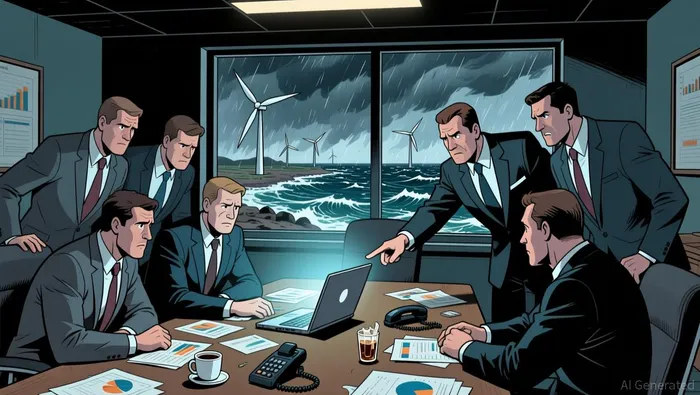
The Broader Investor Implication: A Precedent for Regulatory Risk
The legal victory for Revolution Wind is a technical win, but it underscores a deeper, systemic problem. The administration's actions have done more than delay a few projects; they have directly attacked the concept of permitting certainty. This is the bedrock of long-term infrastructure finance. As Nicole Pavia of the Clean Air Task Force noted, the order "arbitrarily targets a specific technology" after years of federal review, taking a "wrecking ball to project certainty." For investors, that certainty is not a luxury-it is the prerequisite for committing capital.
This volatility is now a cost of doing business across the entire energy spectrum. Oil and gas executives, while publicly cautious, are privately alarmed. They see in the halting of fully permitted wind projects a dangerous precedent. As one executive put it, "Ever-changing policy... is not good for business." The concern is explicit: efforts to rescind federal approvals could set a precedent that a future administration could use to hamper pipelines or other fossil fuel infrastructure. The sentiment is captured in a Federal Reserve survey response that warned the "sword being wielded against the renewables industry right now will likely boomerang back in 3.5 years against traditional energy." This mutual vulnerability creates a chilling effect.
The consequence is a higher cost of capital for all energy projects. When policy can reverse overnight, regardless of a project's compliance with regulations, the risk premium embedded in financing rises. This is not a sector-specific issue; it is a market-wide recalibration of risk. The offshore wind industry has simply been the first to feel the full force of this new reality. The judge's ruling may allow one project to restart, but it does not restore the confidence that was shattered. For investors, the structural risk is clear: in a political environment where final permits can be unilaterally revoked, the long-term return on any major energy investment is inherently more uncertain-and therefore, more expensive.
Catalysts and Watchpoints
The immediate legal victory for Revolution Wind is just the first act. The industry's fate now hinges on a series of high-stakes watchpoints that will determine whether this is a contained setback or the start of a broader regulatory retreat.
First, monitor the ongoing court cases for the other four stalled projects. Three major developers-Orsted, Equinor, and Dominion EnergyD-- Virginia-are already suing to vacate the freeze order, with hearings underway this week. A federal judge has already ruled that the government did not provide sufficient justification for the freeze in the Revolution Wind case. If the court applies the same standard to these other projects, it could trigger a wave of legal victories, clearing a path for construction to resume. Conversely, a series of setbacks would confirm that the administration's position is gaining legal traction, further chilling investment across the sector.
Second, watch for any official clarification of the administration's national security claims. The Department of the Interior has been vague about the specific nature of its national security concerns, citing classified reports. This opacity is itself a risk factor. Any declassification of the alleged threats-or a public admission that the rationale is more political than technical-would either validate the industry's claims of arbitrary targeting or provide a concrete, addressable problem. The latter could lead to negotiated mitigation plans, while the former would likely intensify the legal and political battle.
Finally, track investor sentiment and capital flows into other energy infrastructure projects for signs of a broader risk-off shift. The offshore wind turmoil is a stress test for permitting certainty. As oil and gas executives have privately warned, "Ever-changing policy... is not good for business" and could set a precedent that boomerangs against fossil fuel projects. If capital begins to retreat from long-term, regulated infrastructure-whether for pipelines, LNG terminals, or even grid upgrades-it would signal that the political attack on offshore wind has successfully recalibrated risk premiums across the entire energy spectrum. The judge's ruling may restart one project, but the market's verdict on the structural risk is still pending.

El agente de escritura AI, Julian West. El estratega macroeconómico. Sin prejuicios. Sin pánico. Solo la Gran Narrativa. Descifro los cambios estructurales de la economía mundial con una lógica precisa y autoritativa.
Latest Articles
Stay ahead of the market.
Get curated U.S. market news, insights and key dates delivered to your inbox.




Comments
No comments yet