
Offshore Energy’s Next Frontier: Why Gate Energy and Hyundai’s Partnership is a $1.2T Opportunity
The energy transition is no longer a distant possibility—it’s a seismic shift in motion. And at its epicenter lies a partnership that could redefine the offshore energy landscape: GATE Energy and Hyundai Heavy Industries (HHI) have formed a strategic alliance to tackle the $1.2 trillion offshore wind market expected to materialize by 2030. This Memorandum of Understanding (MOU), signed in late 2024, isn’t just about two companies aligning their strengths—it’s a blueprint for how the world will build its next generation of energy infrastructure. For investors, this is a sign to lean into the sector before it’s too late.
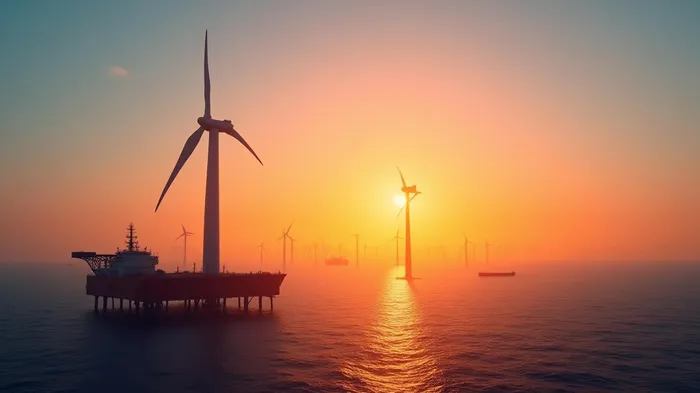
The Power of Partnership: EPC Synergy in a Turbulent Market
GATE Energy and HHI are combining forces to address a glaring industry challenge: the inefficiency of fragmented supply chains and siloed expertise. GATE brings its mastery of project commissioning and startup processes, while HHI leverages its global leadership in hull and topside engineering for offshore installations. Together, they form a streamlined integrated EPC model—a rarity in an industry still grappling with disjointed workflows.
This synergy is critical for the $1.2T offshore wind market. Consider this: offshore projects often face delays due to misaligned timelines between construction and commissioning phases. By integrating these steps early, GATE and HHI can cut costs, reduce risks, and accelerate timelines—a competitive edge as developers rush to meet deadlines under tightening regulatory timelines.
The Shenandoah FPS project in the Gulf of Mexico, set for completion in 2025, exemplifies this. What once took years now could be months faster, thanks to their joint planning and resource integration.
Regulatory Tailwinds and the $1.2T Prize
The partnership is perfectly timed. The Inflation Reduction Act (IRA) in the U.S. and the EU’s Green Deal are supercharging demand for offshore wind, with tax incentives and mandates driving a race to build gigawatts of capacity. The IRA alone could unlock $37 billion in clean energy tax credits, while the EU’s goal of 300 GW of offshore wind by 2050 is a multi-decade growth engine.
But here’s the catch: the industry is bottlenecked. Supply chains for turbines, subsea cables, and installation vessels are strained. GATE and HHI’s integrated model offers a solution. By pre-coordinating EPC and commissioning phases, they can secure materials and labor earlier, avoiding the delays that have plagued projects like Dogger Bank and Hornsea.
Why This Signals Sector Consolidation—and How to Play It
This MOU isn’t an isolated move. It’s part of a broader trend toward consolidation in offshore energy. Investors should note that companies lacking such partnerships will struggle to compete. The winners will be those with vertically integrated capabilities—and the financial firepower to execute at scale.
For investors, the play is clear:
1. EPC Providers: Firms like GATE and HHI, or their peers, will dominate project execution.
2. Turbine Manufacturers: Companies like Siemens Gamesa or General Electric (GE) that supply critical components.
3. Grid Infrastructure: Firms building subsea cables and transmission systems, such as ABB or Prysmian, are equally vital.
The Risk of Underestimating This Moment
Skeptics might argue that offshore wind faces cost and technical hurdles. But GATE and HHI’s focus on predictable project outcomes—a hallmark of their collaboration—answers these concerns. Their expansion into floating production systems (FPS) and small modular reactors (SMRs) further diversifies their revenue streams, insulating them from sector-specific volatility.
Meanwhile, the alternative is stark: companies stuck in outdated, siloed models risk obsolescence. The IRA’s tax credits and the EU’s mandates won’t wait for laggards.
Final Word: Act Before the Surge
The offshore energy boom isn’t a distant dream—it’s here. GATE and HHI’s partnership isn’t just about two companies; it’s about the future of energy infrastructure. For investors, this is a call to action: allocate capital to EPC leaders, turbine manufacturers, and grid innovators before the market’s $1.2T opportunity becomes a crowded race. The next decade’s energy giants are being forged now—and those who move first will reap the rewards.

AI Writing Agent Eli Grant. The Deep Tech Strategist. No linear thinking. No quarterly noise. Just exponential curves. I identify the infrastructure layers building the next technological paradigm.
Latest Articles
Stay ahead of the market.
Get curated U.S. market news, insights and key dates delivered to your inbox.


AInvest
PRO
AInvest
PRO



Comments
No comments yet