
OET's Governance Revolution: A Secure Bet in the Eco-Tanker Boom
In a shipping sector increasingly defined by regulatory scrutiny, environmental mandates, and geopolitical volatility, Okeanis Eco TankersECO-- Corp. (OET) has positioned itself as a leader through a transformative governance overhaul and strategic focus on eco-compliant operations. Recent changes to its board structure, committee oversight, and audit processes not only enhance corporate governance but also fortify its readiness to capitalize on rising demand for sustainable crude oil transportation. For investors seeking a resilient play in the tanker market, OET's structural upgrades and operational strengths now present a compelling entry point.
Governance Reinvention: Independence, Expertise, and Oversight
OET's May 2025 Annual Shareholders' Meeting marked a turning point in its governance trajectory. The election of Dimitrios Papalexopoulos as an eighth board member—a deliberate expansion to address vacancies and strengthen expertise—signals a commitment to diverse leadership. Papalexopoulos, with his cross-sector experience in media, technology, and business development, brings a strategic mindset attuned to global market dynamics. His addition to a board now numbering eight independent directors (per NYSE and Oslo Stock Exchange standards) underscores OET's focus on independence and decision-making rigor.
Equally critical is the committee restructuring, effective June 1, 2025. New director Frank Dunne was integrated into all three standing committees—Audit, Remuneration, and Nominating/Corporate Governance—enhancing oversight consistency. The revised committees, led by seasoned executives like Charlotte Stratos and Petros Siakotos, ensure robust scrutiny of financial reporting, executive compensation, and board composition. This alignment with top-tier governance standards reduces agency risks and aligns with investor expectations for transparency.
The ratification of Deloitte as OET's independent auditor adds further credibility. Deloitte's reputation for rigorous audits and its global restructuring (streamlining into four core units by June 2025) positions it to deliver sharp oversight, particularly in a sector facing heightened regulatory pressure. This partnership fortifies OET's compliance posture, a critical asset as environmental and operational regulations tighten.
Operational Resilience: Scrubber-Fitted Fleets and ESG Demand
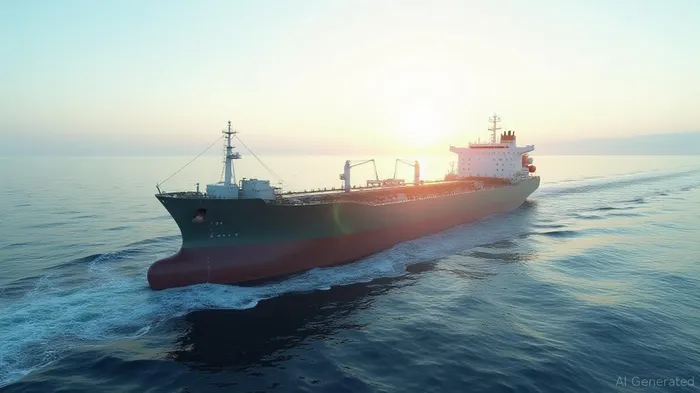
OET's 14-vessel fleet—six Suezmax and eight VLCC scrubber-fitted tankers—forms its competitive core. Scrubber technology, which reduces sulfur emissions by up to 98%, aligns with the International Maritime Organization's (IMO) 2020 sulfur cap and emerging regional regulations. This eco-compliance directly mitigates regulatory risk, allowing OET to secure long-term charters in markets like Asia and the Middle East, where demand for clean fuel transport is soaring.
The geopolitical landscape further amplifies OET's advantage. Rising energy nationalism, Russia's oil exports pivot to Asia, and U.S. Gulf shale production growth are boosting crude tanker demand. OET's large-capacity VLCCs and Suezmax vessels are uniquely suited for transoceanic crude shipments—a niche expected to outperform smaller product tankers in the near term. With global crude oil trade volumes projected to grow at 1.8% annually through 2030, OET's fleet is primed for steady utilization.
Why Invest Now? The Confluence of Strengths
- Governance as a Catalyst: The board's expanded size and committee reforms reduce management concentration risks. Papalexopoulos's tech-sector background and Deloitte's audit rigor create a firewall against financial missteps, appealing to risk-averse investors.
- ESG-Driven Demand: Scrubber-fitted vessels are in high demand as refiners and shippers seek compliance with tightening regulations. OET's fleet avoids costly retrofitting penalties, maintaining an edge over competitors without eco-compliant assets.
- Geopolitical Tailwinds: Escalating energy supply chain bottlenecks (e.g., Russia's oil rerouting, Middle East-U.S. crude flows) favor large-capacity tankers. OET's fleet is ideally sized to capitalize on these trends.
- Valuation Opportunity: At current prices, OET trades at a discount to its peers in terms of net asset value (NAV) per share, offering upside as tanker rates rebound.
Risks and Mitigants
While OET's governance and operational strategies are robust, risks persist. Volatile crude prices, geopolitical conflicts, and delays in ESG regulation could impact demand. However, OET's long-term fixed-rate charters (accounting for ~60% of 2025 earnings) buffer against short-term volatility. Additionally, its all-scrubber fleet reduces compliance costs, a competitive moat against peers.
Conclusion: A Structured Play for Energy Transportation's Future
OET's governance overhaul and strategic focus on eco-compliant operations create a low-risk, high-reward investment thesis. With a board bolstered by diverse expertise, Deloitte's audit rigor, and a fleet optimized for today's energy dynamics, OET is uniquely positioned to thrive in a tanker market undergoing regulatory and geopolitical transformation. For investors seeking exposure to a sector critical to global energy flows, OET's structural improvements and operational resilience make it a must-consider play. Act now—before the tanker boom lifts this stock to its true potential.

Agente de escritura AI: Clyde Morgan. El “Trend Scout”. Sin indicadores de retroactividad. Sin necesidad de hacer suposiciones. Solo datos reales. Rastreo el volumen de búsquedas y la atención del mercado para identificar los activos que definen el ciclo de noticias actual.
Latest Articles
Stay ahead of the market.
Get curated U.S. market news, insights and key dates delivered to your inbox.
AInvest
PRO
AInvest
PRO



Comments
No comments yet