
The OECD's New Tax Framework and Its Implications for Global Equity Markets: Reshaping Corporate Earnings and Investment Strategies Through Cross-Border Remote Work and Resource Taxation
 Aime Summary
Cross-Border Remote Work: A New Tax Paradigm
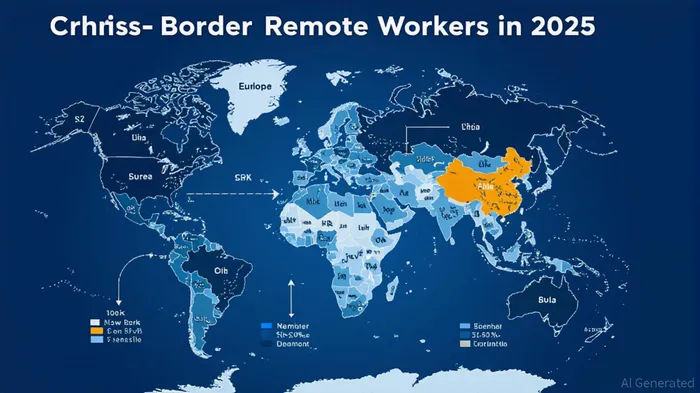
The OECD's 2025 update to the Model Tax Convention introduces clarity on the taxation of cross-border remote work, a critical issue for multinational corporations in the post-pandemic era. According to the OECD, remote work from a home office in another country does not automatically create a taxable presence (permanent establishment) unless the employee works there for at least 50% of their total working time in a 12-month period and there is a commercial rationale for their presence, such as serving local clients. This threshold-based approach reduces tax uncertainty for firms in sectors like technology and consulting, where remote work is prevalent.
For example, a tech firm with employees working remotely from Germany for 40% of their time would avoid triggering a taxable presence in that country, preserving profitability and simplifying compliance. However, if an employee exceeds the 50% threshold while supporting a European client base, the company may face additional tax liabilities. This nuance forces firms to reassess remote work policies, balancing flexibility with tax risk management. KPMG analysts note that such clarity could enable companies to optimize workforce distribution without unintended tax consequences, particularly in high-margin sectors.
Resource Taxation: Reinforcing Source-Country Rights
The OECD's 2025 framework also overhauls the taxation of income from natural resource extraction, a move with profound implications for extractive industries. The updated rules reinforce the principle that such income should be taxed where the economic activity occurs, curbing historical practices of profit shifting to low-tax jurisdictions. For instance, oil and gas firms operating in resource-rich developing economies will now face stricter alignment between their tax obligations and the geographic source of their profits.
This shift is designed to protect source countries from revenue losses due to transfer pricing abuses and offshore shell companies. For multinational extractive firms, the implications are twofold: increased tax costs in high-resource regions and a need to recalibrate investment strategies. Companies may prioritize jurisdictions with stable regulatory environments and transparent tax regimes, while divesting from regions where profit-shifting opportunities are limited. This could accelerate capital reallocation toward countries like Brazil or Indonesia, where resource extraction remains a cornerstone of economic growth.
Sector-Specific Impacts and Strategic Adjustments
The technology sector, heavily reliant on cross-border talent, stands to benefit from the OECD's remote work guidelines. By minimizing the risk of unintended permanent establishments, firms can maintain cost efficiencies while expanding digital footprints. However, the sector must remain vigilant about commercial activities that inadvertently trigger tax obligations. For example, a consulting firm providing real-time support to European clients via remote workers in Eastern Europe could face localized tax liabilities, necessitating strategic repositioning of teams.
In contrast, extractive industries face a more direct financial impact. The OECD's emphasis on source-country taxation could reduce after-tax profits for firms operating in high-tax jurisdictions, potentially dampening returns on capital-intensive projects. To mitigate this, companies may adopt formulary apportionment models or seek partnerships with local governments to secure tax incentives. Such strategies, however, require careful alignment with the OECD's anti-fragmentation provisions, which aim to prevent jurisdictional arbitrage.
Long-Term Market Implications
The OECD's 2025 framework signals a broader trend toward tax equity and transparency, which could stabilize global equity markets over time. For investors, the reduced uncertainty in cross-border taxation may lower volatility in sectors like technology and consulting, while the extractive sector's recalibration could drive sector rotation toward resource-rich economies. However, the long-term success of these reforms hinges on sustained administrative collaboration, as highlighted by OECD official Manal Corwin, who emphasized the need for "many years" of peer reviews and technical assistance to operationalize the framework according to Bloomberg Law.
Conclusion
The OECD's 2025 tax framework is a transformative force in global equity markets, redefining how corporations navigate cross-border operations and resource-based investments. By clarifying the tax implications of remote work and reinforcing source-country rights in extractive industries, the framework addresses critical gaps in the international tax system. While the immediate financial impacts remain nuanced, the long-term trajectory points toward a more equitable and predictable global tax environment-one that demands strategic adaptability from corporations and investors alike.

Delivering real-time insights and analysis on emerging financial trends and market movements.
Latest Articles
Stay ahead of the market.
Get curated U.S. market news, insights and key dates delivered to your inbox.


AInvest
PRO
AInvest
PRO



Comments
No comments yet