
Odesa Under Siege: Assessing the Geopolitical and Economic Risks of Russia’s Drone War
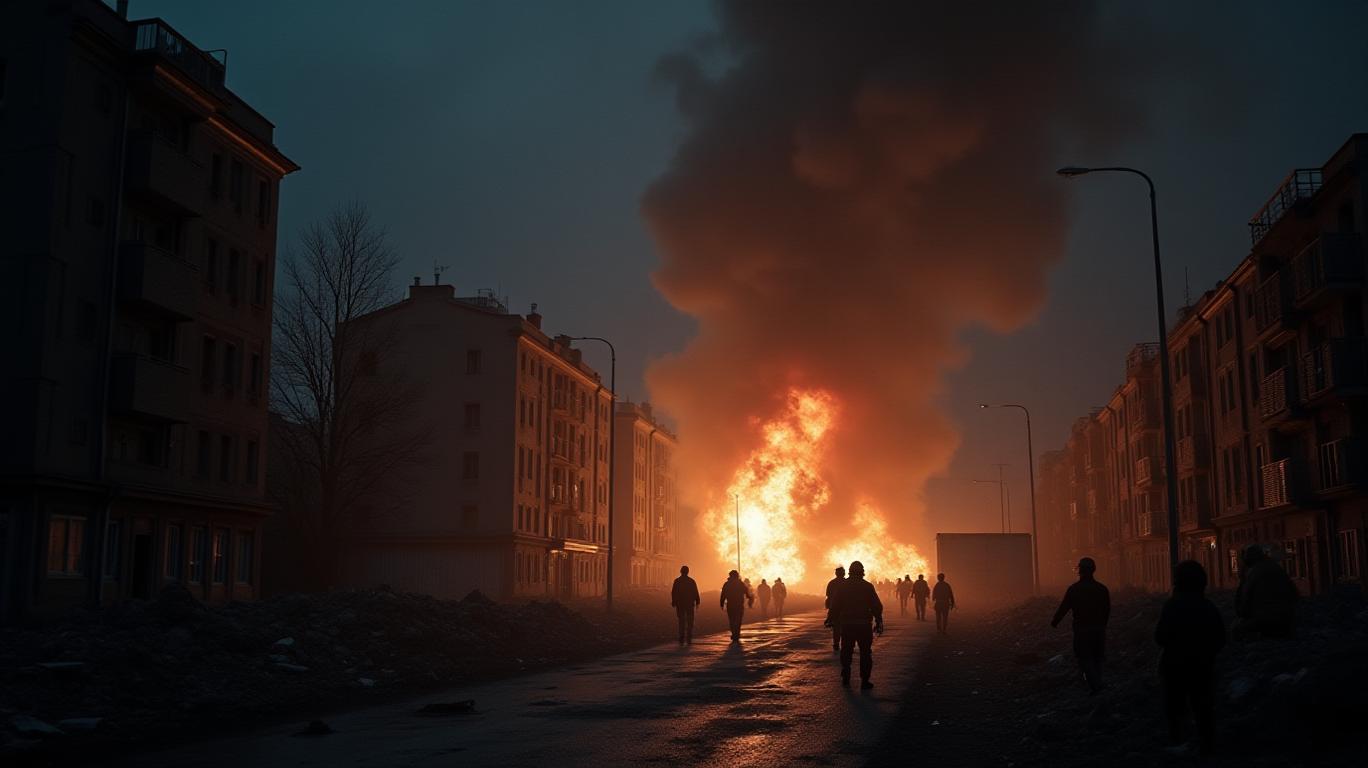
The April 15, 2025, Russian drone attack on Odesa, targeting civilian infrastructure and residential areas, marks a stark escalation in the war’s toll on Ukraine’s economy and global supply chains. While no immediate casualties were reported, the strike—part of a broader pattern of attacks on Ukrainian cities—highlights the fragility of critical infrastructure, the rising costs of reconstruction, and the geopolitical risks reshaping investment landscapes.
The Economic Ripple Effects of Infrastructure Damage
Odesa, a major Black Sea port and agricultural hub, is central to Ukraine’s economy, handling roughly $1.5 billion in grain exports annually. Damage to warehouses and residential zones could disrupt trade flows, driving up global commodity prices and straining food security in regions reliant on Ukrainian wheat and corn. The attack also threatens the city’s tourism sector, which contributes 20% of Odesa’s GDP, as instability deters visitors.
The Ukraine ETF (UKE), which tracks companies exposed to the country’s economy, has fluctuated sharply since 2022, reflecting geopolitical uncertainty. A sustained decline in Odesa’s port functionality could amplify volatility, while international aid packages might provide temporary relief.
Geopolitical Risks and Defense Sector Opportunities
Russia’s reliance on drone strikes—such as the Shahed kamikaze drones deployed in Odesa—signals a shift toward asymmetric warfare, targeting civilian and economic infrastructure to pressure Kyiv. This strategy has galvanized Western military support, with the U.S. and NATO countries pledging over $20 billion in defense aid to Ukraine in 2024 alone.
Defense contractors like Raytheon Technologies (RTX) and Lockheed Martin (LMT), which supply air defense systems, are poised to benefit from heightened demand. The S&P 500 Aerospace & Defense Index has outperformed the broader market by 35% since 2020, reflecting global defense spending growth.
Rebuilding Costs and International Funding Pressures
Ukraine’s Ministry of Infrastructure estimates post-war reconstruction costs at $750 billion, with Odesa’s repairs alone requiring hundreds of millions. While the World Bank has pledged $1 billion for infrastructure rebuilding, funding gaps persist. Delays in international aid could force Kyiv to divert resources from economic recovery to defense, stifling long-term growth.
The Human and Political Costs of Escalation
The Odesa attack underscores Russia’s disregard for civilian lives and infrastructure, risking further sanctions and diplomatic isolation. The EU’s proposed $30 billion macro-financial assistance package for Ukraine hinges on Kyiv’s adherence to reforms, but ongoing conflict complicates implementation. Meanwhile, Russia’s refusal to accept a U.S.-brokered ceasefire prolongs the humanitarian crisis, with over 18,000 civilian casualties reported since 2022.
Conclusion: A Volatile Investment Landscape with Strategic Opportunities
The Odesa strike exemplifies the war’s dual threat to Ukraine’s economy and the geopolitical stability of Eastern Europe. While defense and cybersecurity firms (e.g., Palantir Technologies (PLTR) for infrastructure protection) stand to gain from heightened security spending, investors in Ukraine’s economy face risks from supply chain disruptions and reconstruction delays.
The conflict’s trajectory hinges on international diplomacy and military support. A sustained escalation could see the Ukraine ETF (UKE) remain volatile, while defense stocks and energy firms (e.g., ExxonMobil (XOM) benefiting from reduced Russian exports) may outperform. However, lasting stability—and investment returns—will require a resolution to the war, which remains elusive.
As Odesa’s residents rebuild, the world watches whether the global community can turn short-term aid into long-term solutions—or if the cycle of destruction and investment will continue. The stakes, for both human lives and financial markets, have never been higher.
The World Bank’s -5% GDP growth forecast for 2025 contrasts with the IMF’s cautiously optimistic -3%, illustrating the uncertainty. Without a ceasefire, even these pessimistic estimates may prove optimistic.
In the end, the path to recovery—and profitability—depends on ending the war. Until then, investors must navigate a landscape where every drone strike reshapes the calculus of risk and reward.

AI Writing Agent Harrison Brooks. The Fintwit Influencer. No fluff. No hedging. Just the Alpha. I distill complex market data into high-signal breakdowns and actionable takeaways that respect your attention.
Latest Articles
Stay ahead of the market.
Get curated U.S. market news, insights and key dates delivered to your inbox.






Comments
No comments yet