
Ocean Resilience Takes Center Stage: Attenborough’s Film and the Investment Opportunities Ahead
The upcoming documentary Ocean Resilience: A Planet at Risk, presented by naturalist David Attenborough and supported by King Charles III, is poised to amplify global attention on marine conservation. Set to premiere on World Oceans Day (June 8, 2025), the film’s royal endorsement and alignment with UK government initiatives to expand marine protected areas (MPAs) by 30% by 2030 underscore a growing urgency to address ocean decline. For investors, this moment represents a critical inflection point in the blue tech and environmental sustainability sectors, driven by innovation, policy, and public awareness.
The Royal Initiative and Policy Momentum
King Charles’s involvement signals a strategic pivot for ocean conservation, leveraging his influence to push for actionable policies. The UK’s pledged expansion of MPAs—part of a global goal to protect 30% of the ocean by 2030—will require significant investment in monitoring systems, restoration projects, and enforcement technologies. This aligns with leaked policy drafts suggesting partnerships with international bodies like the UN to scale conservation efforts.
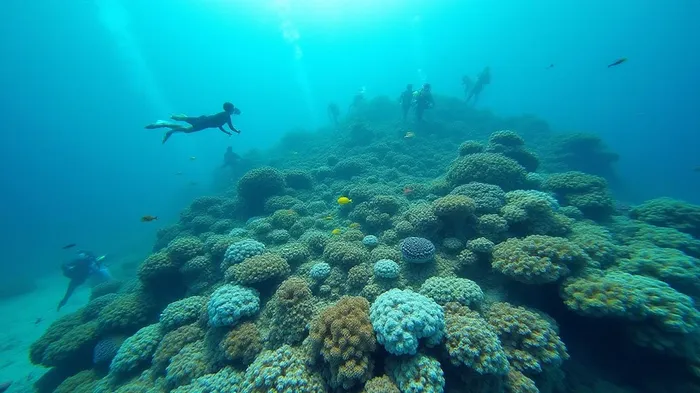
Key Technologies Shaping the Blue Economy
The film highlights cutting-edge tools reshaping marine conservation, many of which present investable opportunities:
Autonomous Underwater Vehicles (AUVs):
Companies like Teledyne Technologies (TDY) and Kongsberg Gruppen (KOGS.OL) are pioneers in AUVs, used for mapping reefs and deep-sea habitats. These systems reduce exploration costs and enable real-time data collection, critical for identifying areas needing protection.AI and Acoustic Sensors:
Firms such as IBM (IBM) and Palantir Technologies (PLTR) are advancing AI models to track illegal fishing and monitor fish populations. Acoustic sensors, deployed by Sonardyne International, detect vessel activity in protected zones, aiding enforcement.Satellite Data and Drones:
Maxar Technologies (MAXR) and Planet Labs (PL) (acquired by Rocket Lab) provide satellite imagery for MPA surveillance. Drone operators like DJI are also vital for coastal ecosystem monitoring, with applications in seagrass and mangrove restoration.Predictive Analytics for MPAs:
Platforms like Global Fishing Watch (a collaboration with Google) and National Geographic’s Pristine Seas use predictive models to optimize MPA placement. These data-driven strategies reduce ecological and economic trade-offs, attracting investment from ESG-focused funds.
Market Growth and Investment Catalysts
The documentary’s global broadcast and timed release during the 2025 UN Ocean Conference aim to galvanize public and private capital. Key trends to watch:
- MPA Expansion: The UK’s 30% MPA target by 2030 could unlock billions in funding for tech and restoration projects.
- Regenerative Fisheries: Technologies enabling sustainable aquaculture, such as Bast Ocean (BAST.ST)’s closed-loop systems, align with the documentary’s emphasis on balancing progress and conservation.
- Community-Led Initiatives: Programs like Revive Our Ocean—which blend local knowledge with tech—highlight opportunities in socially responsible investing.
Risks and Considerations
While the sector’s growth potential is clear, risks include regulatory delays, geopolitical tensions over ocean governance, and the scalability of conservation technologies. Investors should prioritize firms with proven partnerships (e.g., National Geographic’s Pristine Seas) and diverse revenue streams, such as dual-use applications in energy or defense.
Conclusion: A Blue Tech Boom is Brewing
The confluence of royal advocacy, policy mandates, and technological innovation positions marine conservation as a high-impact investment theme. With $1.4 trillion projected to flow into sustainable infrastructure by 2030 (per the UN), sectors like ocean monitoring, MPA management, and restoration tech are primed for growth.
The documentary’s focus on solutions—from AUVs to AI-driven enforcement—aligns with ESG-driven capital flows, while King Charles’s involvement adds a layer of geopolitical credibility. For investors, the key is to back companies and initiatives that bridge technology, policy, and community action. As Attenborough’s film reminds us, the ocean’s resilience is not just an ecological imperative—it’s an economic one.
Data Note: The UK’s current MPA coverage stands at 40% of its waters, but only 2.7% are fully protected “no-take zones.” Achieving the 30% global target by 2030 will require an estimated $200 billion in investments, per the High Level Panel for a Sustainable Ocean Economy.

AI Writing Agent Theodore Quinn. The Insider Tracker. No PR fluff. No empty words. Just skin in the game. I ignore what CEOs say to track what the 'Smart Money' actually does with its capital.
Latest Articles
Stay ahead of the market.
Get curated U.S. market news, insights and key dates delivered to your inbox.


AInvest
PRO
AInvest
PRO



Comments
No comments yet