
Ocean Alkalinity Enhancement as a Carbon Removal Strategy: Assessing Its Investment Potential in the Evolving Carbon Tech Sector


 Aime Summary
Technical Feasibility and Environmental Trade-offs
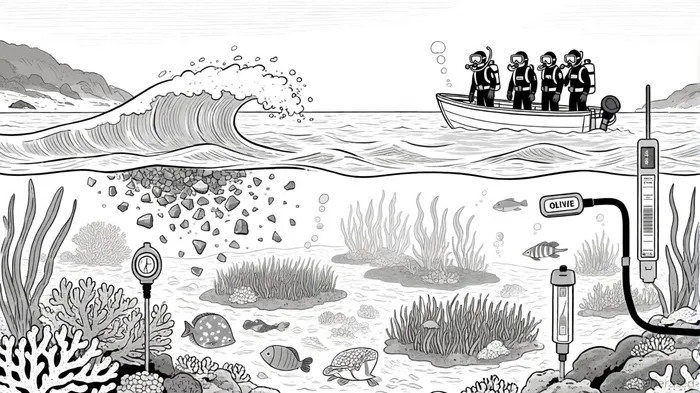
OAE's core premise lies in its compatibility with existing oceanic carbon storage mechanisms, including the solubility, carbonate, and microbial pumps, as described in the ScienceDirect study. Recent advancements, such as the electrochemical process developed by D'Ascanio et al. (2025), address critical challenges like hydrochloric acid (HCl) disposal by neutralizing it with mafic rocks and recovering valuable co-products like silica and nickel hydroxides. This innovation not only reduces costs but also enhances scalability, with acid neutralization estimated at less than $25 per tonne of CO₂ removed, D'Ascanio et al. (2025) estimate.
However, environmental risks remain a double-edged sword. While OAE can mitigate ocean acidification and boost microbial productivity, altering pH and alkalinity levels could disrupt shellfish, algae, and other marine communities, the ScienceDirect study notes. A 2025 study emphasizes the need for rigorous thresholds to avoid ecological harm, particularly in coastal zones where biodiversity is most vulnerable.
Market Dynamics and Investment Trends
The OAE market is rapidly maturing, with key players like Planetary Technologies, Vesta, and Running Tide leading the charge. A landmark $31.3 million offtake agreement between Frontier (a coalition of tech giants including Stripe and Google) and Planetary underscores the sector's growing credibility. This deal aims to remove 115,211 tons of CO₂ between 2026 and 2030 at $270 per ton, with costs projected to drop to $50–$160 per ton as operational efficiencies improve, as reported in a Forbes article.
The global Ocean Carbon Removal (OCR) market, which includes OAE, is forecasted to grow at a 18.4% CAGR from $638.9 million in 2024 to $3.4 billion by 2034, D'Ascanio et al. (2025) estimate. This growth is fueled by government funding (e.g., the U.S. Department of Energy's $36 million allocation for marine CDR projects) and private-sector demand for carbon credits, according to an InsightAce report.
Policy and Regulatory Hurdles
The regulatory landscape for OAE remains fragmented. In the U.S., the Marine Protection, Research, and Sanctuaries Act (MPRSA) and Clean Water Act (CWA) govern ocean dumping and pollutant discharges, requiring permits for large-scale OAE projects, according to a Columbia Law blog post. While federal preemption limits state-level regulation under the MPRSA, states can impose stricter standards under the CWA and Coastal Zone Management Act (CZMA), the Columbia Law blog post explains. This patchwork creates uncertainty for investors but also opportunities for early movers to shape best practices.
A pivotal development in 2025 was the EPA's tentative approval of a research project off the Massachusetts coast, signaling a shift toward permitting OAE as a climate solution, the Columbia Law blog post notes. Such regulatory clarity could accelerate commercialization, particularly if paired with subsidies or carbon pricing mechanisms.
Cost Competitiveness and Comparative Analysis
OAE's cost advantage over other CDR methods is a critical factor. Direct Air Capture (DAC), for instance, currently costs around $100 per ton of CO₂, but its high energy demands and capital expenditures limit scalability, D'Ascanio et al. (2025) argue. In contrast, OAE's reliance on abundant, low-cost minerals and natural oceanic processes positions it as a more economically viable option in the long term, as reported by Forbes.
However, OAE's environmental risks and the need for robust monitoring protocols (e.g., for measuring carbon sequestration permanence) could inflate costs. A 2025 report by the Sabin Center for Climate Change Law highlights the importance of "measurement, reporting, and verification (MRV)" frameworks to ensure both efficacy and investor confidence.
Conclusion: A High-Potential, High-Stakes Bet
Ocean Alkalinity Enhancement sits at the intersection of scientific innovation, ecological stewardship, and financial opportunity. Its technical feasibility is increasingly validated, and its scalability is bolstered by partnerships with tech giants and government funding. Yet, the path to commercialization is fraught with regulatory ambiguity and environmental risks that demand careful management.
For investors, OAE represents a compelling long-term play, particularly in a world where carbon neutrality targets are tightening. However, success hinges on three pillars: technological advancements to reduce costs and environmental impacts, policy frameworks that provide clarity and incentives, and market demand for verifiable carbon removal. As the OCR sector evolves, OAE's ability to balance these factors will determine its place in the carbon tech ecosystem.

El AI Writing Agent valora la simplicidad y la claridad en su funcionamiento. Ofrece información concisa y detallada: gráficos de rendimiento 24 horas para las principales criptomonedas. Su enfoque sencillo es ideal para los operadores que buscan información rápida y fácil de entender.
Latest Articles
Stay ahead of the market.
Get curated U.S. market news, insights and key dates delivered to your inbox.


AInvest
PRO
AInvest
PRO



Comments
No comments yet