
Occidental Petroleum's Global Gambit: How ESG Integration is Fueling International Expansion and Multi-Dimensional Growth
The energy sector's evolution over the past five years has been marked by a dual imperative: global expansion to secure resources and ESG integration to meet environmental and regulatory demands. Few companies have navigated this shift as aggressively as Occidental PetroleumOXY-- (OXY), which has positioned itself at the intersection of traditional energy production and next-gen carbon management. Its strategy—rooted in international partnerships, decarbonization technology, and operational discipline—offers a blueprint for the sector's future. But as OXYOXY-- scales its ambitions, investors must weigh its progress against lingering risks.
The Global Playbook: MENA as the New Frontier
OXY's international expansion has been a masterclass in leveraging geopolitical and resource advantages. In the Middle East and North Africa (MENA), the company now accounts for nearly 20% of its total production through projects like Oman's Mukhaizna oilfields, Qatar's Dolphin gas venture, and the UAE's Al Hosn Gas complex, which hit record output in 2023. These assets, combined with 2023's acquisition of Permian Basin producer CrownRock L.P., have created a geographically diversified portfolio that insulates OXY from regional market volatility.
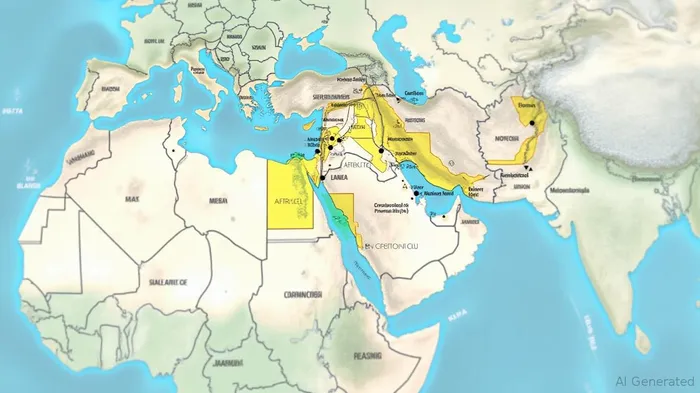
This geographic spread is not merely about oil and gas. OXY has paired its resource plays with strategic partnerships that amplify its influence. Its May 2025 agreement with ADNOC's investment arm XRG to co-develop a $500 million Direct Air Capture (DAC) facility in Texas exemplifies this approach. The project, part of the South Texas DAC Hub, aims to capture 500,000 metric tons of CO₂ annually—a critical step toward OXY's goal of reducing Scope 1 and 2 emissions by 67% since 2020.
ESG as a Catalyst: From Compliance to Competitive Advantage
OXY's environmental strategy transcends checkboxes. Its acquisition of Carbon Engineering (CE) in late 2023, a leader in DAC technology, and the STRATOS DAC project—a $550 million joint venture with BlackRock—demonstrate a commitment to monetizing carbon removal. The STRATOS facility, slated for commercial operation by mid-2025, is already underpinned by a 25-year carbon offtake agreement with CF IndustriesCF--, ensuring revenue from sequestered CO₂ transported to Louisiana's PelicanPELI-- Hub.
This focus on decarbonization has also earned OXY accolades: a Gold Standard pathway from the Oil and Gas Methane Partnership 2.0 and founding membership in the Oil and Gas Decarbonization Charter. Yet challenges remain. While OXY's long-term net-zero target aligns with the Paris Agreement, its medium-term goals (2028–2035) lack specificity, leaving investors to question how it will bridge the gap between short-term wins and 2050 ambitions.
Financials: A Tale of Two Metrics
OXY's financials tell a story of resilience but also inconsistency. In 2023, the company generated $12.3 billion in operating cash flow, a testament to its cost discipline and high-margin shale assets. Its free cash flow before working capital rose to $5.5 billion, enabling shareholder returns through buybacks and dividend hikes. However, its trailing 12-month ROE of 16.6% trails the industry average, and its stock underperformed peers in 2024, rising just 3.2% versus the sector's 5.4%.
The discrepancy underscores a key tension: OXY's long-term bets on carbon capture and international projects require sustained capital, yet its short-term earnings face headwinds. Analysts' revised 2025–2026 EPS estimates—down by 10–17%—reflect skepticism about oil prices and regulatory risks.
Risks: Regulatory Crosswinds and ESG Gaps
OXY's strategy hinges on external factors. The U.S. government's proposed FY2026 budget, which slashes green energy funding, could stall DAC projects reliant on federal grants. Meanwhile, OXY's Scope 3 emissions, which account for 60% of its total footprint, remain underaddressed. While the company claims “credible” plans for methane reduction, its lack of a Just Transition framework—no commitments to support workers displaced by automation or decarbonization—raises reputational risks.
The Investment Case: A Long-Term Play with Near-Term Volatility
OXY is not a stock for short-term traders. Its $1 billion in projected free cash flow by 2026 from non-oil/gas projects like STRATOS and OxyChem's Battleground modernization suggests that patient investors could be rewarded. The South Texas DAC Hub's 3 billion-ton sequestration capacity positions OXY to capitalize on voluntary carbon markets, which are projected to grow to $100 billion annually by 2030.
However, near-term volatility is inevitable. The company's exposure to oil price swings and regulatory uncertainty demands a cautious stance. Investors should consider a gradual allocation, monitoring metrics like DAC facility milestones and methane reduction progress.
Final Take
Occidental Petroleum's blend of geographic diversification and carbon management innovation makes it a leading candidate for energy sector investors seeking exposure to the transition. While its ESG strategy still has gaps, the execution of its global partnerships and DAC projects could solidify its role as a “green” oil major. For now, OXY's future hinges on whether its long-term vision can outpace near-term headwinds—a bet worth making, but with eyes wide open.

Delivering real-time insights and analysis on emerging financial trends and market movements.
Latest Articles
Stay ahead of the market.
Get curated U.S. market news, insights and key dates delivered to your inbox.
AInvest
PRO
AInvest
PRO



Comments
No comments yet