
Occidental Petroleum's Carbon Capture Ambitions: A Strategic Gamble with Climate-Driven Returns
The global energy transition has thrust carbon capture and storage (CCS) into the spotlight as a critical tool for achieving net-zero targets. Occidental Petroleum (OXY) has positioned itself at the vanguard of this shift, leveraging partnerships, regulatory tailwinds, and technological innovation to build a carbon capture empire. But can these initiatives translate into tangible value for investors—or are they a high-risk bet on uncertain climate policies?
The Strategic Pivot to DAC: Partnerships as Catalysts
OXY's recent moves underscore a deliberate shift toward direct air capture (DAC), a nascent but pivotal technology for removing CO₂ directly from the atmosphere. Its collaboration with Abu Dhabi National Oil Company (ADNOC) on a $500 million DAC hub in Texas exemplifies this strategy. The project, announced during a politically charged UAE-U.S. visit, combines geopolitical alignment with commercial ambition. By 2025, the facility is expected to capture 500,000 tonnes annually, leveraging Texas's geologic storage capacity and existing industrial infrastructure.
The partnership with CF Industries, a 25-year offtake agreement for 2.3 million tonnes of CO₂ annually, adds critical revenue stability. Meanwhile, the quirky alliance with Liverpool FC—using DAC to offset merchandise emissions—hints at OXY's broader vision: embedding carbon removal into consumer consciousness.
Technology and Geography: Building a DAC Moat
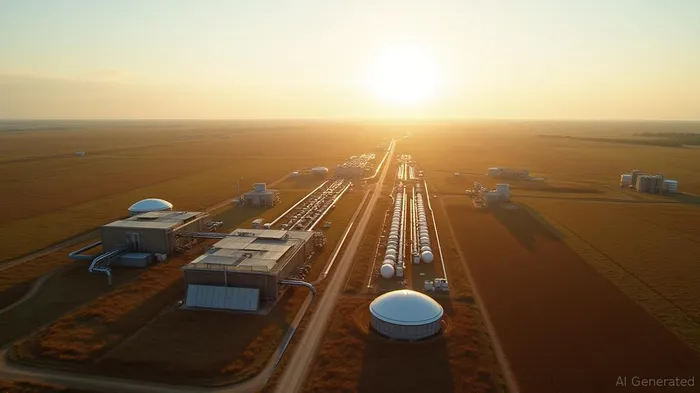
OXY's acquisition of Holocene, a DAC startup, in April 2025 deepened its technological arsenal. Combined with its earlier purchase of Carbon Engineering, this move positions OXY as a leader in proprietary DAC processes. The STRATOS facility, now operational, is a flagship example of commercial-scale DAC, backed by Class VI storage permits that ensure regulatory compliance and permanence.
Texas's role as OXY's carbon capture epicenter cannot be overstated. The South Texas DAC Hub, including the King Ranch site with 3 billion tonnes of storage capacity, benefits from lax regulations, tax incentives, and proximity to CO₂ emitters. This geographic focus minimizes logistical hurdles and maximizes scalability—a competitive edge in an industry still grappling with costs and feasibility.
Government Backing: A Tailwind or a Tether?
Federal support has been pivotal. The Department of Energy's $650 million grant for the South Texas DAC Hub and the Inflation Reduction Act's enhanced 45Q tax credit (now $180/tonne for DAC) have provided OXY with the financial oxygen to scale. However, this reliance on policy creates vulnerability. Former President Trump's proposed cuts to climate funding—a reminder of political fragility—highlight the risks of over-leveraging on government largesse.
The Double-Edged Sword of Enhanced Oil Recovery (EOR)
Critics argue that OXY's use of captured CO₂ for EOR—a process that could boost oil production—undermines its climate credibility. While the company claims EOR sequesters 60-80% of injected CO₂ permanently, environmental groups decry it as “greenwashing.” This tension between profit motives and climate goals could erode OXY's social license, a reputational risk in an era of ESG-driven investing.
Valuation: Betting on a $100 Billion Market
The carbon capture market is projected to hit $100 billion by 2030, driven by corporate net-zero pledges and stricter regulations. OXY's early dominance in DAC infrastructure could lock in first-mover advantages, particularly if it secures long-term contracts with industries like fertilizer production or steel manufacturing.
Investors should note that OXY's stock has underperformed peers like Chevron (CVX) over the past three years, partly due to skepticism around its carbon strategies. Yet, its recent partnerships and technological progress suggest a potential re-rating if DAC projects deliver on their CO₂ removal targets.
Investment Considerations: Risk and Reward
The case for OXY hinges on two variables: technical execution and policy continuity. Success in reducing DAC costs (currently $600+/tonne) and scaling to 65 million tonnes/year (as per IEA) will be key. Conversely, shifts in administration or public backlash over EOR could derail progress.
For investors with a 10+ year horizon, OXY's carbon plays offer exposure to a structural demand for decarbonization. However, short-term volatility is inevitable. A safer bet might involve pairing OXY with pure-play carbon capture firms like Carbon Clean or LanzaTech.
Final Analysis
Occidental's carbon capture initiatives are a bold response to the climate crisis—and a calculated gamble on the future of energy. While the company's Texas-centric strategy and technological bets position it to capitalize on a booming market, its reliance on fossil fuel synergies and policy whims introduces material risks. Investors should weigh OXY's potential upside against its execution challenges, treating it as a speculative, high-conviction holding for portfolios seeking exposure to the energy transition's most contentious frontier.
The clock is ticking. Will OXY's carbon capture vision crystallize into value—or become a cautionary tale of overpromising in the climate race?

Stay ahead of the market.
Get curated U.S. market news, insights and key dates delivered to your inbox.






Comments
No comments yet